

Table of Contents
- Can You Build Muscle Without Protein Powder? The Short Answer
- How Muscle Hypertrophy Actually Works (and What Protein Does)
- How Much Protein to Build Muscle Without Powders
- High Protein Whole Food Sources That Rival Any Shake
- Meal Planning for Muscle Gain Without Protein Powder
- Common Myths About Protein Powder and Muscle Growth
- When Supplements Still Help: Creatine, BCAAs, and Recovery
- Conclusion: Building Muscle on Your Own Terms
- Frequently Asked Questions
Last Updated: September 27, 2026
Can You Build Muscle Without Protein Powder? The Short Answer
Yes, you can build muscle without protein powder, and millions of lifters have done exactly that long before the supplement aisle existed. Muscle growth depends on total daily protein intake, resistance training, and recovery, not on whether that protein arrives in a shaker bottle or on a dinner plate. This guide from Peakform Nutrition walks through the science, the food sources, and the meal plans that make it work.
How Muscle Hypertrophy Actually Works (and What Protein Does)
Muscle hypertrophy is the process by which muscle fibers increase in size following mechanical tension and metabolic stress from training. Protein supplies the amino acids that repair and rebuild those fibers. Without enough dietary protein, the repair process stalls regardless of how hard you train.
Muscle protein synthesis, breakdown, and nitrogen balance
Training creates micro-damage in muscle tissue. Repair requires essential amino acids, particularly leucine, which triggers the signaling that starts synthesis. Whole food sources deliver these amino acids just as effectively as powder when total intake is adequate.
How Much Protein to Build Muscle Without Powders
Most people building muscle need roughly 1.6 to 2.2 grams of protein per kilogram of body weight per day, spread across three to five meals. For a 180-pound lifter, that's about 130 to 180 grams daily. The exact figure depends on training volume, age, and total calories.
Here's the practical translation:
- 4 meals per day at 35-45 grams each covers most lifters
- Each meal should include a complete protein source
- Spread intake evenly rather than loading it all at dinner
- Prioritize protein at breakfast, where most people fall short
High Protein Whole Food Sources That Rival Any Shake
Whole food sources deliver the same amino acids as powder, often with additional micronutrients, fiber, and satiety benefits that support weight management. The list below covers options for omnivores, vegetarians, and vegans.
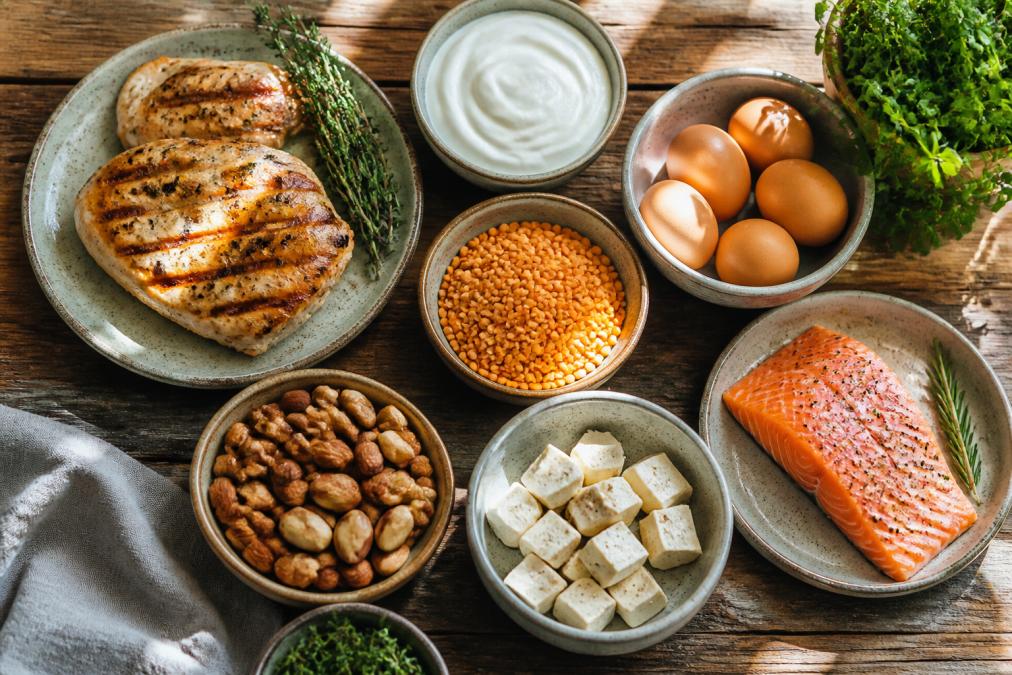
| Food | Protein per Serving | Key Strength | Best For |
|---|---|---|---|
| Chicken breast | ~31g per 100g | Lean, complete protein | Daily staple meals |
| Greek yogurt | ~17g per cup | Casein, slow digestion | Breakfast, pre-sleep |
| Eggs | ~6g each | Complete amino profile | Any meal |
| Lentils | ~18g per cooked cup | Fiber, plant protein | Vegetarian bases |
| Tofu | ~20g per cup | Complete plant protein | Vegan mains |
| Salmon | ~25g per 100g | Omega-3s, complete | Recovery meals |
Complete vs. incomplete proteins and amino acid profiles
Complete proteins contain all nine essential amino acids in adequate amounts. Animal sources like eggs, dairy, meat, and fish qualify. Most plant foods are incomplete proteins, meaning they fall short on one or more essential amino acids. That's not a problem for vegetarians and vegans. Combining complementary plant foods across the day, such as rice with beans or hummus with whole grain pita, delivers a full amino acid profile.
Plant-based combinations that cover every essential amino acid
This is the section most articles skip. If you're plant-based and skipping powders, you need specific pairings, not just a list of foods. The pattern is simple: pair a legume with a grain, or lean on soy, which is already complete on its own.
- Rice and beans, the classic. Beans are low in methionine, rice is low in lysine; together they cover both.
- Hummus and whole-grain pita, chickpeas plus wheat fill each other's gaps.
- Peanut butter on whole-grain toast, legumes plus grains, easy breakfast.
- Lentil soup with a slice of whole-grain bread, same legume-plus-grain logic.
- Tofu or tempeh with rice, soy is a complete protein on its own, so this is a bonus, not a requirement.
- Seitan with quinoa, seitan is low in lysine; quinoa helps fill it in.
- Edamame with brown rice, soy plus grain, high protein and fiber.
Satiety, fiber, and the digestive edge
Whole-food protein sources come packaged with fiber, water, and micronutrients that concentrated powders strip out. That means slower digestion, steadier blood sugar, and a fuller stomach per calorie, a real advantage if you're managing appetite during a surplus or cutting phase. It also means fewer of the bloating and digestive complaints some people get from concentrated protein supplements. The trade-off is convenience: whole foods take more planning and prep time than a scoop, which is exactly why the meal-planning section above matters.
Meal Planning for Muscle Gain Without Protein Powder
Meal planning for muscle gain without protein powder comes down to building each meal around a protein anchor, then adding carbohydrates and fats to hit your caloric surplus. A modest surplus of roughly 200 to 300 calories above maintenance supports growth without excessive fat gain. Most ranking guides stop at that principle. The gap they leave is the how: a repeatable system you can run on autopilot, plus a full week of meals instead of one sample day.
The protein-anchor system
Every meal gets one anchor that carries the bulk of the protein, then supporting foods that fill in calories and micronutrients. Anchors are interchangeable, so you rotate them instead of rebuilding your plan each week.
- Breakfast anchors (30-45g): 3 whole eggs plus 1 cup Greek yogurt; 1 cup cottage cheese with fruit; a 4-egg omelet with cheese
- Lunch anchors (35-50g): 6 oz grilled chicken over rice and beans; 6 oz canned tuna with whole-grain pita; 1.5 cups lentils with a side of cheese
- Dinner anchors (35-50g): 6 oz salmon with potatoes; 6 oz lean beef with quinoa; 8 oz tofu or tempeh stir-fry with rice
- Snack anchors (15-25g): Greek yogurt, cottage cheese, hard-boiled eggs, edamame, jerky, roasted chickpeas
A 7-day high-protein plan without powders
This plan targets roughly 150-170g of protein per day for a 180-pound lifter eating at a slight surplus. Portions scale up or down with body weight.
| Day | Breakfast | Lunch | Snack | Dinner |
|---|---|---|---|---|
| 1 | 3 eggs, 1 cup Greek yogurt, oatmeal with berries | Chicken bowl with rice, black beans, salsa | Cottage cheese with almonds | Salmon, roasted potatoes, broccoli |
| 2 | 4-egg omelet with cheese, whole-grain toast | Tuna salad with pita and hummus | Hard-boiled eggs and fruit | Lean beef, quinoa, green beans |
| 3 | Greek yogurt parfait with granola and nuts | Lentil soup with a side of cheese | Edamame | Chicken thighs, sweet potato, spinach |
| 4 | 3 eggs, cottage cheese, whole-grain toast | Turkey and bean chili over rice | Jerky and an apple | Tofu stir-fry with rice and vegetables |
| 5 | Greek yogurt with berries and almonds | Chicken wrap with beans and cheese | Cottage cheese with pineapple | Salmon, couscous, asparagus |
| 6 | 4-egg scramble with vegetables | Beef and barley soup with a side of cheese | Roasted chickpeas | Tempeh bowl with quinoa and greens |
| 7 | 3 eggs, 1 cup Greek yogurt, oatmeal | Leftover chili or stew | Hard-boiled eggs and nuts | Lean steak, baked potato, salad |
Budget-friendly and vegetarian/vegan strategies
Budget-friendly meal planning favors eggs, canned tuna, chicken thighs, dried lentils, and plain Greek yogurt in large tubs. These deliver more protein per dollar than most supplements and cover macronutrients alongside protein. Dried beans and lentils cost a fraction of canned, and buying eggs and yogurt in bulk sizes stretches the same budget further.
Prep once, eat all week
Cook two or three protein anchors in bulk on one day, a tray of chicken thighs, a pot of lentils, a batch of hard-boiled eggs, then assemble meals from them through the week. This is the step that actually replaces the shaker bottle's convenience, and it's the part most guides skip.
Common Myths About Protein Powder and Muscle Growth
Protein powder is convenient, not essential. That's the myth most worth correcting, because it drives unnecessary spending and the false belief that muscle growth is impossible without a tub of whey on the counter.
Other myths worth retiring:
- "You need a shake within 30 minutes of training." Total daily intake matters far more than timing.
- "Plant protein can't build muscle." With adequate total intake and complete amino acid coverage, it can.
- "More protein is always better." Past a certain point, excess protein offers no additional muscle-building benefit.
- "Powder is more bioavailable than food." Whole food protein is highly bioavailable, and food brings additional nutrients.
When Supplements Still Help: Creatine, BCAAs, and Recovery
Supplements can support recovery and performance even when protein powder isn't part of your routine. Creatine monohydrate is the most researched option for strength and muscle protein synthesis, and it works alongside whole-food protein rather than replacing it.

Do not treat BCAAs or glutamine as a substitute for total daily protein. They support recovery and synthesis, but they do not replace the amino acids your meals need to deliver. Skipping meals and relying on aminos will stall progress.
Conclusion: Building Muscle on Your Own Terms
The real challenge isn't figuring out whether you can build muscle without protein powder. It's building a meal system you can actually sustain through busy weeks, travel, and training blocks. That's where most people fall short, not in the science.
Frequently Asked Questions
Do you actually need protein powder to build muscle?
No. Muscle growth depends on total daily protein intake, resistance training, and a slight caloric surplus, not on powder specifically. Whole foods like chicken, eggs, Greek yogurt, lentils, and tofu supply all nine essential amino acids your muscles need for repair. Total daily protein matters far more than the source or the shake. If you hit your target from meals, powder is optional.
How much protein to build muscle without supplements?
Research points to 1.6 to 2.2 grams of protein per kilogram of body weight per day for hypertrophy. For a 180-pound (82 kg) lifter, that is roughly 131 to 180 grams daily. You can reach that with four to five whole-food meals: eggs and oatmeal at breakfast, chicken and rice at lunch, Greek yogurt as a snack, salmon and potatoes at dinner. Spread intake across the day for steady muscle protein synthesis.
What are the best high protein whole food sources for muscle gain?
Top choices include skinless chicken breast (31g per 100g), lean beef, salmon, eggs, Greek yogurt, cottage cheese, lentils, chickpeas, tofu, and tempeh. These foods also provide leucine, the amino acid that triggers muscle protein synthesis. Pair plant sources like rice and beans to form complete proteins. Whole-food protein keeps you fuller longer than shakes, which helps with caloric control.
Is it harder to build muscle without protein powder?
It can be slightly less convenient, but not harder physiologically. You need to plan meals with enough protein, especially if you are busy or travel often. Meal planning for muscle gain helps: batch-cook chicken, boil eggs, and portion Greek yogurt. If you struggle to eat enough, a supplement like creatine monohydrate can support performance without adding protein. Whole foods also bring fiber and micronutrients that powders lack.