

Table of Contents
- Muscle Growth Recovery Starts With Your Plate
- How Much Protein Per Day for Muscle Growth
- Best Protein Sources for Muscle Building
- Post-Workout Meal Timing: What the Research Says
- Carbs, Fats, and Micronutrients for Recovery
- Budget-Friendly and Gut-Friendly Muscle Building
- Frequently Asked Questions
Last Updated: September 22, 2026
Muscle Growth Recovery Starts With Your Plate
Knowing what to eat for muscle growth and recovery matters more than most athletes realize. Training creates the stimulus; food supplies the raw material your body uses to rebuild stronger tissue. This guide from Peakform Nutrition breaks down protein targets, food choices, and meal timing.
How Much Protein Per Day for Muscle Growth
The evidence-backed target for most strength-training athletes is 1.6 to 2.2 grams of protein per kilogram of body weight daily, roughly 131 to 180 grams for a 180-pound (82 kg) athlete, spread across three to five meals.
Calculating Your Daily Protein Target
Use this simple formula:
- Convert your body weight to kilograms (pounds ÷ 2.2)
- Multiply by 1.6 for a baseline, 2.2 for hard training
- Divide the total across 4-5 meals of 30-40 grams each
A 150-pound (68 kg) athlete training four days per week lands around 109 to 150 grams daily. The exact number matters less than hitting the range consistently.
Best Protein Sources for Muscle Building
The best protein sources for muscle building deliver all nine essential amino acids in digestible form. Animal proteins lead on bioavailability, but several plant options come close when combined properly.
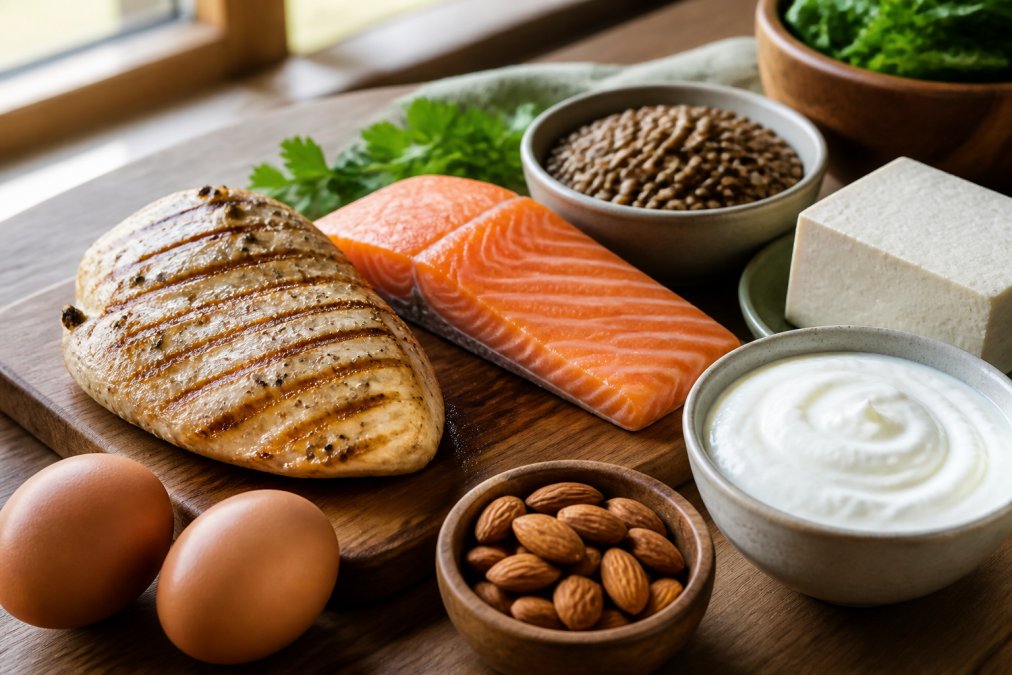
Top picks, ranked by amino acid profile and convenience:
- Chicken breast: roughly 31 grams of protein per 100 grams, low in fat
- Lean beef: rich in creatine, iron, and zinc alongside complete protein
- Salmon: complete protein plus omega-3 fatty acids for inflammation control
- Eggs: one of the highest-quality protein sources available
- Greek yogurt: slow-digesting casein protein, useful before bed
- Whey protein: fast-absorbing, ideal post-workout
Plant-Based Options That Pull Their Weight
Plant-based athletes can build muscle with deliberate planning. Soy, quinoa, and buckwheat are complete proteins on their own; rice and beans, hummus with whole-grain pita, and lentils with brown rice combine complementary amino acids. Hemp, pea, and brown rice protein powders fill gaps on busy days.

Post-Workout Meal Timing: What the Research Says
The anabolic window is wider than the old "30-minute rule" suggested. Current sports nutrition guidance indicates total daily protein intake matters far more than precise post-workout timing, with the window stretching several hours around training.
Carbs, Fats, and Micronutrients for Recovery
Carbohydrates refill muscle glycogen, the stored fuel burned during high-intensity training, and glycogen depletion is one of the strongest drivers of next-day fatigue and soreness. After a hard session, oats, sweet potatoes, brown rice, and whole-grain pasta restore glycogen steadily, while fruit delivers faster glucose.
How Many Carbs You Actually Need
General sports nutrition guidance puts daily carbohydrate needs for strength athletes at 3 to 5 grams per kilogram of body weight for moderate training, rising to 5 to 7 grams during heavy or twice-daily blocks, roughly 246 to 410 grams per day for a 180-pound (82 kg) athlete.
A simple way to individualize it:
- Convert your body weight to kilograms (pounds ÷ 2.2)
- Multiply by 3 for light or skill-focused training days
- Multiply by 5 for heavy strength or high-volume days
- Multiply by 6 to 7 during competition or two-a-day blocks
Fats: Hormones, Inflammation, and Soreness
Fats support hormone production, including testosterone, and help regulate inflammation. Omega-3s from salmon, sardines, mackerel, walnuts, chia seeds, and ground flaxseed are especially useful for reducing delayed onset muscle soreness (DOMS) and supporting joint comfort.
Micronutrients That Keep Repair Running
Micronutrients don't build muscle directly, but they keep the repair machinery working. Deficiencies show up as slower recovery, more cramping, or weaker training output:
Elite Standard Whey Protein (Vanilla) →
- Magnesium: supports muscle contraction, relaxation, and sleep quality. Found in pumpkin seeds, almonds, spinach, black beans, and dark chocolate.
- Vitamin D: involved in muscle strength and bone health. Fatty fish, egg yolks, and fortified dairy are the main food sources; many athletes in northern latitudes or who train indoors run low.
- Iron: carries oxygen to working muscle. Lean red meat, lentils, spinach, and fortified cereals are reliable sources; pair plant iron with vitamin C for better absorption.
- Zinc: supports immune function and hormone signaling. Oysters, beef, pumpkin seeds, and chickpeas are strong sources.
- Antioxidants from berries, tart cherries, leafy greens, and colorful vegetables: help manage exercise-induced inflammation without blunting the training adaptation the way high-dose antioxidant supplements can.
- Electrolytes (sodium, potassium, magnesium): maintain hydration and nerve signaling. Add them during long or hot sessions, or when sweat losses are heavy.
Hydration Is Part of the Macro Plan
Even mild dehydration reduces strength output and slows recovery. Drink roughly half your body weight in ounces of fluid daily as a baseline, then add 16 to 24 ounces for every pound lost during training, weigh yourself before and after a hard session to see what you sweat out.
| Goal | Daily Target | Best Food Sources |
|---|---|---|
| Glycogen refill | 3-7 g carbs per kg body weight | Oats, sweet potatoes, brown rice, fruit |
| Hormone and joint support | 0.5-1 g fat per kg body weight | Salmon, walnuts, olive oil, avocado |
| Muscle function | Varies by nutrient | Pumpkin seeds, spinach, fatty fish, lentils |
| Hydration | ~0.5 oz fluid per lb body weight, plus sweat losses | Water, electrolyte drinks |
Budget-Friendly and Gut-Friendly Muscle Building
Two things almost every muscle-building guide ignores: what it actually costs to eat for growth, and whether your gut absorbs what you pay for.
Eating for Muscle on a Real Budget
Building muscle does not require grass-fed beef and boutique protein powders. The cheapest complete proteins per gram are also some of the most effective:
- Eggs: often the lowest cost per gram of high-quality protein at the grocery store
- Canned tuna and canned salmon: complete protein plus omega-3s at a fraction of fresh fish prices
- Chicken thighs and drumsticks: cheaper than breast, more fat, still excellent protein
- Dried lentils, black beans, and chickpeas: cheap, shelf-stable, and fiber-rich
- Greek yogurt (plain, large tub): slow-digesting casein protein for less than single-serve cups
- Frozen vegetables and frozen berries: same nutrition as fresh, often half the price
- Store-brand whey protein: the amino acid profile is nearly identical to premium brands
Why Gut Health Determines How Much Protein You Actually Use
Here is the angle most fitness blogs skip: eating 180 grams of protein does not mean your body absorbs 180 grams. The gut is the gatekeeper between your plate and your muscle, if the lining is inflamed, digestion is slow, or the microbiome is out of balance, a meaningful share of amino acids never reaches circulation in usable form.
Three practical levers:
- Fiber diversity: aim for a wide range of plant fibers (oats, beans, berries, leafy greens, nuts) rather than the same source every day. Different fibers feed different gut bacteria, and a more diverse microbiome is associated with better nutrient extraction.
- Fermented foods: plain yogurt, kefir, sauerkraut, kimchi, and tempeh introduce live cultures that support the gut environment. A small serving daily is enough for most people.
- Amino acids that feed the gut lining: L-glutamine is the primary fuel source for intestinal cells, and the gut is one of its biggest consumers in the body. During heavy training blocks, when protein turnover is high, the gut's demand for glutamine rises. Peakform Nutrition's L-Glutamine 2000 provides 2,000 milligrams per serving, unflavored and easy to mix into any cold beverage, ideally within 30 minutes after training alongside protein.
Sleep: The Recovery Multiplier Nobody Sells
Most muscle repair happens during deep sleep, when growth hormone release peaks. Athletes who consistently sleep seven to nine hours recover faster, handle higher training volumes, and report less soreness than those sleeping six or fewer.

Specific foods can support sleep quality:
- Magnesium-rich foods (pumpkin seeds, almonds, spinach, black beans) support muscle relaxation and sleep depth
- Slow-digesting protein before bed (Greek yogurt, cottage cheese, casein) supplies amino acids through the overnight repair window
- Tart cherries and kiwi have been studied for their potential to improve sleep duration and quality
- Avoiding heavy meals, alcohol, and large caffeine doses within a few hours of bed protects sleep architecture
Supplements That Earn Their Place
For strength gains, Creatine Monohydrate remains the most researched supplement available, supporting muscle protein synthesis and exercise performance when added to a solid diet, and it's one of the cheapest per serving. Whey protein is the other staple: convenient, complete, and cost-effective per gram compared to most whole foods.

| Goal | What to Eat | When |
|---|---|---|
| Muscle repair | Whey protein, chicken, eggs | Within 2 hours post-workout |
| Glycogen refill | Oats, sweet potatoes, fruit | Post-workout and at meals |
| Soreness reduction | Salmon, walnuts, flaxseed | Daily, spread across meals |
| Gut support | L-Glutamine, yogurt, fiber | Post-workout and morning |
| Budget protein | Eggs, lentils, canned tuna | Any meal |
| Sleep support | Greek yogurt, pumpkin seeds, tart cherries | 1 hour before bed |
Frequently Asked Questions
What foods speed up muscle growth?
Foods that support muscle growth recovery combine high-quality protein with carbohydrates and micronutrients. Lean meats, eggs, Greek yogurt, and whey protein deliver the amino acids needed for muscle protein synthesis. Pair these with complex carbohydrates like oats, rice, and sweet potatoes to replenish glycogen. Add fruits, vegetables, and omega-3 sources such as salmon to reduce inflammation and support tissue regeneration after training.
How much protein do I need for muscle repair?
Most research supports 1.6 to 2.2 grams of protein per kilogram of body weight daily for people doing strength training. For a 175-pound athlete, that is roughly 127 to 175 grams per day. Spreading intake across four or five meals of 25 to 40 grams each supports muscle protein synthesis better than eating most of it in one sitting. Whole foods should form the base, with protein powder filling gaps when needed.
Should I eat carbs after a workout for recovery?
Yes. Carbohydrates replenish glycogen, the stored energy your muscles burn during training. After a hard session, aim for 0.5 to 1 gram of carbohydrate per kilogram of body weight within an hour or two. Foods like rice, potatoes, fruit, or oats work well. Pairing carbs with protein during post-workout meal timing supports both glycogen replenishment and muscle repair, especially if you train again within 24 hours.
What kills muscle gains the most?
Chronic under-eating is the biggest culprit. If you burn more calories than you consume, your body breaks down muscle for fuel, undermining muscle mass preservation. Other setbacks include skipping protein at meals, poor sleep, dehydration, and training the same muscles hard without recovery days. Alcohol in excess also blunts muscle protein synthesis. Nailing the basics of nutrition, hydration, and rest protects your progress better than any supplement.