

Quick Summary
A supplement brand is right for you if its label lists every ingredient and dose, a named independent lab has tested it, and it works for your goals without side effects. Check the lot number and request a certificate of analysis for your batch to confirm the product matches its label.
- Check that every ingredient and its dose appears on the Supplement Facts panel, with no hidden proprietary blends.
- Record the lot number on your bottle and ask whether the brand provides a certificate of analysis for that lot.
- Confirm the certificate's lot number matches your bottle and that an independent lab, not the manufacturer, ran the tests.
- Compare cost per serving and cost per verified active ingredient, not just price per bottle.
- Give a product a fair trial before judging it, and check with a healthcare professional if you have a medical condition.
Table of Contents
- Why Checking Your Current Supplement Brand Matters
- Signs Your Supplement Brand Is Working for You
- How to Tell If Vitamins Are Good Quality
- Best Supplement Brands Third-Party Tested: What to Look For
- Supplement Brand Red Flags That Should Make You Switch
- A Repeatable Checklist for Reviewing Your Brand
- Reviewing Your Brand Choice Before Your Next Reorder
- Frequently Asked Questions
Signs Your Supplement Brand Is Right: A Reassessment Guide
Last Updated: November 12, 2026
Why Checking Your Current Supplement Brand Matters
Most people buy a supplement once and keep reordering it for months without asking whether it still makes sense. At Peakform Nutrition, we think that's a mistake worth fixing. A supplement brand is only as good as its label, its testing, and how well it fits your goals and body.
Dietary supplements are regulated differently from drugs, so quality isn't guaranteed by a pharmacy shelf or a flashy bottle (the FDA). You have to check.
This guide walks you through a simple way to reassess your brand. You'll learn how to read the label, how to look for batch testing, and how to spot red flags. We'll also give you a checklist you can run through before your next reorder.
Here's the short version: if your brand is transparent, tested, and working for you, you're probably in good shape. If any of those three things is missing, it's time to look closer.
Signs Your Supplement Brand Is Working for You
Start with how you feel and what you're measuring. A good brand should make your routine easier, not harder.
Look for these signs that your brand is a good fit:
- You can name every ingredient. You know what's in the scoop and why it's there.
- The dose matches the label. You're not guessing about how much you're taking.
- You feel the results you expected. Energy, recovery, or focus changes within a reasonable window.
- You don't get unexpected side effects. Jitters, stomach issues, or sleep changes can be warning signs.
- Your bloodwork or check-ins look steady. If you track health markers, they should stay in a normal range. Talk to your doctor before changing anything.
Be honest with yourself here. Feeling good on a supplement doesn't prove the product is safe for you. Check with a healthcare professional before deciding.
Watch out: Don't judge a product by one good week. Give it a fair trial, then decide.
How to Tell If Vitamins Are Good Quality
Quality comes down to three things: what's in the bottle, whether the bottle matches the label, and whether someone independent checked it.
A quick way to think about it:
- Accurate label: Every ingredient and amount is listed, with no hidden blends.
- Independent testing: A named third party has checked identity, potency, and contaminants.
- Traceable manufacturer: You can find who makes it, where, and how to reach them.
Reading the Supplement Facts Label
The Supplement Facts panel is the most useful tool you have. Here's what to look for, in order:
- Serving size and servings per container. A 30-serving tub that actually delivers 20 doses changes your real cost per serving.
- Each active ingredient with its amount. Vague terms like "proprietary blend" make it impossible to judge whether the dose is meaningful.
- % Daily Value where listed. This helps you judge the dose against a standard and spot megadoses.
- Other ingredients. Check for allergens, fillers, and additives you want to avoid.
- Manufacturer and distributor lines. The "Distributed by" address is not always the manufacturer. If no physical address or phone number appears, that's a transparency problem.
Watch out: A label can hide amounts inside a proprietary blend. If you can't see the dose, you can't evaluate it.
Checking Lot Numbers and Batch Testing
Every bottle should carry a lot number. Write it down or photograph it. If something goes wrong, the lot number tells the brand exactly which batch to investigate, and tells you whether a recall or quality notice applies to your bottle.
Ask whether the brand publishes batch-level testing or can provide a certificate of analysis (COA) for your specific lot. A COA is the lab report for that batch, not a general promise of quality. It typically shows identity, potency, and contaminant results, plus the lab's name and the date tested.
When you request a COA, check three things: the lot number on the report matches your bottle, the lab is independent of the manufacturer, and the test date is recent relative to the batch. A COA for a different lot tells you nothing about your product.
Lot numbers and batch testing matter most when a product is recalled or when a bottle smells, tastes, or looks off. Knowing where a bottle came from makes the next step much clearer.
Best Supplement Brands Third-Party Tested: What to Look For
Third-party testing means an independent lab checks the product against published standards. It's one of the strongest signals of quality you can find on a label or website.
Look for brands that name the testing organization and explain what was tested. Common checks include identity (is the ingredient really there), potency (is the amount correct), and contamination (are heavy metals or microbes within safe limits).
Certification seals can help, but they aren't the whole story. Read what the seal actually covers.
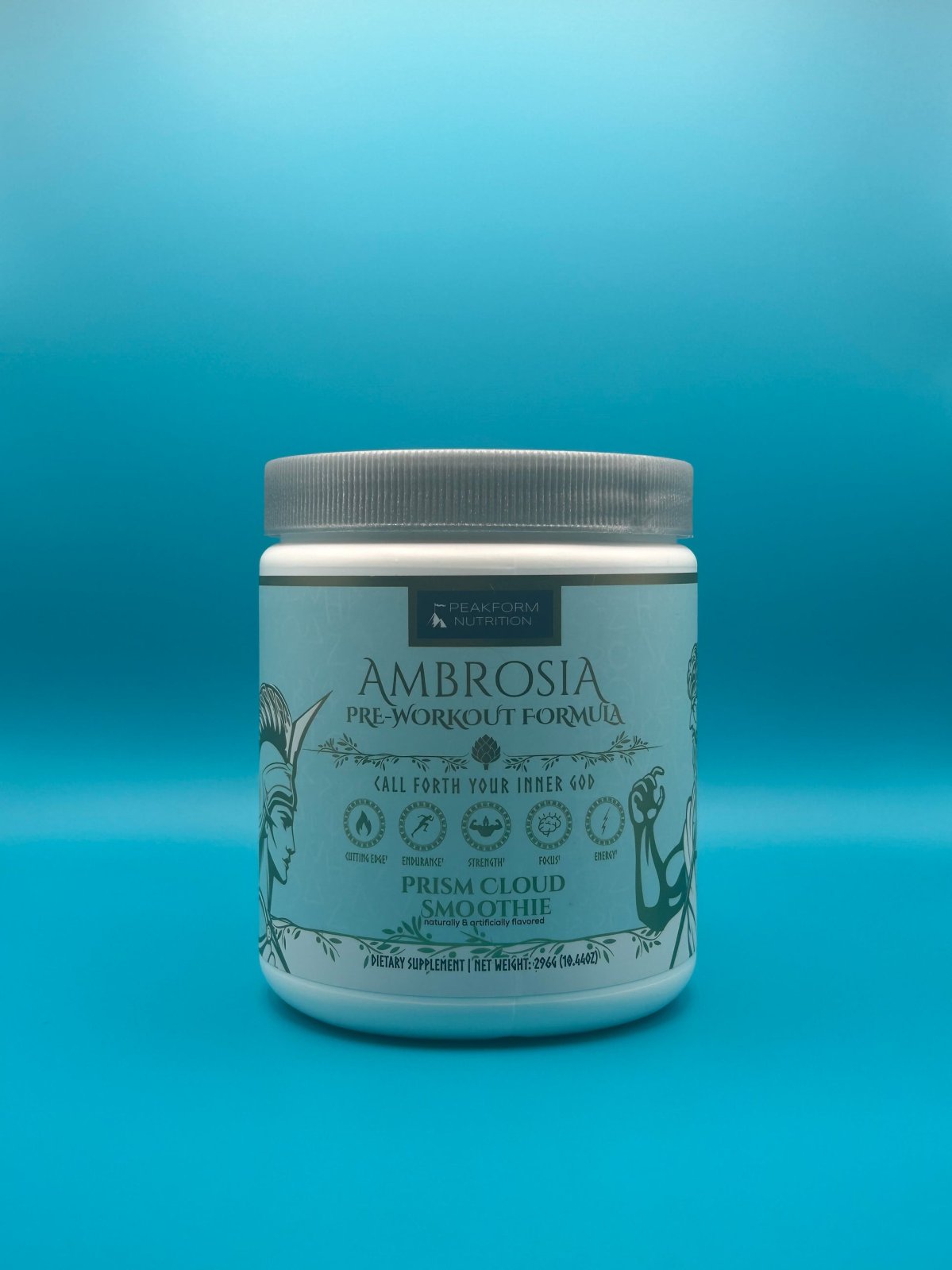
Our own approach at Peakform Nutrition is to list every ingredient and dose on the Supplement Facts panel, with no proprietary blends. For a step-by-step method, see how to choose safe performance supplements. Our Ambrosia Pre-Workout Powder, for example, lists each dose on its label. The Ambrosia Starter Kit pairs that same formula with a shaker bottle if you want to try it.
Whatever brand you choose, do your own check against the list above. Don't rely on our word alone.
Supplement Brand Red Flags That Should Make You Switch
Some warning signs are easy to spot once you know them. If you see several of these, consider switching.
Red Flags vs. Green Flags
| Red Flag | Green Flag |
|---|---|
| Vague "proprietary blend" with no amounts | Every ingredient listed with its dose |
| Claims to cure or treat disease | Careful wording, with a clear note that the product is not meant to diagnose or treat disease |
| No lot numbers on the bottle | Lot number printed on every container |
| No way to contact the manufacturer | Clear manufacturer name and contact details |
| Prices far below the rest of the market with no explanation | Pricing that matches a clearly stated quality process |
| Pressure to buy fast with "limited" offers | Straightforward returns and refund terms |
| No independent testing mentioned | Named third-party lab or certification |
Disease-cure claims deserve special attention. A brand that promises to cure something is not one you should trust with your health.
Watch out: A reputable brand can still have a bad batch. What matters is how the company responds when a problem comes up.
A Repeatable Checklist for Reviewing Your Brand
Run through this list every time you reorder or switch products.
- I can read every ingredient and dose on the label.
- No ingredient is hidden inside a proprietary blend.
- The bottle has a lot number I can note.
- The brand offers batch testing or a certificate of analysis.
- A named third party has tested the product.
- I can reach the manufacturer with a question.
- The label makes no disease-cure claims.
- The product fits my goals, and I've checked with a healthcare professional if I have a medical condition.
- I've tracked how I feel over a fair trial period.
- I know the return policy if it doesn't work for me.
If you can't check off most of these, keep looking.
!A person at a kitchen counter reading the Supplement Facts panel on a supplement tub, with a notepad and pen beside them
Reviewing Your Brand Choice Before Your Next Reorder
Before you hit reorder, take five minutes to run the checklist. Compare what you see on the label with what you expected, and check whether anything about the product has changed since your last bottle.
Put Reassessment on a Schedule
Products and your needs both change. A practical cadence is to review your brand at every reorder and revisit your personal fit whenever your health circumstances, medications, or goals change.
Look Beyond Price per Bottle
Price per bottle hides the real comparison. Work out cost per serving, then cost per verified active ingredient: divide the price by the number of servings, and check whether the label actually discloses each dose. A cheaper tub with a proprietary blend and no COA can cost more per verified milligram than a transparent, tested product. Account for serving size, testing, and formulation transparency before you decide a brand is the better value.
What to Do When a Brand Fails a Check
If your current brand fails one or more items, act in order:
- Stop using the product if you suspect contamination, a mislabel, or an adverse reaction, and talk to a healthcare professional.
- Contact the manufacturer with the lot number and a clear description of the issue, and ask for the COA and a replacement or refund under their stated policy.
- Report a suspected adverse event or quality problem to the relevant regulator, and check recall notices for your lot number.
- Switch brands only after you've identified which criteria the current one failed, so you don't repeat the same mistake.
If your brand passes, keep going. Reassessing isn't about being suspicious of every product. It's about making sure the supplement you take still deserves your trust. Start with the label, check the testing, and trust what you can verify.
Frequently Asked Questions
How do I know if a supplement brand is good?
Start with the label. A trustworthy brand lists every ingredient and its exact amount in the Supplement Facts panel, with no proprietary blends hiding doses. Check whether it names a manufacturer with a real address and phone number, and whether it offers lot numbers or a certificate of analysis on request. Independent third-party testing from a recognized program adds another layer of verification. If a brand is vague about any of these points, treat that as a reason to look elsewhere before you reorder.
What are the red flags for a supplement brand?
The clearest warning signs include claims that a product cures or treats a disease. Other red flags are missing or hard-to-find manufacturer contact details, proprietary blends that hide ingredient amounts, and promises of dramatic results in a short time. Be cautious if the label is missing a lot number or expiration date. Dietary supplements are regulated differently from drugs, so the burden of checking quality falls more heavily on the buyer.
How can I check whether a supplement is third-party tested?
Look for a seal or logo from an independent testing organization on the label or website. Third-party testing can check identity, potency and contaminants. Ask the brand for a certificate of analysis tied to your specific lot number. A brand that supplies this readily is usually more transparent than one that deflects the request.
When should I stop taking a supplement or switch brands?
Stop taking a supplement and talk to a healthcare professional if you notice side effects, an allergic reaction, or any interaction with a medication you take. Consider switching brands if the label no longer matches what you see on the product, if the brand fails to answer basic quality questions, or if a batch shows inconsistent appearance or taste. Before changing anything, track how you feel for a few weeks so you can judge the result fairly.
