

Table of Contents
- Why Natural Muscle Building Alternatives Matter
- High Protein Whole Foods for Muscle Growth
- Progressive Overload Training Principles
- Optimal Sleep for Muscle Growth and Recovery
- Hormonal Optimization Through Lifestyle
- Best Stimulant Free Pre-Workout 2026 Options
- When to Combine Natural Strategies With Supplements
- Conclusion
- Frequently Asked Questions
Last Updated: September 28, 2026
Why Natural Muscle Building Alternatives Matter
Building muscle doesn't require a supplement cabinet. The fitness industry has conditioned us to believe that gains demand powders, pills, and proprietary blends. But the truth is simpler: natural muscle building alternatives to supplements can deliver results that match or exceed what most commercial products promise. At Peakform Nutrition, we understand this tension. We make supplements, yet we also recognize that whole foods, intelligent training, and lifestyle optimization form the foundation that any supplement sits on top of.
The real question isn't whether you need supplements. It's whether you've maximized the free variables first. Many athletes plateau not because they lack products, but because they've overlooked the basics: protein intake, progressive overload, sleep quality, and hormonal health. These factors drive muscle protein synthesis, the actual mechanism of muscle growth, far more reliably than any ingredient list.
This guide covers the natural muscle building alternatives that actually work, when to add supplements to amplify them, and how to avoid the trap of buying your way to results.
High Protein Whole Foods for Muscle Growth
Protein is the building block of muscle tissue. Your body requires sufficient dietary intake to support muscle protein synthesis, the process by which your muscles repair and grow after resistance training. Unlike supplements that isolate and concentrate protein, whole foods deliver amino acids alongside micronutrients that support recovery and metabolic function.
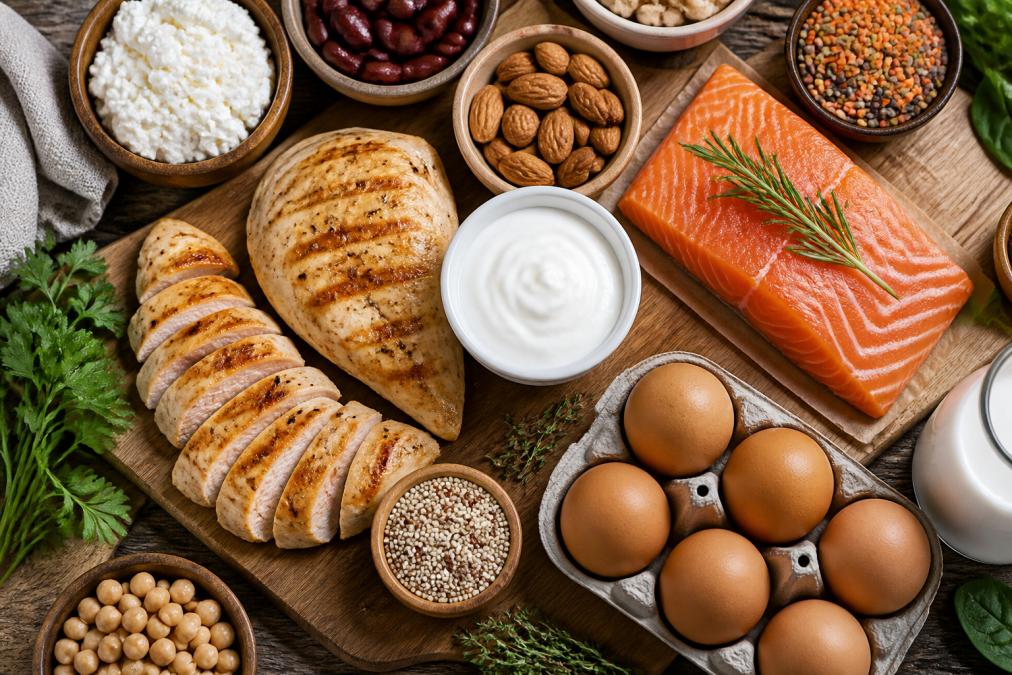
The best sources of protein for muscle building are animal-based and plant-based foods that provide complete amino acid profiles. Chicken breast, lean beef, eggs, and Greek yogurt contain all nine essential amino acids your body cannot produce. These foods also deliver micronutrients like zinc and magnesium, which regulate muscle function and recovery. Plant-based alternatives like lentils, chickpeas, and tofu require combining with grains to achieve a complete amino acid profile, but they're equally effective when structured properly.
A practical approach: aim for 0.7 to 1 gram of protein per pound of body weight daily, distributed across meals. This intake supports optimal muscle protein synthesis without excess. A 180-pound athlete consuming 126-180 grams of protein daily from chicken, fish, eggs, and dairy will support muscle remodeling more effectively than someone relying on protein powder alone. The advantage of whole foods is satiety, you feel fuller longer, which aids weight management while building lean body mass.
If whole foods feel limiting, consider that Peakform Nutrition's Grass-Fed Hydrolyzed Collagen Peptides at $34.99 or Elite Standard Whey Protein at $59.99 bridge the gap. These aren't replacements for whole food protein; they're tools for convenience when meal prep falls short. Collagen specifically supports joint structure and tendon health, making it valuable for athletes under sustained training stress.

Progressive Overload Training Principles
Progressive overload is the engine of muscle growth. Without it, your body adapts to current demands and stops growing. This principle, gradually increasing the demands placed on your muscles, is non-negotiable for hypertrophy, regardless of your supplement stack.
Progressive overload takes several forms. You can increase weight lifted, add more repetitions at the same weight, reduce rest periods between sets, or improve movement quality. The most reliable approach combines weight progression with rep targets: if you complete 8 reps at 185 pounds, your goal becomes 10 reps at that weight. Once achieved, you increase to 190 pounds and drop back to 8 reps. This cycle repeats indefinitely.
Resistance training triggers muscle fiber recruitment and mechanical tension, the primary drivers of muscle protein synthesis. Your nervous system adapts first (strength gains), followed by muscle adaptation (size gains). This process takes 6-12 weeks of consistent overload before visible muscle growth appears. Most people abandon training before this window closes, mistaking slow progress for ineffective methods.
The data is clear: structured resistance training outpaces supplement efficacy. A well-designed program hitting each muscle group twice weekly with progressive overload will produce measurable hypertrophy within 8 weeks. No pre-workout formula, amino acid blend, or ergogenic aid accelerates this timeline meaningfully without the training stimulus underneath.
Common mistakes: training the same weights for months, following random workout routines without progression targets, or switching programs every two weeks before adaptation occurs. Consistency beats optimization. A simple program executed consistently beats an advanced program started and abandoned.
Optimal Sleep for Muscle Growth and Recovery
Sleep is where muscle actually grows. During deep sleep, your body releases growth hormone and testosterone, anabolic hormones that drive muscle protein synthesis. Without sufficient sleep, these hormonal processes falter, and recovery protocols fail regardless of nutrition or training quality.
Most athletes underestimate sleep's impact on muscle growth. Seven to nine hours nightly is the target for active individuals. During sleep, cortisol levels drop, allowing anabolic hormones to dominate. This hormonal window is irreplaceable by any supplement. Creatine monohydrate, amino acids, and protein powders cannot compensate for chronic sleep deprivation.
Grass-Fed Hydrolyzed Collagen Peptides →

The mechanism is straightforward: resistance training creates muscle damage. Growth hormone and testosterone orchestrate repair and adaptation during sleep. Interrupt sleep, and you interrupt the repair process. An athlete sleeping five hours nightly will see slower muscle growth than someone sleeping eight hours, even with identical training and nutrition.
Practical improvements: maintain consistent sleep and wake times, keep your bedroom cool and dark, avoid screens one hour before bed, and limit caffeine after 2 PM. These behavioral changes cost nothing and deliver measurable results. A two-week sleep optimization experiment typically produces better recovery and strength gains than switching supplements.
Hormonal Optimization Through Lifestyle
Testosterone and growth hormone drive muscle growth. While supplements cannot manufacture these hormones, lifestyle factors directly regulate their production and availability. Optimizing these factors creates an anabolic environment that amplifies training and nutrition efforts.
Resistance training itself is a primary stimulus for testosterone release. Heavy compound movements, squats, deadlifts, bench presses, trigger acute testosterone spikes. Consistent training over weeks elevates baseline testosterone levels. This is why progressive overload training matters: the intensity required to stimulate hormonal response requires increasing demands on your muscles.
Stress management directly impacts cortisol levels. High chronic stress elevates cortisol, which suppresses testosterone and growth hormone while promoting muscle breakdown. Reducing stress through meditation, controlled breathing, or leisure activities lowers cortisol and restores hormonal balance.
Best Stimulant Free Pre-Workout 2026 Options
Pre-workout supplements exist on a spectrum from stimulant-heavy to completely clean. For athletes seeking energy and focus without caffeine jitters or cardiovascular stress, stimulant-free options provide real value. But understanding what they actually deliver prevents disappointment.
When to Combine Natural Strategies With Supplements
Supplements amplify a solid foundation; they don't create one. Once you've optimized protein intake, progressive overload, sleep, and hormonal health, supplements can provide marginal gains. Understanding which ones deliver measurable value prevents wasting money on ineffective products.
| Supplement | Purpose | Timing | Evidence Level |
|---|---|---|---|
| Creatine Monohydrate | Strength, endurance | Daily, consistent | Strong |
| Whey Protein | Convenience, recovery | Post-workout or anytime | Moderate |
| L-Glutamine | Recovery, immune | Post-workout or daily | Moderate |
| Collagen Peptides | Joint health | Daily, consistent | Moderate |
| Pre-Workout (Stimulant-Free) | Performance, focus | 30-60 min pre-training | Moderate |
Conclusion
Natural muscle building alternatives to supplements are not inferior, they're foundational. Whole food protein, progressive overload training, quality sleep, and hormonal optimization drive muscle growth consistently and sustainably. Supplements enhance these fundamentals; they don't replace them.
Frequently Asked Questions
Can I build muscle naturally without taking supplements?
Yes. Muscle growth depends primarily on resistance training, adequate protein intake from whole foods, and recovery. Most people can achieve significant muscle hypertrophy through progressive overload training and eating enough protein, roughly 0.7-1 gram per pound of body weight daily from sources like chicken, eggs, fish, dairy, and legumes. Supplements accelerate results but are not required for muscle protein synthesis to occur.
What are the most effective whole-food sources for muscle growth?
Lean meats (chicken, turkey, beef), fatty fish (salmon, mackerel), eggs, Greek yogurt, cottage cheese, legumes (lentils, chickpeas), and whole grains all support muscle remodeling. Eggs contain all nine essential amino acids and choline for muscle function. Salmon provides omega-3 fatty acids that reduce inflammation. Legumes offer plant-based protein plus fiber for gut health. Combining these throughout the day ensures consistent amino acid availability for hypertrophy.
How does sleep quality impact natural muscle protein synthesis?
Sleep is when most muscle repair occurs. During deep sleep, growth hormone peaks, triggering collagen synthesis and muscle fiber recovery. Poor sleep (under 7 hours nightly) reduces anabolic hormones and increases cortisol, which breaks down muscle tissue. Aim for 7-9 hours of consistent sleep in a cool, dark room. Quality sleep directly supports nitrogen balance and recovery protocols, making it as important as training and nutrition for natural muscle building.
What is the role of progressive overload in natural muscle building?
Progressive overload, gradually increasing weight, reps, or volume in your workouts, is the primary driver of muscle fiber recruitment and hypertrophy. Without progressive overload, your muscles adapt and growth plateaus. Add weight weekly, increase reps, reduce rest periods, or improve form to continually challenge muscle fibers. This principle works independently of supplements and is backed by decades of resistance training research.
Are there natural alternatives to creatine for performance?
Whole foods don't replicate creatine's ergogenic effect, but several strategies optimize performance naturally. Adequate carbohydrate intake (3-5 grams per kg of body weight) restores muscle glycogen. Beet juice contains nitrates that improve blood flow and oxygen delivery. Tart cherry juice reduces muscle soreness and inflammation. Electrolyte-rich foods support muscle function and endurance. For a stimulant-free option, Peakform Nutrition's Creatine Monohydrate ($34.99) provides research-backed performance gains without stimulants.
Peakform Nutrition supports your muscle-building journey with clean, evidence-backed supplements designed to enhance your training and recovery. Our Elite Standard Whey Protein, Creatine Monohydrate, and Grass-Fed Collagen Peptides work alongside proper nutrition and training to deliver measurable results. Shop Now and build your foundation with products designed for serious athletes.