

Table of Contents
- What Collagen Is and Why Your Skin Needs It
- How Collagen Powder Works: From Peptides to Skin
- Collagen Powder Benefits for Skin: What Studies Show
- How Long Does Collagen Take to Work for Skin?
- Collagen Powder Side Effects and Safety Concerns
- Collagen vs Retinol for Sagging Skin: Which Works Better?
- Is Collagen Powder Worth the Cost? A Practical Verdict
- Frequently Asked Questions
Last Updated: October 13, 2026
What Collagen Is and Why Your Skin Needs It
Collagen is the most abundant protein in your skin, making up roughly 70% of your dermis (the layer beneath the surface). It provides structure, elasticity, and firmness. Without it, your skin loses its ability to bounce back, wrinkles deepen, and that youthful plumpness fades.
Your body produces collagen naturally, but production declines with age, sun exposure, and poor diet. By your 30s, you're losing about 1% of your collagen annually. That's why so many people turn to collagen powder and oral supplements hoping to reverse the damage.
The question isn't whether collagen matters for skin health, it absolutely does. The real question is whether is collagen powder worth it for skin health when swallowing it can actually restore what you've lost. That's where things get complicated.
How Collagen Powder Works: From Peptides to Skin
Most collagen supplements on the market are hydrolyzed collagen, also called collagen peptides. Hydrolyzed means the collagen has been broken down into smaller amino acid chains so your digestive system can absorb them more easily.
When you consume collagen powder, your stomach breaks it down further into individual amino acids. These amino acids, especially glycine, proline, and hydroxyproline, circulate in your bloodstream. Your body can then use these building blocks to synthesize new collagen in your skin.
The theory is sound. The challenge is bioavailability. Your digestive system doesn't prioritize sending amino acids directly to your skin. Your body decides where those amino acids go based on what it needs most. Some may rebuild collagen in your skin.
This is why timing and dosage matter. Most studies showing skin benefits used daily doses of 2.5 to 10 grams over 8 to 24 weeks. Lower doses or shorter timelines rarely produce visible results.
Collagen Powder Benefits for Skin: What Studies Show
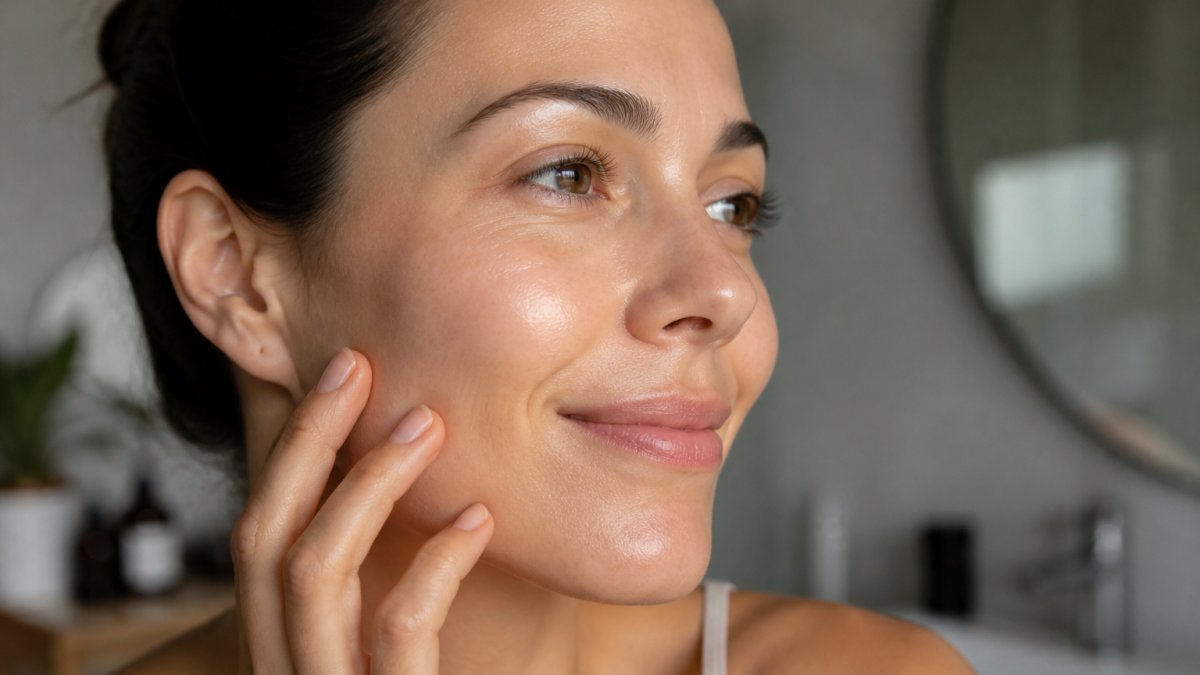
When you read that collagen powder "improves skin," the claim usually traces back to a handful of randomized controlled trials (RCTs), the strongest study design for cause-and-effect. But not all of those trials are equal, and the way they were designed, sized, and funded changes how much weight you should give the results.
Here's how to read the evidence like a skeptic.
Skin hydration and moisture
Hydration is the most consistently reported benefit. In several RCTs, participants taking hydrolyzed collagen daily for 8-12 weeks showed higher skin moisture readings than placebo groups, measured with a device called a corneometer that gauges water content in the outer skin layer.
But the effect sizes are modest. A common pattern is a small-to-moderate improvement in moisture readings, enough to show up on an instrument, not always enough for a person to notice in the mirror. And many of these trials enrolled only 50-100 participants, which limits how confidently the results apply to the general population.
Skin elasticity and firmness
Elasticity trials tend to use cutometer measurements, which test how well skin snaps back after being pulled. Some RCTs reported improved elasticity scores after 8-12 weeks of daily collagen peptides, and a few showed reduced skin roughness.
Here's the catch: several of the most-cited elasticity studies were funded by the companies that make the supplements. Industry funding doesn't automatically invalidate a result, but it does mean independent replication matters more. When independent researchers have run similar trials, the benefits have generally been smaller or less consistent.
Wrinkles and visible aging
Wrinkle improvements are the weakest part of the evidence base. A few trials reported modest reductions in wrinkle depth or eye-area wrinkles, but the effects were small and often measured by subjective grading rather than objective imaging. Nothing in the published literature supports the dramatic before-and-after transformations you see in supplement marketing.
For context, the evidence for topical retinoids and daily sunscreen is far stronger and longer-standing. Collagen powder is not in the same tier.
What the evidence does not show
- No large, long-term, independently funded RCT has demonstrated that collagen powder reverses skin aging.
- No study has shown it replaces sunscreen, retinoids, or in-office procedures.
- Long-term safety data beyond 12-24 weeks is limited.
- Benefits appear to fade when supplementation stops, based on the short follow-up windows that exist.
The honest summary: collagen powder has plausible mechanisms and modest, mostly industry-funded trial support for hydration and elasticity. That's a real but limited evidence base, not the transformative anti-aging intervention marketing implies.
NIH Office of Dietary Supplements, dietary supplement fact sheets
How Long Does Collagen Take to Work for Skin?
Most people ask this question because they want a timeline. The honest answer is: it depends on your baseline skin condition and expectations.
Studies showing skin benefits typically ran for 8 to 24 weeks. Most visible improvements appeared around week 8 to 12. Before that, you're unlikely to notice anything. If you're looking for results in 2-4 weeks, collagen powder isn't your tool.
Realistic expectations matter here. If your skin is dehydrated, you might notice a difference in how it feels (smoother, less tight) within 6-8 weeks.
One more consideration: what happens after you stop? The studies don't address this well. When people discontinue collagen supplementation, their skin likely reverts to its previous state within weeks. Collagen powder isn't a one-time fix, it's something you'd need to continue using to maintain any benefits.
Collagen Powder Side Effects and Safety Concerns
Collagen powder is generally safe for most people. Serious side effects are rare. The most common complaints are mild: digestive bloating, constipation, or a chalky aftertaste.
Some people report joint pain or muscle aches after starting collagen, though this is uncommon and usually temporary. Allergic reactions are possible if you're sensitive to the source (bovine, marine, or plant-based collagen).
One legitimate concern: quality and sourcing. Not all collagen powder is created equal. Some products contain heavy metals, fillers, or ingredients not listed on the label. This is where brand reputation and third-party testing matter.
Aphrodite’s Blessing - Perfect Hydration Moisturizer →
At Peakform Nutrition, our approach to supplementation focuses on products you can trust, which is especially important when you're consuming something daily for skin health.
If you have existing health conditions, take medications, or are pregnant, check with your doctor before starting any supplement regimen.
Collagen vs Retinol for Sagging Skin: Which Works Better?
This is the comparison that matters most for anti-aging. Retinol is a topical vitamin A derivative that increases cell turnover, boosts collagen synthesis, and reduces wrinkles.
Collagen powder is an oral supplement that provides amino acids your body may use to build new collagen. The evidence is moderate and indirect.
For sagging skin specifically, retinol has a clearer track record. It works on the skin surface and penetrates the dermis where collagen lives.
That said, retinol isn't for everyone. It causes irritation, redness, and peeling in many users. It increases sun sensitivity. It's not suitable during pregnancy.
Collagen powder has fewer side effects and is easier to use consistently. You take it once daily with water.
The practical answer: if you're serious about addressing sagging skin, retinol is the stronger tool.
Our Aphrodite's Blessing Perfect Hydration Moisturizer combines Retinol with peptides to support skin renewal and maintain optimal hydration, addressing multiple pathways to skin renewal in a single product.

Is Collagen Powder Worth the Cost? A Practical Verdict
Most articles tell you collagen powder "costs $20-$60 a month" and leave it there. That number is useless without context. What matters is what a realistic trial actually costs you, and how that compares to the alternatives you could spend the same money on.
The real cost of a fair trial
Studies showing skin benefits typically used 2.5-10 grams of hydrolyzed collagen daily for 8-24 weeks. To give collagen a fair shot, you need to commit to at least 12 weeks at a studied dose.
Here's the math for a typical product:
- A 20-ounce tub of unflavored collagen peptides usually contains about 40-50 servings at 10-20 grams each.
- At a 10-gram daily dose, that tub lasts roughly 20-25 days.
- At $30-$45 per tub, a 12-week trial runs about $150-$270.
- A 24-week trial runs about $300-$540.
If you buy single-serve packets or flavored blends, expect to pay 20-50% more per gram of collagen. Collagen capsules are usually the most expensive per gram because you're paying for the capsule and the convenience.
How that compares to alternatives
For the same $150-$270 you'd spend on a 12-week collagen trial, you could instead buy:
- A year's supply of a well-formulated broad-spectrum sunscreen (the single most evidence-backed anti-aging product).
- A 3-6 month supply of a prescription-strength retinoid, often under $50 with insurance or a discount card.
- A vitamin C serum plus a basic moisturizer.
All three have stronger evidence for visible skin improvement than oral collagen. That doesn't mean collagen is worthless, it means the opportunity cost is real, and collagen should come after the basics, not instead of them.
When the cost is justified
Collagen powder makes the most sense when:
- You're already using sunscreen and a retinoid, and you want to add a low-risk complementary option.
- You have joint concerns too, some of the same trials that measured skin also measured joint comfort, so you're potentially getting two benefits from one purchase.
- You tolerate it well and notice a difference in skin feel within 8-12 weeks.
It makes the least sense when:
- You're using it as a substitute for sun protection or proven topicals.
- You're buying it before fixing basics like sleep, hydration, and sun exposure.
- You expect visible wrinkle reduction, the evidence doesn't support that at any price.
A practical decision rule
Set a 12-week trial budget of $150-$270 to determine whether is collagen powder worth it for skin health. Buy a plain, third-party-tested hydrolyzed collagen at a studied dose. Take it daily. At week 12, ask yourself one question: has my skin's hydration or texture measurably changed?
If yes, continue, the cost is buying you something you value. If no, stop. You've spent a defined amount to answer the question for yourself, and you can redirect that money to interventions with stronger evidence.
FDA, dietary supplements consumer information
Frequently Asked Questions
Is there a downside to collagen powder?
Most people tolerate collagen powder well, but potential side effects include mild digestive discomfort, bloating, or allergic reactions in those sensitive to the source (marine or bovine). Quality matters: lower-grade supplements may contain heavy metals or contaminants. Collagen powder is not a replacement for sun protection or retinol-based treatments, so relying solely on it for skin aging may disappoint. Always verify third-party testing on the label.
How long does collagen powder take to work for skin?
Clinical studies show visible improvements in skin hydration and elasticity typically appear between 8 to 12 weeks of daily supplementation. Some users report subtle changes in skin firmness within 4 to 6 weeks, though results vary by individual, dose, and baseline skin condition. Consistency matters: stopping supplementation reverses benefits over time. Most trials lasted 8 to 24 weeks to measure meaningful changes.
Which is better for sagging skin, retinol or collagen?
Retinol works faster and more visibly for sagging skin because it stimulates collagen production directly and increases cell turnover. Collagen powder supplements the building blocks your skin needs but works passively. For maximum results, combining both approaches, topical retinol for immediate stimulus and oral collagen for systemic support, often outperforms either alone. Retinol requires consistent use and sun protection; collagen is gentler but slower.
Does collagen powder actually help with wrinkles and skin elasticity?
Clinical evidence supports modest improvements in skin elasticity and fine lines. Randomized controlled trials show collagen peptides improve skin hydration and reduce visible wrinkles when taken daily for 8 to 24 weeks. Results are most noticeable in fine lines and skin suppleness rather than deep wrinkles. Sun exposure, diet, sleep, and topical skincare remain equally important; collagen powder alone cannot reverse significant sun damage or aging.