

Table of Contents
- Is Collagen Supplementation Worth It for Seniors? The Honest Answer
- What Collagen Does in the Body After 65
- The Evidence: What Clinical Trials Actually Show
- How Long to Take Collagen for Results
- Collagen Side Effects for Older Adults
- Best Collagen for Senior Women: What to Look For
- Lifestyle Factors That Preserve Existing Collagen
- Conclusion: Making the Call on Collagen
- Frequently Asked Questions
Last Updated: October 3, 2026
Is Collagen Supplementation Worth It for Seniors? The Honest Answer
Whether is collagen supplementation worth it for seniors depends on what you expect.
Collagen is the body's most abundant protein, forming the scaffolding of skin, tendons, cartilage, and bone.
Here is the honest version: collagen supplementation can be worth it for seniors who treat it as one small piece of a broader plan, not a stand-alone fix.
Below: what collagen does after 65, what the trials show, how long results take, and the safety questions that matter most.
What Collagen Does in the Body After 65
Collagen gives connective tissue its strength and stretch. After 65, the body produces less and breaks down what remains faster, showing up as thinner skin, stiffer tendons, and creakier joints.
Think of collagen as the rebar inside concrete: the protein framework that keeps your mineral matrix from cracking under load. In skin, that framework lives in the dermis, the middle layer that holds moisture and gives the surface its bounce.
Types of Collagen and What Each One Targets
Type I is the workhorse, making up the bulk of skin, bone, tendons, and ligaments; most peptides are Type I or a Type I and III blend. Type II is the cartilage specialist, usually sold as undenatured collagen or a joint formula.
For skin hydration and elasticity, look for hydrolyzed Type I. For joint mobility, Type II is the better match.
How Aging Changes Collagen Production
Two things happen at once: fibroblasts, the cells that build collagen, become less active, and existing fibers stiffen and fragment. The result is a dermis that holds less water and a matrix that tolerates less load.
The Evidence: What Clinical Trials Actually Show
The honest summary: collagen peptides show modest, measurable benefits for skin hydration and joint comfort, and much weaker evidence for bone density and serious joint disease. Most trials are small, short, and often supplement-funded, so the placebo effect deserves a mention.
Where the research lands:
- Skin: Several small trials report improved hydration and elasticity after 8 to 12 weeks of daily hydrolyzed collagen.
- Joints: Some studies show reduced joint pain scores in active adults, though results vary widely between products and doses.
- Bone: Evidence is early. Collagen is not a substitute for calcium, vitamin D, or prescribed osteoporosis treatment.
For a broader look at how supplements are evaluated, the NIH Office of Dietary Supplements maintains fact sheets on individual nutrients and their evidence base.
How Long to Take Collagen for Results
Most people who notice anything notice it between 8 and 12 weeks of consistent daily use, skin changes first and joint comfort second. If you have taken it daily for three months with no difference, stop and put that money elsewhere.
That timeline is the same at 40 and 70, but the dose may not be. Research doses were established in younger, healthier populations, and seniors face a steeper baseline of collagen loss.
Why dosage guidance for the 65+ group is different
Collagen production drops measurably with age and accelerates after menopause, so a senior is not topping up a normal level but offsetting a faster decline.
The practical implication: the low end of the general dose range is more likely wasted on a senior, and collagen should count toward your daily protein total, not as a separate category.
A reasonable dosing framework for older adults
There is no government-set dose or official Recommended Dietary Allowance for collagen. What follows is a framework based on how it is typically studied in older adults. It is not a prescription.
- Starting dose. 5 grams per day of hydrolyzed collagen peptides is a reasonable starting point. It is low enough to test tolerance and high enough to matter.
- Typical working dose. 10 grams per day is the most common target for skin and joint goals in older adults. Many people stay here indefinitely.
- Upper practical range. 15 grams per day is the top of the range most commonly studied. Going higher is not dangerous for most people, but there is little evidence it does more.
What to pair it with, and why
Collagen synthesis requires vitamin C as a cofactor, so taking collagen with orange juice, strawberries, or a vitamin C supplement has a real biochemical rationale. Some early research also suggests collagen taken shortly before resistance training may be more effective for connective tissue than collagen taken at random.
How to run a fair 12-week trial
A trial only tells you something if you run it consistently. A few rules make the result meaningful:
- Take the same dose every day, not sporadically. Skipped days are the most common reason people conclude collagen "doesn't work."
- Pair it with vitamin C at the same time.
- Keep a simple log of skin and joint symptoms, a one-line note per week is enough, so you are not relying on memory.
Reading the label so you actually get the dose you think you are getting
Dosage is where most people go wrong, and the label is where the problem starts. Research doses sit in the 2.5 to 15 gram range per day, and many people take far less than intended because they use one scoop of a low-dose powder.
- Check grams per serving, not scoops. A scoop is a volume measure, not a dose. Two products with identical scoops can differ by 5 grams.
- Check servings per container. If the tub says 30 servings and you take two scoops a day, it lasts 15 days, not 30.
- Check for "hydrolyzed" or "peptides." Non-hydrolyzed collagen is less bioavailable and does not dissolve well in cold liquid.
Collagen Side Effects for Older Adults
Collagen peptides are generally well tolerated. The most common complaints are mild and digestive, bloating, fullness, or loose stools when starting a high dose, and usually settle within a week or two.
The bigger issues for older adults are not the collagen itself but what travels with it: blended ingredients, timing against prescriptions, and organ systems already working harder after 65.
Why seniors face a different risk profile
Two things change with age. Kidney function declines gradually, so the body clears excess protein breakdown products more slowly. And the average older adult takes several prescriptions, so the more medications in the mix, the higher the chance of an interaction.
Collagen on its own has no well-documented interactions with common prescriptions. The risk lives in the add-ins.
Ingredients to screen for if you take prescriptions
Read the full supplement facts panel, not just the front of the tub. These add-ins are most likely to matter:
- Vitamin K (especially K2 as MK-7). Vitamin K interferes with warfarin and similar blood thinners by reversing their effect. A collagen powder with a high-dose K2 blend can quietly reduce your INR control. If you take warfarin, choose a plain collagen with no added K.
- Herbal extracts. Many collagen blends include ashwagandha, turmeric, or green tea extract. Some of these affect blood pressure medication, blood sugar medication, or thyroid medication. If the label lists an herb you do not recognize, look it up before you buy.
- High-dose biotin. Biotin is common in collagen and hair-skin-nail formulas. Large doses can interfere with certain lab tests, including thyroid and cardiac troponin assays, producing falsely abnormal results. Tell your physician you take biotin before any blood work.
Organ conditions that change the calculus
- Chronic kidney disease. Anyone with reduced kidney function should talk to their nephrologist before adding any protein supplement, collagen included. The concern is total protein load, not collagen specifically.
- Liver conditions. Collagen is metabolized like other proteins. Significant liver disease warrants a conversation with your physician first.
- Gout or elevated uric acid. Collagen is rich in glycine and proline, not purines, so it is generally not a gout trigger, but check with your physician if you have had flares.
Allergens and sourcing
Marine collagen is fish-derived, so a fish allergy means choosing bovine or eggshell membrane instead. Eggshell membrane is a problem for egg allergies. Bovine is generally the safest default, though anyone with a history of reactions should confirm the source on the label.
The single habit that prevents most problems
Bring your full supplement list, every powder, capsule, gummy, and tea, to every medical appointment, and update it when you add something new. That one habit catches nearly every interaction before it becomes a problem. Pharmacists are also underused here; most will review a supplement list against your prescriptions at no cost.
Best Collagen for Senior Women: What to Look For
The best collagen for senior women is a hydrolyzed peptide powder with a clear gram-per-serving number, third-party testing, and no unnecessary additives. Everything else is marketing.
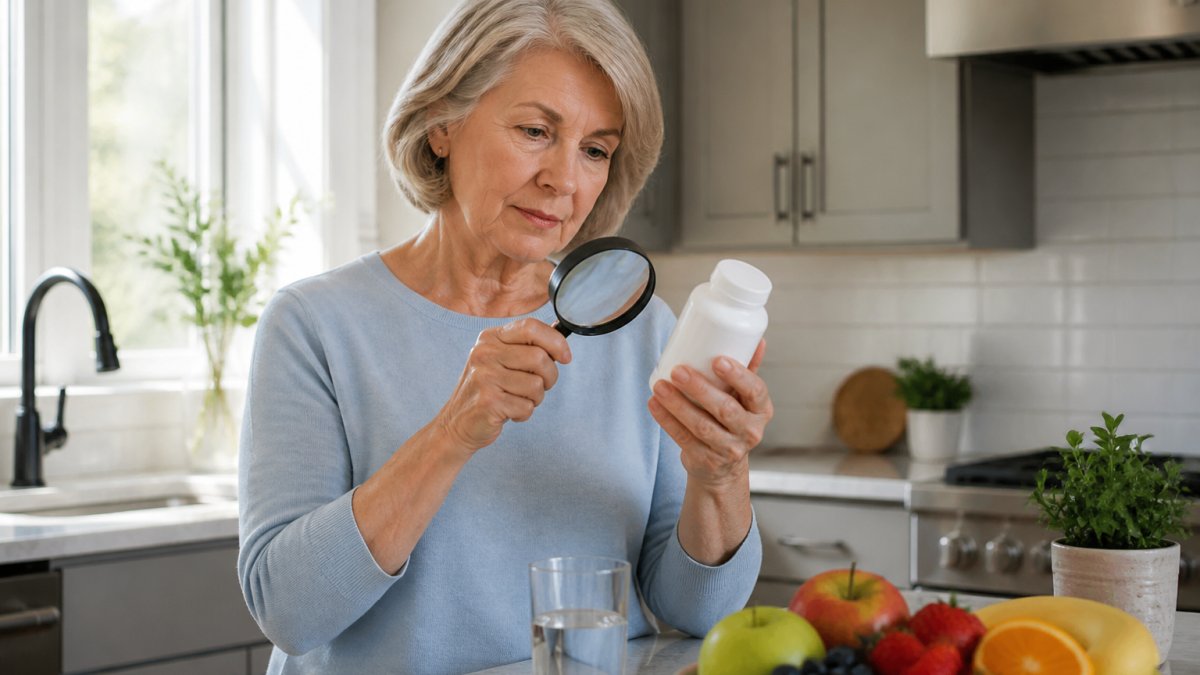
Use this checklist before you buy:
- Hydrolyzed peptides. Hydrolysis breaks collagen into smaller peptides, which improves bioavailability and makes it dissolve in liquid.
- Grams per serving stated plainly. Look for at least 5 grams per scoop.
- Third-party testing. A certificate of analysis or a visible testing seal tells you the label matches the contents.
Where collagen fits into a wider routine matters too. If your goal is healthy aging rather than skin alone, our NMN capsules support cellular energy production at 500 mg per serving and pair sensibly with a collagen and protein plan. For skin hydration from the outside, our Aphrodite's Blessing Perfect Hydration Moisturizer uses retinol and peptides to support collagen production and skin renewal. And a daily multivitamin gummy covers the vitamin C and biotin that collagen synthesis depends on.


| Product | Format | Key Ingredients | Best For |
|---|---|---|---|
| NMN | Capsule, 500 mg | ß-Nicotinamide Mononucleotide | Cellular energy and healthy aging |
| Multivitamin Gummies | Gummy, 2 per day | Vitamin C, biotin, zinc, B vitamins | Daily nutrient baseline |
| Perfect Hydration Moisturizer | Topical cream | Retinol, peptides, ceramides | Skin hydration and elasticity |
Lifestyle Factors That Preserve Existing Collagen
Protecting the collagen you already have is cheaper and more effective than replacing it.
- Daily sunscreen. Ultraviolet light degrades collagen in the dermis directly. Broad-spectrum SPF 30 on exposed skin is the single highest-return habit.
- Resistance training. Loading a tendon or bone signals the body to maintain its connective tissue. Two sessions a week is enough to matter.
- Protein at every meal. Collagen synthesis needs amino acids, particularly glycine and proline. Most older adults eat too little protein overall.
Dietary sources still count. The USDA FoodData Central database lists protein and amino acid content for common foods if you want to compare sources.
For general guidance on dietary protein needs as you age, the Dietary Guidelines for Americans is the reference document worth bookmarking.
Conclusion: Making the Call on Collagen
If your goal is modest skin improvement and a bit more joint comfort, collagen supplementation is worth trying for 12 weeks, and worth stopping if nothing changes.
The seniors who get the most from collagen treat it as one habit among several: protein at meals, resistance training twice a week, sunscreen daily, and a supplement routine built around what is actually missing from their diet.
Frequently Asked Questions
Do 70-year-olds need collagen supplements?
No one needs collagen supplements to survive, but adults over 70 may benefit from them more than younger people. Collagen production drops roughly 1% per year after age 20, and the decline accelerates after menopause. By 70, the body's natural collagen stores are significantly depleted, which affects skin elasticity, joint comfort, and bone mineral density. A supplement can help fill that gap, but it works best alongside a protein-rich diet and regular movement.
What is the downside of taking collagen?
The most common downsides are mild digestive upset, bloating, and an aftertaste from certain collagen peptides. Some people report headaches or skin breakouts, though these are rare. A bigger concern for older adults is drug interactions. Anyone taking blood thinners, thyroid medication, or diabetes drugs should talk to their doctor first.
How long does it take for collagen supplements to work?
Most clinical trials measure results at 8 to 12 weeks. Skin hydration and elasticity changes often show up first, usually around the 4 to 8 week mark. Joint comfort and mobility improvements tend to take longer, often 3 to 6 months of consistent daily use. If you have not noticed any change after 12 weeks of daily use at a proper dose, the supplement is probably not doing much for you.
What is the best type of collagen for a 70-year-old woman?
Type I and Type III collagen are the most studied for skin elasticity, hydration, and bone health, which are common concerns for women over 70. Type II collagen is better suited for joint cartilage support. Hydrolyzed collagen peptides are the most bioavailable form because they are broken into smaller amino acid chains that absorb more easily. Look for third-party testing.
Can collagen supplements help with joint pain in seniors?
Some clinical trials show modest improvements in joint mobility and discomfort with daily collagen peptide supplementation, particularly Type II collagen. The effect is not as strong as prescription anti-inflammatories, but collagen has fewer side effects for long-term use. Results typically appear after 3 to 6 months. Collagen works best as part of a broader joint health plan that includes strength training, maintaining a healthy weight, and adequate vitamin C intake.
Building a routine that actually fits your body takes more than one product. Peakform Nutrition approaches it as a personalized program, from our 500 mg NMN capsules for cellular energy to our Aphrodite's Blessing moisturizer for skin hydration and our daily multivitamin gummies for the nutrient baseline. Get started with Peakform Nutrition and build a healthy-aging plan around your goals, not a generic label.