

Table of Contents
- Why Supplement Quality Verification Matters
- How to Read Supplement Labels for Quality Indicators
- Third-Party Supplement Testing: What It Means
- How to Choose Clean Protein Powder
- Evaluating Manufacturing Standards and Good Manufacturing Practices
- Digital Tools and Direct Verification Methods
- Retailer Vetting and Supply Chain Transparency
- Common Label Claims vs. Verified Quality
Last Updated: August 17, 2026
Why Supplement Quality Verification Matters
The supplement industry generates billions in annual sales, yet quality varies dramatically between brands. Some products contain exactly what the label claims; others fall short on potency, contain undisclosed ingredients, or harbor contaminants that pose real health risks. For athletes, health-conscious consumers, and anyone taking supplements regularly, knowing how to verify supplement quality is essential.
The challenge is that supplement regulation differs fundamentally from pharmaceutical oversight. The FDA doesn't pre-approve supplements before they hit shelves the way it does with prescription drugs, meaning the burden of quality verification falls largely on consumers and retailers. Understanding what separates a trustworthy product from a questionable one requires knowing where to look and what red flags to recognize.
At Peakform Nutrition, we've built our reputation on transparency and quality assurance. We understand that athletes and health-conscious adults need supplements they can trust completely. This guide walks you through the practical steps to verify supplement quality, from reading labels to understanding third-party testing, so you can make informed decisions about what goes into your body.
How to Read Supplement Labels for Quality Indicators
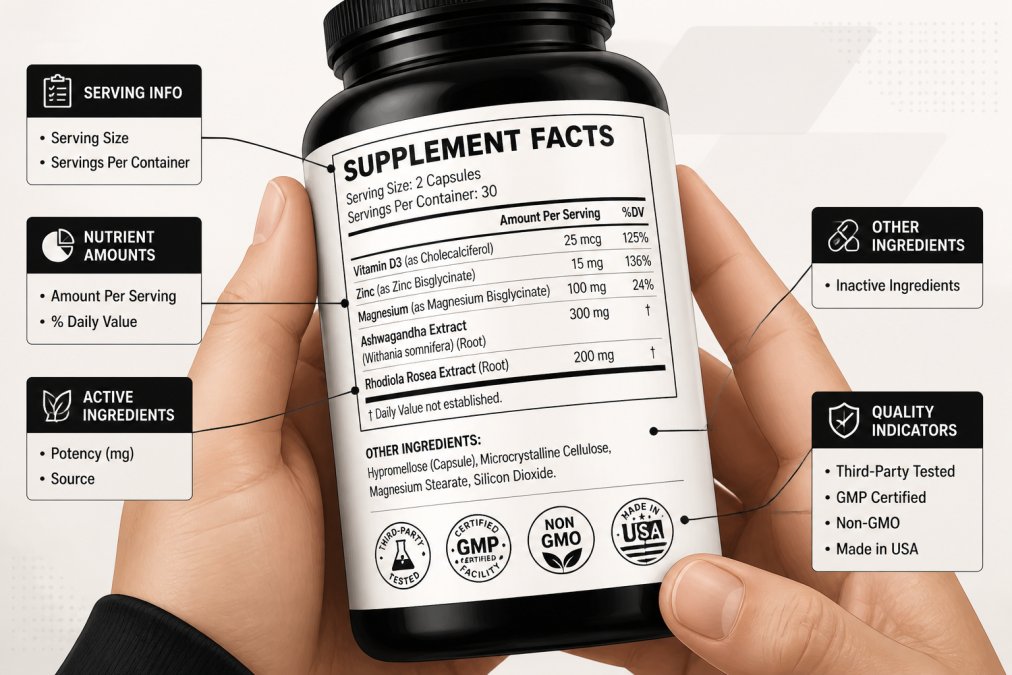
A supplement label tells you far more than most people realize. The Supplement Facts panel, ingredient list, and supporting claims each reveal important information about product quality and transparency.
Decoding the Supplement Facts Panel
The Supplement Facts panel lists each ingredient, its amount per serving, and the serving size. Start by checking the serving size, some products use deceptively small servings to make dosages appear higher than they actually are. A pre-workout powder listing a serving size of half a scoop instead of a full scoop is using this tactic.
Next, examine the quantities listed for active ingredients and compare them against published research on effective dosages. For example, research supports 3-5 grams daily of creatine monohydrate; if a product lists 1 gram per serving, it won't deliver the benefits you're seeking. Standardized extracts should list their concentration percentage, a tribulus terrestris extract standardized to 40% saponins is more potent and reliable than one with no standardization listed.
Pay attention to the "Other Ingredients" section, where fillers, binders, and additives appear. A long list of unfamiliar chemical names might indicate unnecessary additives. While some additives serve legitimate purposes like magnesium stearate for tablet binding, excessive filler reduces the actual active ingredient content you're paying for.
Spotting Red Flags in Ingredient Lists
Proprietary blends, where multiple ingredients are grouped under a single dosage without individual amounts listed, hide the true concentration of each component. You can't verify whether you're getting an effective dose of key ingredients. This practice is common in lower-quality supplements and should raise immediate concerns.
Watch for vague terms like "natural flavors" or "natural colors" without further specification. Check for ingredient sourcing claims, products that specify "pharmaceutical-grade" or "USP-verified" ingredients demonstrate a commitment to purity standards. If a label makes exaggerated health claims like "increases muscle by 30%" or "burns fat while you sleep," the manufacturer may be prioritizing marketing over accuracy.
Third-Party Supplement Testing: What It Means
Third-party testing is one of the most reliable indicators of supplement quality. When an independent laboratory tests a product, they verify that label claims are accurate and that the product is free from harmful contaminants. Third-party testing typically covers potency verification, microbial contamination screening, heavy metal testing, and for athletes, banned substance screening.
Major Certification Seals and What They Verify
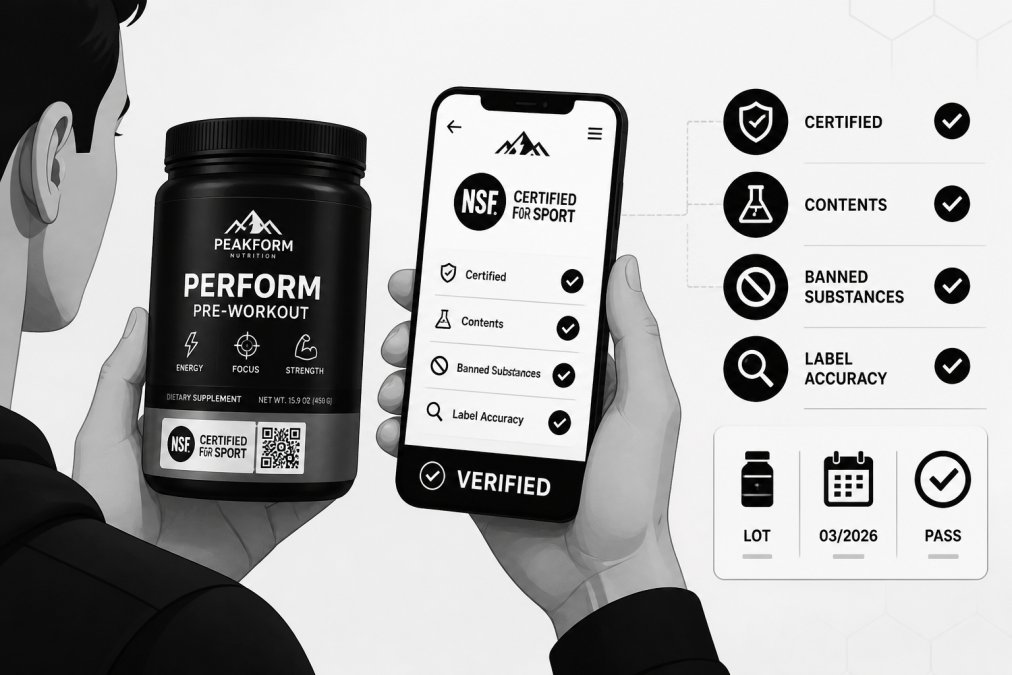
NSF Certified for Sport is one of the most rigorous certifications available. NSF tests for banned substances, banned methods, and contaminants, verifying label accuracy and manufacturing practices. This certification is particularly valuable for competitive athletes.
USP (United States Pharmacopeia) Verified indicates that a product meets USP standards for strength, purity, and manufacturing quality, including potency verification, contamination screening, and consistency checks across batches.
ConsumerLab.com conducts independent testing and publishes detailed results online, covering ingredient accuracy, contamination, and consistency. Their transparency in publishing both passing and failing results makes their certification particularly credible.
Informed Choice focuses on banned substance testing, making it especially relevant for athletes. Their certification confirms that a product has been tested for banned substances and that manufacturing controls prevent accidental contamination with prohibited ingredients.
How to Verify a Certification Is Legitimate
Verify legitimate certifications by visiting the certifying organization's website directly and searching their database for the specific product. For NSF Certified for Sport, go to nsfsport.com; for USP Verified, visit usp.org; for ConsumerLab, visit consumerlab.com. Be cautious of seals that lack an associated website or database, if you can't independently verify a certification, treat it as unverified marketing language.
How to Choose Clean Protein Powder
Protein powder is one of the most popular supplements, with quality varying widely. Focus on ingredient transparency, manufacturing standards, and third-party testing.
Ingredient Quality and Bioavailability
The protein source matters significantly. Whey protein isolate is more processed than concentrate but contains less lactose and fewer carbohydrates. Plant-based proteins like pea, rice, or hemp offer alternatives for those avoiding dairy, though they typically have lower bioavailability than whey.
Whey protein has a high biological value (around 104 on the PDCAAS scale), meaning your body absorbs and uses most of the protein you consume. Check the amino acid profile listed on the label, complete proteins contain all nine essential amino acids. Leucine content matters particularly for muscle protein synthesis; whey typically contains 10-12% leucine, which supports muscle growth.
Testing for Contaminants and Heavy Metals
Heavy metal contamination in protein powders is a documented concern. Lead, cadmium, and arsenic can accumulate in certain plant sources, particularly rice protein. Third-party testing for heavy metals is essential, especially for plant-based protein powders.
Request test results directly from the manufacturer if they're not publicly available. Reputable brands publish heavy metal testing results or can provide them upon request. Look specifically for testing that measures lead, cadmium, arsenic, and mercury at parts per billion (ppb) levels. Products with NSF Certified for Sport or USP Verified seals have undergone this testing.
Evaluating Manufacturing Standards and Good Manufacturing Practices
Good Manufacturing Practices (GMP) is a regulatory standard that ensures supplements are produced consistently and safely. However, "GMP compliance" varies in rigor depending on who's enforcing it. Third-party GMP certifications from organizations like NSF or ConsumerLab are more rigorous than basic FDA compliance.
Ask about batch testing procedures. Quality manufacturers test each batch for potency and contamination before release. Batch-by-batch testing demonstrates a serious commitment to consistency and safety. Facility location matters as well, supplements manufactured in countries with strong regulatory oversight (like the United States, Canada, or European Union countries) generally undergo more scrutiny than those from countries with lax standards.
Digital Tools and Direct Verification Methods
Modern verification allows consumers to verify supplement quality directly. ConsumerLab.com publishes detailed test results for thousands of supplements, searchable by product name, ingredient, or brand. NSF Certified for Sport maintains a searchable database at nsfsport.com.
Manufacturer websites increasingly provide Certificates of Analysis (CoA) for their products, detailed reports from third-party laboratories showing potency and contamination test results for a specific batch. Request these directly from customer service if they're not posted online. Some manufacturers now use QR codes on labels linking directly to batch-specific test results.
Contact manufacturers directly with questions about sourcing, testing, and manufacturing. Companies committed to quality respond promptly with detailed information. If a manufacturer is evasive or provides vague answers, that's a red flag about their actual quality standards.
Retailer Vetting and Supply Chain Transparency
Where you buy supplements affects quality assurance. Major pharmacy chains and supplement retailers typically vet their suppliers and require documentation of testing and compliance. Online marketplaces with minimal vetting carry higher risk of counterfeit or substandard products.
Ask retailers about their supplier vetting process. Reputable retailers require suppliers to provide proof of GMP compliance, third-party testing, and regulatory compliance. Check retailer return policies, if a product doesn't deliver results or causes adverse effects, you should be able to return it.
For online purchases, verify the seller's credentials. Authorized distributors for major brands are listed on manufacturer websites. Buying directly from the brand's website or authorized distributors reduces the risk of counterfeit products.
Common Label Claims vs. Verified Quality
"Natural" is a marketing term with no regulatory definition. Look instead for specific certifications like "USDA Organic" or third-party testing seals. "Clinically proven" or "research-backed" are often vague, reputable manufacturers cite specific studies with publication details rather than making broad claims.
"Pharmaceutical grade" and "medical grade" are unregulated terms. "Made in the USA" appeals to consumers but doesn't guarantee quality. What matters is third-party testing and GMP certification, not manufacturing location alone. "Non-GMO" and "gluten-free" are meaningful for people with specific dietary needs but don't indicate overall quality.
Choosing supplements you can trust requires moving beyond marketing claims to actual verification. Reading labels carefully, understanding third-party testing, and checking manufacturer transparency are foundational steps. Peakform Nutrition's approach to supplement quality reflects this commitment, we prioritize third-party testing, transparent ingredient sourcing, and manufacturing standards that exceed basic regulatory requirements. When you're investing in your health and performance, these details matter. Start verifying supplement quality today by checking for third-party certifications, requesting Certificates of Analysis, and asking manufacturers directly about their testing and sourcing practices. Your body deserves that level of certainty.
Frequently Asked Questions
How do I tell if my supplements are fake?
Check the supplement label for spelling errors, blurry printing, or misaligned text. Verify third-party certification seals by visiting the certifying organization's website directly. Purchase only from authorized retailers listed on the manufacturer's site. Counterfeit supplements often have inconsistent packaging, missing batch numbers, or suspiciously low prices. If a deal seems too good to be true, it likely is. Request the Certificate of Analysis from the retailer if available.
What third-party certifications should I look for on supplement labels?
Look for NSF Certified for Sport, USP Verified, ConsumerLab, or Informed Choice seals. These certifications verify label accuracy, screen for banned substances, and confirm manufacturing standards. NSF is particularly valuable for athletes due to its banned-substance testing. USP Verified confirms that the product contains the ingredients listed in the amounts claimed. Each seal represents independent testing and batch verification, providing assurance beyond manufacturer claims.
How do I know if a supplement has been tested for contaminants and heavy metals?
Request the Certificate of Analysis (CoA) from the manufacturer or retailer, which documents heavy metal testing, microbial contamination screening, and potency verification. Third-party certified products undergo contaminant screening as part of their certification process. Check the manufacturer's website for transparency reports or batch-specific testing results. Reputable brands publish this data openly. If a company refuses to provide testing documentation, that's a significant red flag about product integrity and quality assurance practices.
How can I verify that a supplement's label claims are actually true?
Compare the Supplement Facts panel against independent test results and third-party certifications. Look for standardized extracts with specified potency percentages rather than vague ingredient amounts. Check if the manufacturer cites published research supporting their claims. The FDA does not pre-approve supplement claims, so verification relies on third-party testing and manufacturer transparency. Brands with good manufacturing practices documentation and batch testing reports demonstrate commitment to label accuracy and product integrity.
What role does the FDA play in supplement regulation and quality?
The FDA oversees dietary supplements under the Dietary Supplement Health and Education Act (DSHEA) but does not pre-approve supplements before sale like it does for drugs. Manufacturers are responsible for ensuring safety and label accuracy. The FDA can take action against contaminated or mislabeled products after they reach the market. This regulatory gap makes third-party testing and independent certification essential for consumer protection. Good manufacturing practices (GMP) compliance is required by law, but third-party verification provides additional assurance.
How do I assess bioavailability when choosing a supplement?
Bioavailability refers to how well your body absorbs and uses an ingredient. Look for chelated minerals, which are bound to amino acids for better absorption. Standardized extracts indicate consistent potency and often higher bioavailability than raw plant materials. Check if the supplement includes absorption enhancers like black pepper extract (piperine). Third-party testing sometimes includes bioavailability data. Brands that disclose ingredient forms and sourcing demonstrate attention to quality. Ask the manufacturer for research supporting their ingredient choices.
Should I check where a supplement is manufactured?
Yes. Verify that the manufacturer operates under FDA-registered facilities and follows good manufacturing practices. Check if the product is manufactured in the United States or another country with strict regulatory oversight. Look for GMP certification from third parties like NSF or USP. The manufacturing location and facility standards directly impact product purity, potency, and contamination risk. Transparency about manufacturing location and facility compliance indicates confidence in quality. Avoid brands that hide manufacturing details or use multiple contract manufacturers without explanation.