

Quick Summary
To store supplements for freshness, keep them in a cool, dry, dark place away from heat, sunlight, and moisture, such as a pantry or cabinet rather than a bathroom or car. Keep each product sealed in its original container. Always check the label first, since some products, like certain probiotics, need refrigeration.
- Heat, light, moisture, and air are the main enemies of supplement freshness.
- Avoid cars, sunny windowsills, and steamy bathrooms when storing supplements.
- Refrigerate only when the label calls for it, since fridges add condensation.
- Close the lid tightly after each use and write the open date on the container.
- Discard products that clump, smell off, or discolor, since potency loss is invisible.
Table of Contents
- Why Storage Affects Supplement Freshness and Potency
- Step 1: Keep Supplements in a Cool, Stable-Temperature Place
- Step 2: Protect Supplements From Sunlight and Light
- Step 3: Keep Supplements Dry and Away From Bathrooms
- Step 4: Know Which Supplements Need Refrigeration
- Step 5: Keep Supplements Fresh After Opening
- Step 6: Check Shelf Life After Opening and Spot Spoilage
- Step 7: Set Up a Clean Organizer or Travel Kit You Can Trust
- Frequently Asked Questions
Why Storage Affects Supplement Freshness and Potency
Last Updated: November 8, 2026
How you store a supplement can change how well it holds up over time. Heat, light, and moisture are the three main enemies of freshness. Many people keep supplements on a sunny windowsill or in a steamy bathroom, which can quietly wear them down, so storage habits matter from day one.
Storage matters because supplements are not all built the same way. A tub of powder, a bottle of capsules, and a box of gummies each react differently to their surroundings. Careful storage helps keep a product close to its original condition.
Here is what usually goes wrong:
- Heat speeds up breakdown of sensitive ingredients.
- Light can degrade some nutrients over time.
- Moisture can clump powders and soften capsules.
- Air exposure stales products once the seal is broken.
The good news is that most of these problems are easy to prevent. The steps below walk you through each one.
Step 1: Keep Supplements in a Cool, Stable-Temperature Place
Store supplements somewhere cool and steady. A pantry shelf or a closet away from appliances usually works well. Avoid spots where the temperature swings, like near a stove, dishwasher, or heating vent.
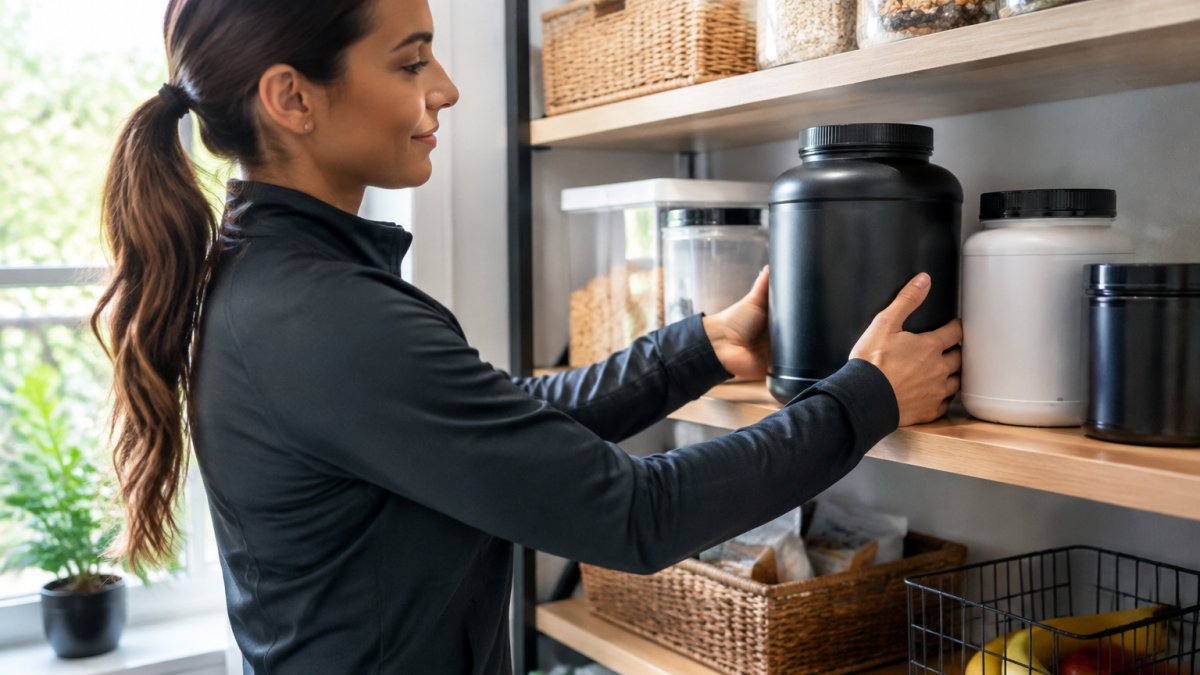
Temperature swings matter as much as high heat. A place that is warm in the afternoon and cold at night puts stress on the product. Steady conditions help protect potency.
Watch out: a car is one of the worst spots. Interior temperatures can climb well past what a supplement can handle on a warm day.
Check the label first. Many brands print exact storage directions, and those beat any general rule.
Step 2: Protect Supplements From Sunlight and Light
Keep supplements out of direct sunlight. A sunny windowsill can warm a bottle and expose it to light all day. Over time, that exposure can reduce freshness.
Most supplement containers are designed to block light. Keep the product in its original container, and close the lid tightly after each use. This adds a layer of protection that a clear jar cannot offer.
Simple habits help:
- Store products in a cabinet or drawer.
- Avoid leaving bottles out on the counter in bright light.
- Return the container to its spot right after use.
Step 3: Keep Supplements Dry and Away From Bathrooms
Bathrooms are a common mistake. Showers create steam, and that humidity can reach the product every day. Moisture can clump powders, soften capsules, and speed up spoilage.
Pick a dry spot instead, such as a kitchen cabinet or bedroom drawer. Make sure the lid is always fully closed, since even a loose cap lets in moisture. If your home is humid, a sealed container with a desiccant packet can help.
Dry storage is especially important for powders and gummies. Once they absorb moisture, they are hard to bring back to their original state.
Step 4: Know Which Supplements Need Refrigeration
Refrigeration is not a universal upgrade. For some products it protects potency; for others it adds moisture every time the door opens and the container cycles between cold and room temperature.
Here is how the major formulations usually differ:
- Probiotics and live-culture products. Many require refrigeration after opening to keep the cultures viable, and the label will say so explicitly. Some shelf-stable strains are freeze-dried and do not need it, follow the package, not the category.
- Fish oil and other oils. Oxidation is the main enemy, and cool, dark storage slows it. Some labels recommend refrigeration after opening; others accept a cool pantry.
- Gummies. Refrigeration can cause condensation and stickiness when the container is repeatedly removed and returned. A cool, dry cabinet is usually better unless the label says otherwise.
- Powders. Most pre-workout, protein, and greens powders are happiest in a dry pantry. The fridge introduces humidity each time you open the tub, which is exactly what clumps powders.
- Capsules and tablets. A cool, dry shelf is the default. Refrigeration helps only when the label calls for it, and a sealed container is essential if you do refrigerate.
- Softgels. These can become brittle or sticky with temperature swings, so a stable cabinet beats a fridge door that opens all day.
The mechanism to understand: cold air holds less moisture, but when you pull a cold container into a warm room, water condenses on the product and the inside of the lid.
A simple approach:
- Read the label first. It is the most reliable guide and overrides any general rule.
- Follow the directions exactly if refrigeration is listed, including whether it applies before or after opening.
- Keep the product dry if you do refrigerate it, using a tightly sealed container and returning it promptly.
- Let it come to room temperature before opening, to avoid condensation on the contents.
Watch out: a fridge door shelf is the worst spot inside a refrigerator, it takes the biggest temperature swing every time the door opens. If you must refrigerate, use an interior shelf toward the back.
When in doubt, a cool, dry shelf is the safer default for most standard supplements.
The right storage choice depends on the formulation, so here is how the major types usually differ.
| Supplement type | Storage approach | Key reason |
|---|---|---|
| Probiotics and live cultures | Often refrigerate after opening | Keeps cultures viable; check label |
| Fish oil and other oils | Cool, dark place; some labels say refrigerate | Slows oxidation |
| Gummies | Cool, dry cabinet | Fridge can cause condensation and stickiness |
| Powders | Dry pantry | Fridge humidity clumps powders |
| Capsules and tablets | Cool, dry shelf | Refrigerate only if label calls for it |
| Softgels | Stable cabinet | Temperature swings cause brittleness or stickiness |
Step 5: Keep Supplements Fresh After Opening
Opening a supplement starts the clock on freshness. Air, moisture, and handling all reach the product once the seal is broken. Careful habits after opening make a real difference.
Start by keeping the original container whenever possible. Its design usually fits the product well. Close the lid tightly each time, and never leave it open while you measure.
Use clean, dry hands or a clean scoop. You can find a freshly sealed tub of Ambrosia Pre-Workout Powder to restock whenever you need it.

You can also try these habits:
- Write the open date on the container.
- Use a small airtight container for daily use, and keep the main supply sealed.
- Avoid pouring product into a bowl or open cup and storing it there.
For powders, the original container is usually the best home. The FDA's consumer guidance on dietary supplements is a good place to check general safety and handling basics.
Best for: people who use one product daily and want to keep it potent. Skip if: you rarely open a container and plan to use it up quickly.
Step 6: Check Shelf Life After Opening and Spot Spoilage
Every supplement has an expiration date, but the date on the label assumes the product was stored properly. Once a container is opened, the real freshness window can be shorter. Check the label for any "use by" guidance after opening, and treat that as the ceiling, not a guarantee.
Watch for signs that a product has gone off:
- Clumping or hard lumps in powders, which points to moisture.
- Off smells that differ from when the product was new, rancid oils smell like old nuts or crayons.
- Discoloration or spots on the powder or capsules.
- Soft or sticky gummies, which often mean heat or humidity exposure.
- Capsules that stick together or deform, a common sign of heat damage.
What to do after heat or moisture exposure
Most storage advice describes ideal conditions and stops. The harder question is what to do when a bottle has already been left in a hot car, a steamy bathroom, or a damp bag. A cautious sequence:
- Let it cool or dry before judging it. A warm bottle is not automatically ruined, and a damp one is not automatically safe. Bring it to room temperature in a dry spot first.
- Inspect, then smell. Look for clumping, sticking, discoloration, or a changed texture. Then smell it, a shift from the original scent is a stronger signal than appearance alone.
- Check the label for heat-sensitivity notes. Probiotics, fish oil, and some vitamins are more heat-sensitive than a mineral tablet, so the same exposure means different things across products.
- When in doubt, discard. Replacing a spoiled product costs far less than the risk of taking something degraded, and potency loss is invisible, a product can look fine and still have lost activity.
A common pattern is that people keep a heat-exposed probiotic or oil because it "looks okay." Those are exactly the formulations where appearance tells you the least.
Keep a simple check-in habit
Go through containers every few weeks, especially powders and gummies that get opened daily. Write the open date on the lid so you are not guessing. For guidance on expiration dates and how supplements are regulated, the National Institutes of Health Office of Dietary Supplements offers reliable background.
Catching problems early saves money and protects your routine.
Step 7: Set Up a Clean Organizer or Travel Kit You Can Trust
A daily organizer or travel kit makes supplements easy to use. It also raises the risk of exposure, since containers get opened, moved, and carried around. Set it up with clean storage in mind.
Choose a case that seals well and stays closed in your bag. Keep each product in its own small compartment, and avoid mixing powders with capsules in the same section.
For travel, keep kits away from hot cars, direct sun, and damp bathroom bags. Pack only what you need for the trip, and return the main supply to its usual cool, dry spot when you get home.
A few setup tips:
- Use labeled, airtight compartments for each daily dose.
- Store the organizer in a cabinet, not on the counter.
- Keep spare products sealed in their original containers.
If you're building your own setup, the Centers for Disease Control and Prevention food safety guidance lists general principles for keeping products clean and dry that apply well here too.
For a ready-to-go option, the Ambrosia Starter Kit: Tub + Shaker from Peakform Nutrition includes one 30-serving tub of Ambrosia Pre-Workout Powder and the official Ambrosia Shaker Bottle. Explore the Ambrosia Starter Kit: Tub + Shaker to see what's included.
Frequently Asked Questions
What is the best way to store supplements to keep them fresh?
Keep supplements in their original, tightly closed containers in a cool, dry, dark place at a stable room temperature. Avoid heat, sunlight, and humidity, which are the main factors that degrade potency over time. Always follow the storage instructions printed on the label, since requirements vary by product. Replace the lid immediately after each use and avoid transferring powders or capsules to loose bags unless the product directions allow it.
Do supplements need to be refrigerated?
Not all of them. Some products, particularly certain probiotics and live cultures, may direct refrigeration once opened, while many vitamins and minerals do not. Refrigeration is not a universal recommendation, so check the label before moving a product to the fridge. If refrigeration is required, keep the container sealed to limit moisture from condensation when it is removed and returned.
How long do supplements stay fresh after opening?
Freshness after opening depends on the product, its formulation, and how it is stored. Use the expiration date printed on the label as your primary guide, and follow any shorter use-by window the manufacturer specifies once the seal is broken. Keeping the container tightly closed, dry, and away from heat helps the product retain potency until that date.
How can you tell if a supplement has gone bad?
Look for changes in color, odor, texture, or appearance, such as clumping powder, a stale or rancid smell in oils, or visible mold or moisture inside the container. Capsules or tablets that have softened, stuck together, or crumbled may have been exposed to humidity. If you notice any of these signs or the product is past its expiration date, discard it rather than taking it.
