

Table of Contents
- What a Holistic Skin Care Routine Actually Involves
- How to Identify Your Skin Type Before You Buy Anything
- A Simple Morning and Evening Skin Care Routine to Start With
- How to Choose Natural Skin Care Products Without Getting Fooled
- Building a Skin Care Routine for Sensitive Skin
- How Long Does It Take to See Results From a Skin Care Routine?
- Common Mistakes That Derail a Holistic Skin Care Routine
- Conclusion: Start Small, Stay Consistent, Adjust as You Go
- Frequently Asked Questions
Last Updated: October 6, 2026
What a Holistic Skin Care Routine Actually Involves
A holistic skin care routine is a daily practice that pairs gentle topical products with the lifestyle habits that support your skin from the inside. It treats your skin as part of your whole body, not a separate surface to fix.
Most people start with products. That is backwards.
The topical steps matter, but they only work when the basics behind them are in place: sleep, water, food, stress, and sun protection. Skip those and no serum will save you.
The Topical Steps and the Lifestyle Factors That Support Them
The topical side is simple: cleanse, hydrate, treat, protect. A gentle cleanser, a moisturizer, and a sunscreen cover most of it. Add one treatment product once your basics feel steady.
The lifestyle side does the quiet work, and each factor has a real mechanism behind it:
- Sleep. Skin cell turnover and barrier repair follow your body clock, and most of that repair happens during deep sleep. Short or broken sleep is linked to more visible fine lines, duller tone, and slower recovery from irritation. Seven to nine hours is the general adult target, and a consistent bedtime matters as much as the total.
- Water and hydration. Drinking enough fluid supports circulation and helps your body regulate temperature and flush waste, but it does not "moisturize" skin directly. The bigger lever is protecting your barrier so water does not escape, which is why a moisturizer applied to damp skin does more for dryness than an extra glass of water.
- Food. There is no single skin food, but patterns matter. Colorful vegetables and fruit supply vitamin C, which your body needs to build collagen. Healthy fats, olive oil, nuts, fatty fish, support the lipid barrier. Diets heavy in added sugar and refined carbohydrates are associated with more breakouts in some people. None of this replaces a topical routine; it changes the raw material your skin has to work with.
- Stress. Ongoing stress raises cortisol, which can increase oil production, worsen inflammatory conditions like acne and eczema, and slow barrier recovery. Managing stress is not a skin care step, but it is a skin variable.
Neither side works alone. That is the whole point of a holistic approach, you are not choosing between a serum and a good night's sleep. You are stacking them.
How to Identify Your Skin Type Before You Buy Anything
Wash your face with a gentle cleanser, wait one hour without applying anything, then check how your skin feels. Tight and flaky means dry. Shiny all over means oily.
Redness, stinging, or easy reactions point to sensitive skin, which needs its own approach.
Here is a quick way to sort it out:
- Dry skin: feels tight, looks flaky, drinks up moisturizer
- Oily skin: shines within an hour, prone to clogged pores
- Combination: oily T-zone, drier cheeks
- Sensitive: reacts fast to new products, stings or turns red
- Mature skin: thinner, drier, more focused on firmness and fine lines
Your skin type can shift with the seasons, your hormones, and your stress levels. Recheck it twice a year.
A Simple Morning and Evening Skin Care Routine to Start With
A simple morning and evening skin care routine needs four products at most: a gentle cleanser, a moisturizer, a sunscreen, and one treatment. Start there for two weeks before adding anything else.
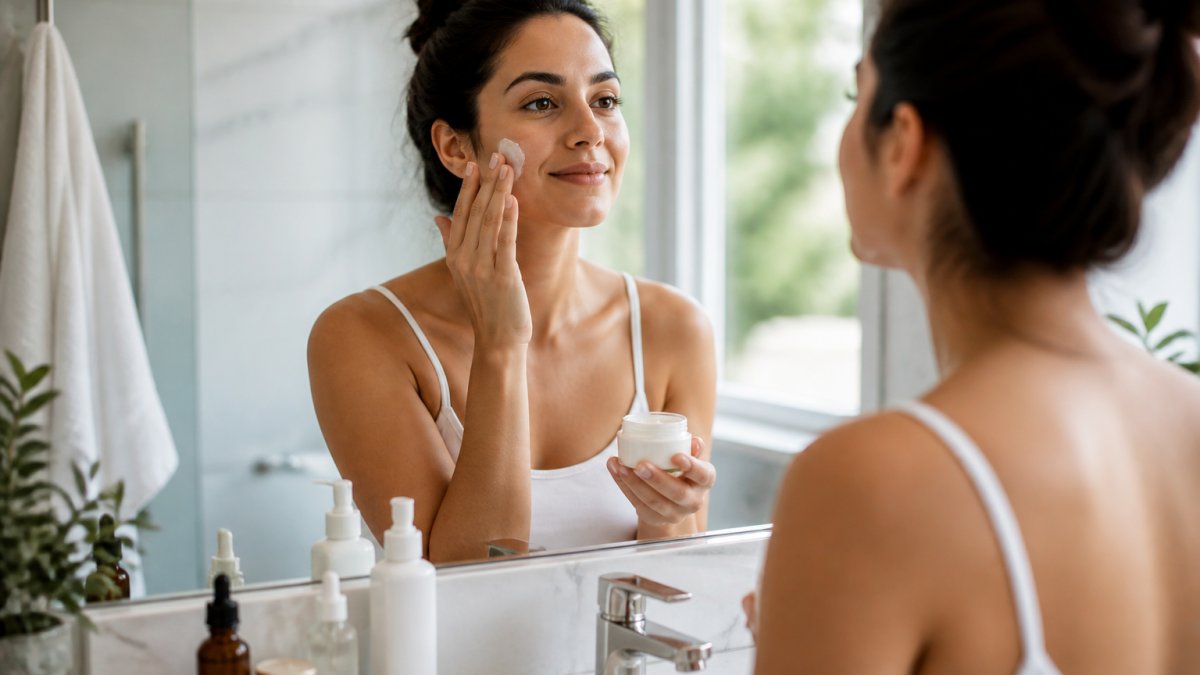
Morning: Cleanse, Hydrate, Protect
- Cleanse. Splash with lukewarm water, or use a gentle cleanser if you wake up oily. Hot water strips your skin barrier.
- Hydrate. Apply a moisturizer to slightly damp skin. This locks in water and keeps your barrier strong.
- Protect. Finish with sunscreen on your face, ears, and neck. This is the step that prevents UV damage and premature aging.
That is it. Three steps, under two minutes.
Evening: Cleanse, Treat, Repair
- Cleanse. Wash off sunscreen, sweat, and the day. Use your fingertips, not a rough cloth.
- Treat. Apply one active product, such as a retinol or a gentle exfoliant. One product, not three.
- Repair. Seal everything in with a moisturizer or a facial oil.
How to Choose Natural Skin Care Products Without Getting Fooled
Read the ingredient list, not the front of the bottle. "Natural," "clean," and "botanical" are marketing words with no legal definition in the United States, so the label on the back is the only thing that tells you the truth. The Food and Drug Administration regulates cosmetics for safety and labeling, but it does not pre-approve products or certify the word "natural."
A few habits separate good picks from bad ones:
- Short lists win. Fewer ingredients means fewer chances for irritation, and it makes it easier to spot what caused a reaction.
- Learn a handful of names. Glycerin, hyaluronic acid, ceramides, niacinamide, shea butter, jojoba, and vitamin E are common, well-tolerated options with clear roles. Glycerin and hyaluronic acid pull in water; ceramides and shea butter reinforce the barrier; niacinamide supports tone and oil balance.
- Check the order. Ingredients are listed by amount, so anything after the fragrance or preservative is present in tiny amounts. A "hero" botanical listed last is often there for the label, not the effect.
- Patch test properly. Apply a small amount behind your ear or on your inner forearm, leave it 24 hours, and check for redness, itching, or bumps. Repeat on your jawline for a second day before using it on your whole face.
- Buy from brands that publish full ingredient lists. If you cannot find one, walk away.
Natural Does Not Automatically Mean Safe
This is the part most product roundups skip. Plant-based ingredients can work well, but "natural" is not a synonym for gentle or effective:
- Essential oils are a common irritant. Citrus, lavender, peppermint, and tea tree oils cause contact reactions in plenty of people, and some citrus oils increase sun sensitivity.
- Botanical extracts can trigger allergies. Fragrance, natural or synthetic, is one of the most frequent causes of cosmetic contact dermatitis.
- "Chemical-free" is meaningless. Water is a chemical. The phrase is marketing, not chemistry.
- Evidence varies by ingredient. Some plant ingredients have solid research behind them; many have only traditional use. A short ingredient list with a few well-studied actives usually beats a long list of trendy extracts.
If you have eczema, rosacea, or a history of reactions, treat any new botanical as a potential trigger and patch test every time.
Roll New Products In One at a Time
Even a good product can cause a breakout or irritation if you add it wrong. A simple rollout:
Aphrodite’s Blessing - Perfect Hydration Moisturizer →
- Week 1: Keep your current basics, cleanser, moisturizer, sunscreen, and change nothing.
- Week 2: Add one new product, used every other day.
- Week 3: If your skin is calm, move that product to daily.
- Week 4: Only now consider adding a second new product, and repeat the cycle.
If your skin stings, turns red, itches, or breaks out in a new pattern, stop the newest product and go back to your basics for a week. That reaction is information, not failure.
Building a Skin Care Routine for Sensitive Skin
A skin care routine for sensitive skin follows the same steps with fewer products and slower changes.
When you do add something, add one product at a time and wait a week before the next.
A few ground rules for reactive skin:
- Skip scrubs, strong acids, and anything with added fragrance
- Use lukewarm water, never hot
- Pat dry with a clean towel instead of rubbing
- Keep a short list of what works and stick to it
If your skin stays irritated after weeks of gentle care, or you notice spreading rashes, painful bumps, or sudden changes in a mole, see a dermatologist.
How Long Does It Take to See Results From a Skin Care Routine?
Most people see early changes in two to four weeks, and clearer, more even skin by three months. Skin cells turn over on a roughly monthly cycle, so real change takes at least one full cycle to show.
Set your expectations by step:
| Change | Typical Timeline | What You'll Notice |
|---|---|---|
| Hydration | 1-2 weeks | Less tightness, softer feel |
| Texture | 4-6 weeks | Smoother surface, smaller-looking pores |
| Tone and dark spots | 8-12 weeks | More even color |
| Fine lines and firmness | 3-6 months | Subtler lines, better bounce |
Consistency beats intensity. A simple routine done daily outperforms a complicated one done twice a week.
Common Mistakes That Derail a Holistic Skin Care Routine
The biggest mistake is adding too many products at once. When five new items go on your face in one week, you cannot tell what is helping and what is causing the breakout.
Other common slip-ups:
- Over-cleansing. Washing more than twice a day strips your barrier and makes oil worse.
- Skipping sunscreen on cloudy days. UV damage happens year-round.
- Scrubbing daily. Gentle exfoliation once or twice a week is plenty.
- Chasing overnight results. No product erases years of sun in a week.
- Ignoring the inside. Poor sleep, dehydration, and constant stress show up on your skin no matter what you apply.
Conclusion: Start Small, Stay Consistent, Adjust as You Go
The hard part of skin care is not finding products. It is staying consistent long enough to see what works. Start with four basics, keep them simple, and change one thing at a time.
At Peakform Nutrition, we built our beauty care line around that same idea. Our Aphrodite's Blessing Perfect Hydration Moisturizer supports collagen with retinol, encourages renewal with peptides, and helps your skin hold onto moisture with ceramides and shea butter.

Get started with Peakform Nutrition and give your skin the steady, simple care it responds to best.
Frequently Asked Questions
What is a holistic skin care routine?
A holistic skin care routine treats topical products as one part of a bigger system. You still cleanse, moisturize, and protect your skin daily, but you also pay attention to sleep, stress, hydration, and diet because those factors influence how your skin looks and feels. The goal is supporting your skin barrier from multiple angles instead of relying on a single serum or cream to fix everything. Start with the basics, then layer in lifestyle habits over time.
How long does it take to see results from a skin care routine?
Most people notice small changes like better hydration or less tightness within two to four weeks. Visible improvements in tone, texture, or fine lines typically take eight to twelve weeks because skin cell turnover happens on a roughly 28-day cycle, and that cycle slows with age. Take a photo in natural light on day one, then again at week four, eight, and twelve. Comparing photos removes the guesswork that daily mirror checks create.
Can natural skin care products irritate sensitive skin?
Yes. Natural does not automatically mean gentle. Essential oils, botanical extracts, and fragrances can trigger redness, stinging, or breakouts in reactive skin. Always patch test on your inner forearm for 24 to 48 hours before applying anything to your face, and introduce one new product at a time so you can identify the culprit if irritation appears. If burning or swelling occurs, stop using the product and consult a dermatologist.
Do I need supplements for healthy-looking skin?
Supplements are not required, but they can fill gaps when your diet falls short. Skin health depends on nutrients like vitamin C, vitamin E, zinc, and omega-3 fatty acids, which you can get from food. If you already eat a varied diet, a topical routine plus consistent sleep and hydration may be enough. Talk to your doctor before adding any supplement, especially if you take medication or have a health condition.