

Last Updated: October 24, 2026
Quick Summary
To read pre-workout supplement labels, start with the Supplement Facts panel: check the serving size and servings per container, then confirm each active ingredient's dose and unit. Add every caffeine source together, and treat proprietary blends that hide individual doses as unverifiable.
- One thousand micrograms equals one milligram, so 500 mcg is only 0.5 mg.
- Most research supports roughly 3-6 mg of caffeine per kilogram of body weight before training.
- Creatine's effective dose is about 3-5 grams per day, so 1 gram is label decoration.
- Beta-alanine's studied dose is roughly 3.2-6.4 grams per day taken over weeks.
- A proprietary blend lists ingredients under one total weight with no individual doses shown.
Table of Contents
- What a Pre-Workout Supplement Facts Label Tells You
- How to Compare Pre-Workout Ingredients and Dosages
- Caffeine in Pre-Workout: Find the Milligrams First
- What a Proprietary Blend in Supplements Hides
- Other Ingredients, Allergens, and Front-of-Label Claims
- A Worked Example: Reading a Real Pre-Workout Label
- Choose Your Next Tub With a Label-First Checklist
- Frequently Asked Questions
What a Pre-Workout Supplement Facts Label Tells You
Pre-workout supplement labels are legal documents, not marketing copy. It tells you exactly what is in the tub, how much of each ingredient you get per scoop, and who made it.
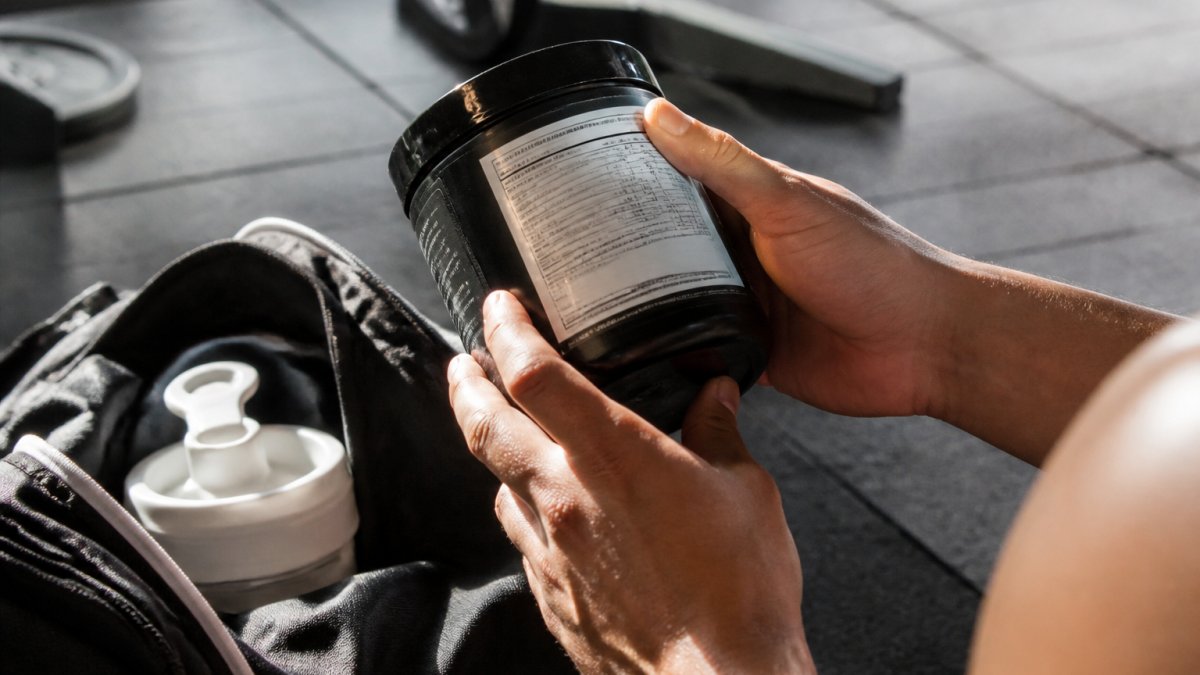
The stakes are higher than most athletes realize. According to The Vitamin Shoppe's 2026 Health & Wellness Trend Report, 47% of respondents said they had declined to buy a supplement because the label or formula lacked enough transparency. Meanwhile, Mordor Intelligence's market forecast projects the pre-workout category growing from $22.48 billion in 2026 to $31.53 billion by 2031.
That growth means more tubs, more claims, and more confusion. At Peakform Nutrition, we built our formulas around the idea that you should be able to check every number yourself.
Serving Size and Servings Per Container
Serving size is the amount the label's numbers describe. Servings per container tells you how many of those doses the tub holds.
This matters because pre-workout scoops vary wildly. One product lists a 10-gram scoop; another lists 20 grams.
Check three things:
- The scoop size in grams
- How many servings the tub contains
- Whether the brand's suggested scoop matches the label serving
A tub with 30 servings at one scoop each lasts a month. The same tub at two scoops lasts 15 days, and your caffeine intake doubles with it.
Ingredient Names, Amounts, and Units of Measurement
Every active ingredient appears with an amount and a unit.
Units are where readers slip up. One thousand micrograms equals one milligram. A label listing 500 mcg of an ingredient is giving you 0.5 mg, a tiny dose.
Some ingredients carry a percent Daily Value, which shows how much of a nutrient one serving supplies relative to a standard daily intake.
How to Compare Pre-Workout Ingredients and Dosages
Comparing two tubs means comparing doses, not marketing lines. A 2019 study in the Journal of the International Society of Sports Nutrition analyzed the ingredient profiles of multi-ingredient pre-workout products and reported the mean amounts and standard deviations for each ingredient listed on the Supplement Facts label. In plain terms: label doses across the category vary enormously, and the same ingredient name can mean a clinically studied dose in one tub and a token sprinkle in another.
The fix is to judge each active against the dose range that research actually supports, rather than treating every label the same way. Here is how the four most common pre-workout actives stack up.
Caffeine
Caffeine is the one ingredient with a well-established performance dose: most research supports roughly 3-6 mg per kilogram of body weight taken about 30-60 minutes before training. For a 180-pound athlete, that is about 245-490 mg, which is why the 400 mg daily ceiling the FDA cites for healthy adults matters. A label showing 150 mg per scoop is a moderate dose; 350 mg per scoop is near the top of the range for most people.
Creatine
Creatine monohydrate is the most studied sports supplement, and the effective dose is well established at about 3-5 grams per day, with a common loading approach of roughly 20 grams per day split into four doses for about a week. A pre-workout that lists 1 gram of creatine is not a creatine product, it is a label decoration. If creatine is a priority, buy it as a standalone monohydrate and use the pre-workout for other actives. Also check the form: monohydrate is the evidence-backed choice, while creatine HCl and buffered creatine carry far less supporting research.
Beta-Alanine
The studied dose for beta-alanine is roughly 3.2-6.4 grams per day, taken consistently over weeks to build up muscle carnosine. The tingling sensation, paresthesia, is harmless and dose-related, not a sign of potency. A pre-workout listing 1.6 grams per scoop requires two scoops to reach the low end of the studied range, which is fine if the directions support it and the caffeine total stays reasonable. A product listing 500 mg is unlikely to do much.
Citrulline
Citrulline is the pump ingredient, and the research dose is meaningful: about 6-8 grams of L-citrulline, or roughly 8-10 grams of citrulline malate (which is about half citrulline by weight). A label showing 1.5 grams of citrulline malate is far below the studied range. Watch the form too, citrulline malate and L-citrulline are not interchangeable gram for gram, so convert before you compare.
Run the comparison
- List the actives that matter to your goal (focus, pump, endurance).
- Write down the dose per serving for each product.
- Convert everything to the same unit and the same form (citrulline vs. citrulline malate, for example).
- Flag any ingredient dosed far below the amounts studied in research.
- Compare caffeine totals last, since they drive the experience.
For readers weighing formulas built around focus rather than raw stimulant load, our breakdown of pre-workout alternatives for focus walks through the trade-offs.
Here is how the four most common pre-workout actives compare against the doses research supports.
| Ingredient | Studied dose | Label note |
|---|---|---|
| Caffeine | Roughly 3-6 mg per kg body weight, 30-60 minutes before training | 150 mg per scoop is moderate; 350 mg is near the top |
| Creatine | About 3-5 grams per day; loading roughly 20 grams per day for about a week | 1 gram is label decoration; monohydrate is evidence-backed |
| Beta-Alanine | Roughly 3.2-6.4 grams per day over weeks | 1.6 grams per scoop needs two scoops; 500 mg unlikely to do much |
| Citrulline | About 6-8 grams L-citrulline, or roughly 8-10 grams citrulline malate | 1.5 grams citrulline malate is far below the studied range |
Caffeine in Pre-Workout: Find the Milligrams First
Caffeine is the first number to find on any pre-workout label. It is the ingredient most likely to cause jitters, a racing heart, or a sleepless night, and it is the one ingredient where the label math most often goes wrong.
Add every caffeine source, not just the obvious one
Caffeine hides under several names on a Supplement Facts panel. Scan for all of these and add them together:
- Caffeine anhydrous, the synthetic form used in most pre-workouts
- Natural caffeine, often from green coffee bean or tea
- Green tea extract, standardized for caffeine and EGCG
A product can list 150 mg of caffeine anhydrous plus 100 mg from green tea and quietly deliver 250 mg per scoop. If guarana appears in a blend, you cannot calculate its contribution at all, treat the caffeine total as unknown and assume the worst case.
Do the serving math before you scoop
Serving math is where most athletes get caught. Work the problem in three steps:
- Caffeine per serving. Read the amount next to caffeine on the panel. That figure describes one label serving, which may or may not equal one scoop.
- Scoops per serving. Check the directions. A label that says "1-2 scoops" means the panel numbers may describe one scoop, and a double scoop doubles every active, including caffeine.
- Servings per day. If you use pre-workout in the morning and a caffeinated fat burner or energy drink later, add those totals too.
A worked example: a tub lists 200 mg caffeine per scoop and directs 1-2 scoops. Two scoops puts you at 400 mg from the tub alone. Add a 95 mg cup of coffee and you are at 495 mg, above the 400 mg daily ceiling the Food and Drug Administration cites for healthy adults. The FDA also notes that rapid consumption of around 1,200 mg of caffeine can cause serious adverse events, which is why stacking products without adding up the milligrams is a real risk, not a hypothetical one.
Read the stimulant load, not just the caffeine
Some formulas pair caffeine with yohimbine, synephrine (bitter orange), or high-dose theacrine. These are not caffeine, but they compound the stimulant effect and carry their own cautions. Yohimbine in particular is associated with elevated heart rate and blood pressure in some users, and the FDA has warned about synephrine-containing products. Our article on pre-workout side effects long-term covers what regular high-dose use can do.
A quick caffeine audit
Before you buy, answer four questions:
- What is the caffeine total per serving, with all sources added?
- Does one serving equal one scoop, or can the directions push you to two?
- What else in the formula is a stimulant?
If any answer is "I can't tell from the label," the product has failed the most important test on the panel.
What a Proprietary Blend in Supplements Hides
A proprietary blend is a group of ingredients listed together under one total weight, with no individual doses shown.
This is legal, and it is common. It also makes dose comparison impossible. One blend might be 90% of the cheapest ingredient and 2% of the one you actually wanted.
Our rule: if a blend hides the actives you care about, treat the product as unverifiable. Buy from brands that disclose every dose.
Other Ingredients, Allergens, and Front-of-Label Claims
Below the active ingredients sits the "Other Ingredients" list: fillers, flow agents, flavors, colors, and sweeteners.
Then check allergens. Look for milk, soy, wheat, or tree nut disclosures, plus a "manufactured in a facility" statement.
Front-of-label claims deserve skepticism. For readers who want to dig into additive-free options, our guide to clean ingredient supplements for women explains what to look for.
A Worked Example: Reading a Real Pre-Workout Label
Here is the checklist applied to our own flagship, Ambrosia Pre-Workout Powder. The panel shows lower caffeine levels paired with a high nootropic load, plus five nitric oxide ingredients for blood flow and beta-alanine with malic acid for soreness support. L-carnitine tartrate, green coffee bean extract, and yohimbine HCl round out the metabolism side.

Run the steps:
- Serving size: one scoop, so the doses below are per scoop
- Caffeine: lower than typical, which is why the label promises focus without jitters
- Blends: none hiding the actives
You can see the full Ambrosia label and ingredient panel and check each number yourself.
Choose Your Next Tub With a Label-First Checklist
Take this list to the shelf or the product page:
- Caffeine total per serving, in milligrams, all sources added
- Every active ingredient dosed individually, no hidden blends
- Units consistent and converted correctly
Seven checks, five minutes. That is the whole skill.
The supplement aisle rewards brands that write big promises and small print. Reading the panel flips that advantage back to you. If you want a formula that passes the checklist without an argument, explore our clean performance supplements for muscle growth and see how we disclose every dose.
Frequently Asked Questions
How can I tell how much caffeine is in a serving of pre-workout?
Look for caffeine on the Supplement Facts panel, listed in milligrams per serving. If caffeine appears inside a proprietary blend, the exact amount is not disclosed, so treat the product as unknown until the brand publishes a number. Mayo Clinic Press notes the average pre-workout contains around 18 ingredients, which makes it easy for caffeine to hide in a blend. Check the serving size too: a scoop may be half a serving, which changes your caffeine exposure.
What should I look for in pre-workout supplement labels before buying?
Start with four items: the serving size, the caffeine amount in milligrams, whether key ingredients sit in a proprietary blend, and the allergen statement. A 2026 Vitamin Shoppe report found 47% of respondents had skipped a supplement because its label or formula lacked transparency, so you are not alone in checking. Compare ingredient amounts against the doses you actually want, and confirm the label lists a manufacturer and directions for use.
What does a proprietary blend mean on a supplement label?
A proprietary blend groups several ingredients under one total weight, such as 3,000 mg, without listing each ingredient's individual amount. You see the ingredients in the blend but not the dose of any single one. That makes it impossible to compare against research doses or judge how much caffeine or beta-alanine you get. When a pre-workout relies on blends, ask the brand for a full disclosure or choose a product that lists every amount separately.
How do I know how much pre-workout to take?
Follow the directions for use on the label and start with the smallest serving listed. Check the serving size against the scoop: some labels define a serving as one scoop, others as two. If the label lists caffeine in milligrams, keep your total daily intake in view across coffee, tea, and other supplements. If you are sensitive to stimulants, a stimulant-free formula lets you control caffeine separately, and you can adjust timing before training rather than guessing at the dose.
Most athletes never learn to read a label, and they pay for it in jitters, wasted money, and tubs that sit half-empty. Peakform Nutrition builds every formula to survive the checklist: Ambrosia's crystal clear mental focus with lower caffeine and high nootropics, five nitric oxide ingredients for lasting blood flow, and full disclosure on every panel. Get started with Peakform Nutrition and choose your next tub with confidence instead of guesswork.
