

Last Updated: November 4, 2026
Quick Summary
Improving thyroid health naturally starts with a blood test, not a grocery list, so you know your TSH, free T4 and free T3 before changing anything. Then build meals around iodine, selenium, zinc and iron from fish, dairy, eggs, nuts, seeds and produce, and retest in 6-8 weeks.
- A 2026 analysis found targeted lifestyle changes may normalize TSH in 30-40% of people with subclinical hypothyroidism.
- Take thyroid medication on an empty stomach and wait 30-60 minutes before eating.
- Separate thyroid medication from calcium, iron supplements and antacids by 4 hours.
- Fill half your plate with fruit and vegetables, plus palm-sized protein and fist-sized whole grains.
- Aim for 7-9 hours of sleep and keep a consistent bedtime to support hormone balance.
Table of Contents
- Start With Testing Before You Change Your Diet
- Key Nutrients That Support Thyroid Function
- Foods for Thyroid Health to Add to Your Plate
- Foods to Avoid for Thyroid: What Actually Matters
- Building a Hypothyroidism Diet That Fits Real Life
- Thyroid Supplements: What the Evidence Shows
- Lifestyle Levers That Support Thyroid Hormone Balance
- When Natural Approaches Are Not Enough
- Frequently Asked Questions
Start With Testing Before You Change Your Diet
The most useful first step in learning how to improve thyroid health naturally is a blood test, not a grocery list. A 2026 analysis found that targeted lifestyle changes may normalize Thyroid Stimulating Hormone (TSH) levels in 30-40% of people with subclinical hypothyroidism (thyroid function optimization analysis). That is a real window of opportunity, but it only applies after you know your numbers.
A common pattern is that people overhaul their diet before they know what is actually low.
Thyroid health is the state of your thyroid gland's ability to make and regulate thyroid hormone. Two tests tell you where you stand:
- TSH: the signal from your brain asking the thyroid to work
- Free T4 and free T3: the hormones your body actually uses
Get tested before you change anything. Then retest in 6-8 weeks. Without a baseline, you cannot tell whether a change helped or hurt.
Key Nutrients That Support Thyroid Function
Thyroid hormone synthesis depends on a short list of micronutrients. Iodine and iron are essential for hormone production, while selenium and zinc play critical supporting roles (natural support strategies for thyroid function). The useful question is not which nutrients matter, it is how each one works, how much food actually delivers, and who is most likely to run short.
Iodine: The Building Block
Iodine is the raw material your thyroid uses to build hormone. The gland traps iodine from the blood and attaches it to tyrosine to form T4 and T3. Iodized salt, seaweed, fish, dairy, and eggs are the main sources. Too much can be a risk, so high-dose kelp or sea moss supplements are best avoided. If you are pregnant or trying to conceive, iodine needs rise and are usually met through a prenatal vitamin, ask your clinician before adding a separate iodine supplement.
Selenium, Zinc, and Iron
Selenium and zinc play supporting roles in thyroid function. Iron matters too, because the enzyme that produces thyroid hormone requires iron, and low iron is common in women, especially those with heavy periods or low dietary intake. A common pattern is that iron deficiency shows up as fatigue that looks like hypothyroidism but does not resolve with thyroid treatment alone.
Food sources to consider:
A daily multivitamin can fill gaps while you work on food. Our Elite Multivitamin covers iodine, selenium, zinc, and iron in one dose. If your vitamin D is low, our Vitamin D3 2,000 IU supports bone and immune function alongside thyroid care.
Watch out: do not self-diagnose a deficiency from symptoms alone. Ask your clinician about appropriate blood tests before you supplement.
Foods for Thyroid Health to Add to Your Plate
No single food fixes a thyroid. The evidence points to a balanced, nutrient-rich diet instead. Mayo Clinic guidance is blunt about this: there is no clinical evidence that eating or avoiding specific foods makes an underactive thyroid work better.
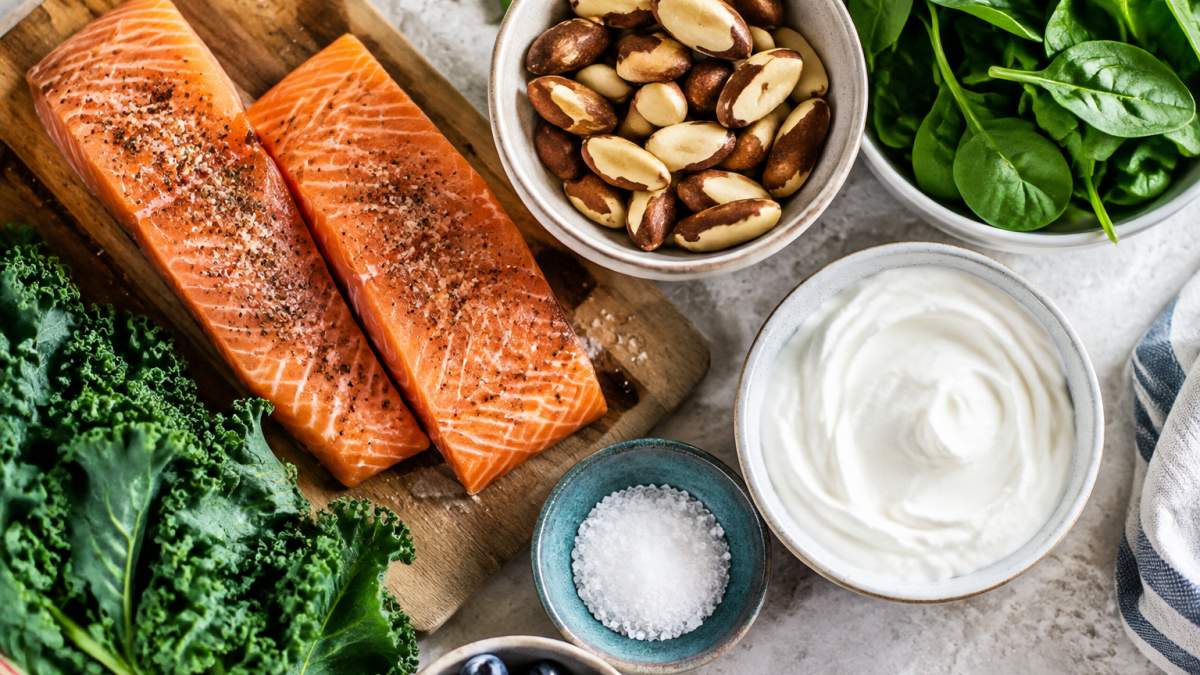
Build meals around a varied mix of fish, dairy, nuts, seeds, legumes, whole grains, fruit, and vegetables. Keep portions normal and variety high.
Foods to Avoid for Thyroid: What Actually Matters
Very little belongs on a strict avoid list. The real issues are excess and timing, not specific vegetables.
Watch out: raw cruciferous vegetables in huge amounts and high-dose kelp can interfere with thyroid function. The British Thyroid Foundation warns that kelp and sea moss can carry excessive iodine. Normal servings of broccoli or cabbage are fine.
If you take thyroid medication, timing matters more than any food:
- Take it on an empty stomach
- Wait 30-60 minutes before eating
- Separate it from calcium, iron supplements, and antacids by 4 hours
For a deeper look at metabolism and weight, read our guide on foods to avoid for slow metabolism weight loss.
If you take thyroid medication, these timing rules matter more than any food choice.
Peakform Nutrition Multivitamin Gummies (Adult) →
| Step | What to do |
|---|---|
| Take medication | On an empty stomach |
| Before eating | Wait 30-60 minutes |
| Calcium, iron supplements, antacids | Separate by 4 hours |
| Raw cruciferous vegetables | Normal servings are fine; avoid huge amounts |
| Kelp and sea moss | Can carry excessive iodine; discuss with clinician |
Building a Hypothyroidism Diet That Fits Real Life
A hypothyroidism diet works when it is boring and repeatable. Skip the elimination plans.
Use this simple plate method:
- Fill half the plate with fruit and vegetables
- Add a palm-sized portion of protein (fish, poultry, eggs, dairy)
- Add a fist-sized portion of whole grains or legumes
- Add a thumb of nuts or seeds for selenium and zinc
Repeat that structure most days. If you lift or train hard, consider adjusting portions to your needs.
Thyroid Supplements: What the Evidence Shows
Most thyroid supplements are unproven. The honest position: herbal extracts and natural products show potential in drug discovery research, but that is early-stage science, not proof they treat thyroid disease (PMC research on herbal formulations). The practical skill is separating a diagnosed deficiency you can correct from a bottle that promises to "support" a gland it cannot measure.
Grade the evidence before you buy:
- Supplements should be used under a clinician's guidance, particularly when correcting a diagnosed deficiency.
- Kelp and sea moss supplements can push iodine intake to high levels, so discuss them with your clinician before use.
Test Before You Supplement
Ask your clinician which tests are appropriate for you. Do not interpret a panel on your own, and bring your symptoms and supplement list to the visit.
Timing Around Thyroid Medication
If you take prescription thyroid hormone, timing matters more than any supplement choice. Follow your prescriber's instructions on timing, since they take priority over any general guidance.
Watch out: supplements can interact with thyroid medication and with each other, and "natural" does not mean risk-free. Tell your doctor and pharmacist about everything you take, including multivitamins, herbal blends, and high-dose selenium or iodine, before you start, and stop and call your clinician if you notice a racing heart, unusual anxiety, or worsening fatigue.
Lifestyle Levers That Support Thyroid Hormone Balance
Stress, sleep, and movement shape hormone balance as much as food does. The 2026 Levels guide names five levers: nutrition, stress management, exercise, quality sleep, and reducing environmental toxin exposure (Levels thyroid health guide).
Start with these:
- Stress management: high cortisol works against hormone balance. Our Super Ashwagandha is a stress-support option with black pepper extract for absorption.
- Sleep habits: keep a consistent bedtime and aim for 7-9 hours.
- Exercise: walking, swimming, resistance training, and yoga all support metabolic health.
- Gut health: a healthy gut supports nutrient absorption. Our Perfect Microbiome offers 20 billion CFU per capsule.
- Blood sugar: steady meals beat crash diets.
When Natural Approaches Are Not Enough
Natural support has a ceiling. It does not replace medical treatment for diagnosed thyroid disease.
See a doctor promptly if your symptoms are getting worse, or if you are pregnant or planning to conceive.
Hypothyroidism is usually managed with prescription hormone replacement. Diet and lifestyle support that treatment, they do not replace it. This is the part most guides skip, and it is the most important one.
Frequently Asked Questions
How can I boost my thyroid naturally?
Start with testing, not guesswork. Ask your doctor for a TSH panel plus free T4 and thyroid antibodies before changing anything. From there, the levers with the most evidence are nutrient sufficiency (iodine, selenium, zinc, iron), a balanced diet built on whole foods, regular movement, quality sleep, and stress management. Targeted lifestyle changes may help some people with subclinical hypothyroidism. None of this replaces prescribed medication if you already take it.
Which nutrients are most important for thyroid health?
Iodine and iron are essential for thyroid hormone synthesis, while selenium and zinc play critical supporting roles, according to 2026 industry guidance. Selenium is part of the enzymes that convert T4 into active T3, and zinc supports hormone production and immune function. The catch: more is not better. Excess iodine from kelp or sea moss can interfere with thyroid function, so get iodine from iodized salt and food rather than high-dose supplements unless a doctor recommends otherwise.
What are five foods to avoid for thyroid health?
There is no clinical evidence that eating or avoiding specific foods makes an underactive thyroid work better, per Mayo Clinic guidance. That said, five items worth limiting: raw cruciferous vegetables in very large amounts, excess kelp and sea moss (iodine overload), highly processed foods that crowd out nutrient-dense meals, sugary drinks that spike blood sugar, and calcium or iron supplements taken at the same time as thyroid medication. Timing matters more than outright avoidance for most of these.
Can thyroid supplements help, and are they safe?
Some can help if you have a confirmed deficiency, and some can hurt. Herbal extracts and natural product-based interventions show potential in thyroid research, but evidence is still early. Health organizations warn specifically against kelp and sea moss because excessive iodine can interfere with thyroid function. If you take levothyroxine, calcium, iron, and antacids can block absorption, so separate them by four hours. Always tell your doctor about any supplement before starting it.
Learning how to improve thyroid health naturally starts with testing, then food, then the levers most people ignore: sleep, stress, and honest evidence about supplements. At Peakform Nutrition, we build clean, stimulant-free products for people who want to support their body without guesswork, from our Elite Multivitamin to stress and gut support. Get started with Peakform Nutrition and give your daily routine a foundation you can actually measure.
