

Quick Summary
Treat sweat stains on technical athletic fabric as soon as possible with an enzyme-based stain remover and cool-to-lukewarm water below 100°F. Keep the garment away from heat until the stain is fully gone, because dryer heat can lock the protein residue in permanently.
- Sweat stains are usually protein-based, so enzyme-based products are the recommended treatment.
- Pre-soak in cool to lukewarm water below 100°F, because hot water sets protein stains.
- Let the enzyme remover sit for at least 15 minutes, or follow the product label.
- Never use chlorine bleach on elastane or colored performance fabric, since it damages stretch and fades prints.
- Air dry the garment and check for remaining marks before using a dryer.
Table of Contents
- Why Sweat Stains Set on Technical Fabric
- Check the Care Label and Test Colorfastness First
- Step-by-Step: Pretreat Fresh Sweat Stains
- How to Remove Old Sweat Stains From Clothes
- How to Remove Sweat Stains From Colored Shirts
- How to Get Sweat Stains Out of Shirts After Washing
- Washing Workout Clothes to Remove Odors and Prevent Buildup
- Start Your Stain Removal Routine Today
- Frequently Asked Questions
Why Sweat Stains Set on Technical Fabric
Last Updated: November 5, 2026
Sweat stains on technical athletic fabric are frustrating because they rarely look like a stain at first. You pull a workout shirt from the hamper, and it smells fine, but a yellowish ring has already formed under the arms. This guide will help you fix that stain properly, without damaging the fabric you rely on.
Sweat is not just water. It carries salts, oils and proteins from your skin, and those proteins are what bind to synthetic fibers and set over time. Iowa State University Extension's sports-stain guidance, which recommends enzyme-based products for sweat and other protein stains
Technical fabrics such as polyester, nylon and elastane blends are built to move sweat away from your skin. That same structure can trap residue deep in the weave. Heat makes it worse, because warm water and high dryer temperatures can lock protein stains in place.
Quick answer: Sweat stains on technical fabric are usually protein-based. Treat them early with an enzyme-based product and cool-to-lukewarm water, and avoid heat until the stain is gone.
Here is the core problem to keep in mind through the rest of this guide. The stain is not only on the surface. Odor-causing bacteria and buildup can accumulate in the same fibers, so a stain that looks faint can still come back after a routine wash.
Check the Care Label and Test Colorfastness First
Before you treat anything, read the care label. Many performance garments carry specific instructions about water temperature, drying and chemicals. Following them protects the moisture-wicking finish and the color.
Cleaning advice for technical fabrics is not uniform. One source recommends a vinegar soak for spandex, while another recommends enzyme-based pretreatment and cold-to-lukewarm water for sports stains. Spandex by Yard's guidance on vinegar soaks for spandex The results do not show that one method works for every technical fabric, so test before you commit.
Use this quick colorfastness check:
- Dampen a hidden seam or the inside hem with cool water.
- Press a white cloth against the spot for 30 seconds.
- Check the cloth. If color transfers, skip any product with a higher pH or heat.
Watch out: Never use chlorine bleach on elastane or colored performance fabric. It can break down the stretch and fade prints permanently.
Step-by-Step: Pretreat Fresh Sweat Stains
Fresh stains are the easiest to remove, so act soon after your workout. Iowa State University Extension recommends an enzyme-based product with a cold-to-lukewarm pre-soak below 100°F for sweat stains. Iowa State University Extension AnswerLine guidance on sports stains
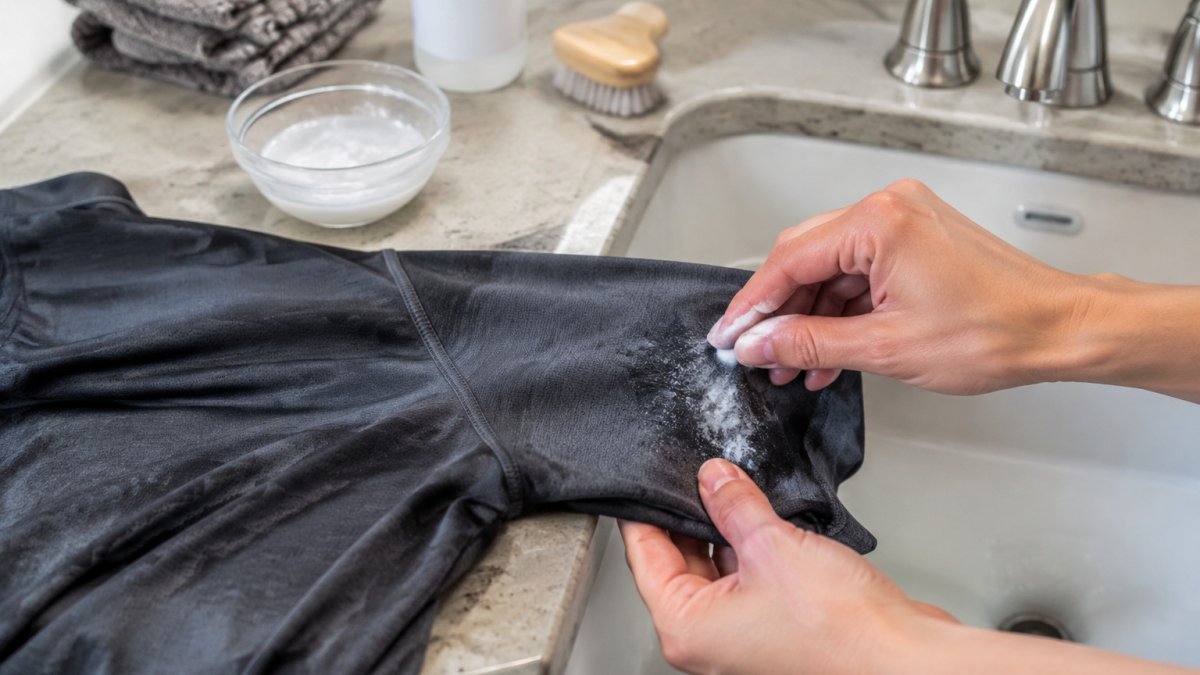
- Rinse the garment in cool water. Flush from the back of the stain so you push residue out, not further in.
- Apply an enzyme-based stain remover. Work it gently into the stained area with your fingers.
- Let it sit. Allow the product to work for at least 15 minutes, or follow the product label.
- Pre-soak in cool to lukewarm water. Keep the water below 100°F. Hot water sets protein stains.
- Gently rub the fabric together. Do not scrub hard, because abrasion can fuzz synthetic fibers.
- Check before drying. If a faint mark remains, repeat the treatment. Heat from a dryer can make it permanent.
Plenty of people reach for baking soda paste or hydrogen peroxide here. Those can work on some stains, but test them on a hidden area first, since peroxide can lighten dark performance fabrics.
The steps below summarise the fresh-stain pretreatment routine, with the timing and temperature limits the article specifies.
| Step | What to do | Time or limit |
|---|---|---|
| 1. Rinse | Flush from the back of the stain in cool water | Cool water |
| 2. Enzyme remover | Work an enzyme-based remover in with fingers | Follow product label |
| 3. Let it sit | Allow the product to work | At least 15 minutes |
| 4. Pre-soak | Soak in cool to lukewarm water | Below 100°F |
| 5. Gentle rub | Rub fabric together without scrubbing | No hard scrubbing |
| 6. Check | Repeat if a faint mark remains, before drying | Before any dryer use |
How to Remove Old Sweat Stains From Clothes
Old sweat stains are harder because the protein, salt, and oil residue has had time to oxidize and bond with the fiber. On technical fabric the residue also sits inside the gaps between filaments, so a surface-only treatment often lifts the visible ring while leaving the source behind.
Use stain age, color, and fabric to pick your method instead of running every remedy in sequence.
If the stain is yellow-brown and the garment is white or light-colored: start with an oxygen-based color-safe booster (the sodium percarbonate products sold as "Oxi"-style powders) dissolved in cool water, and pre-soak for 1 to 2 hours. Oxygen bleach is generally considered gentler on elastane than chlorine bleach. Follow the package dose; more is not better and can leave its own residue.
If the stain is yellow-brown and the garment is dark or printed: skip oxygen boosters and peroxide unless you have patch-tested them, because both can lighten dye. Use an enzyme-based pretreatment, work it into the stain, and let it sit 30 to 60 minutes before a cool wash.
If the stain is gray or black and smells musty: the discoloration is likely microbial, not just protein. Treat it as an odor problem first with an enzyme product or a dedicated sports-detergent soak, then reassess. Killing the odor source often clears the discoloration on the next wash.
If the stain is white and crusty: that is usually deodorant and antiperspirant residue, not sweat. Antiperspirant salts (aluminum chlorohydrate and similar) bind to fabric and resist normal washing. Dissolve it with a warm-water soak and a small amount of dish soap or white vinegar, then launder. Treating it as a sweat stain wastes time.
For any old stain, a baking soda paste still has a role: it is mildly alkaline, lifts surface residue, and helps with odor. Mix three parts baking soda to one part water, spread it on, leave it 20 to 30 minutes, and rinse before washing.
Watch out: Do not use chlorine bleach on elastane or on any colored or printed performance garment. Chlorine degrades spandex elasticity and can permanently yellow white synthetics, and the damage is not reversible.
If a stain survives two or three rounds of enzyme treatment plus an oxygen soak, it is probably oxidized dye damage rather than removable residue. At that point the discoloration is in the fiber, not on it, and further treatment risks weakening the fabric. Retire the garment to non-training use rather than escalating to stronger chemicals.
How to Remove Sweat Stains From Colored Shirts
Colored shirts need extra care. Dyes can shift or fade if the treatment is too strong or too hot.
- Always run the colorfastness test first.
- Use only cool to lukewarm water, below 100°F.
- Choose an enzyme-based product over a bleach-based one.
- Avoid hydrogen peroxide on dark or printed garments unless you have tested a hidden spot.
Printed slogans and logos are also at risk. Turn the garment inside out before you wash it, and do not scrub directly over the print.
How to Get Sweat Stains Out of Shirts After Washing
Sometimes a stain only shows up after a wash, when it has dried and set. This usually means residue was trapped in the fibers and heat from the dryer locked it in.
Re-treat the stain before the next wash. Apply an enzyme-based remover, let it sit, then rinse in cool water. Wash the shirt by itself or with similar colors, using a detergent suited to athletic fabric.
Air dry the garment. Heat is the most common reason a faint stain becomes a permanent one. If you must use a dryer, use the lowest setting and check the shirt before it goes in.
Washing Workout Clothes to Remove Odors and Prevent Buildup
Most guides treat workout laundry as a stain problem. On technical fabric it is also a finish problem. Moisture-wicking and antimicrobial treatments are applied to the fiber surface, and the wrong routine strips them faster than normal wear does.
Detergent choice. Use a liquid detergent labeled for activewear or a mild, dye-free liquid detergent. Powder detergents can leave undissolved granules trapped in tight synthetic weaves, and detergents with optical brighteners can dull dark performance fabrics over time.
Fabric softener and dryer sheets. Skip both on technical fabric. Softeners work by coating fibers with a waxy layer, which is exactly what blocks wicking and traps odor-causing bacteria. Dryer sheets do the same thing and also reduce the breathability of mesh panels.
Water temperature. Cool or lukewarm water is enough for routine washing and is safer for elastane, which degrades faster in hot water. Reserve warm water for the occasional deodorant-residue soak, not for every load.
Load and cycle. Wash technical garments inside out, in a mesh bag if the fabric is thin, and separate from cotton and towels that shed lint into synthetic weaves. Use a normal or gentle cycle; heavy-duty cycles abrade the surface and can pill the fabric.
Frequency. Wash after every heavy sweat session. Rinse in cool water if you cannot wash right away, because dried residue is harder to lift than fresh residue.
Antimicrobial finishes. These are designed to slow bacterial growth, not to replace washing. They also wear off with repeated hot washing and harsh detergents. If odor returns quickly after washing, the finish may be depleted; an enzyme pre-soak can help, but it will not restore the finish.
Watch out: Do not use chlorine bleach or oxygen bleach on antimicrobial-treated garments unless the care label explicitly allows it, because both can degrade the finish and, on some fabrics, the fiber itself.
A simple routine that protects the finish: cool water, activewear liquid detergent, no softener, inside-out, mesh bag, air dry. That routine handles both odor and buildup without trading away the performance you paid for.
Start Your Stain Removal Routine Today
Pick one stained garment and treat it this week. Start with the care label, run the colorfastness check, and use cool water with an enzyme-based pretreatment. Consistent routines prevent most sweat stains from becoming permanent.
Peakform Nutrition offers performance supplements and moisture-wicking apparel designed for daily training.

Last Updated: November 5, 2026
Frequently Asked Questions
How do you get sweat stains out of athletic material?
Pretreat the stain as soon as possible with an enzyme-based stain remover, since enzymes break down the proteins in sweat. Soak the garment for about 30 minutes in cold to lukewarm water. Gently rub the area, then launder on a normal cycle with a detergent that matches the fabric. Check the care label first, and air dry the shirt to confirm the stain is gone before using the dryer, since heat can set any remaining residue.
Can old sweat stains be removed from technical athletic fabric?
Often yes, though older stains take more patience. Repeat the enzyme pretreatment and a longer soak, typically several hours or overnight in cold water, then wash again. Avoid chlorine bleach, which can damage elastane and discolor synthetic dyes, and skip high heat until the stain is fully gone. If yellowing persists after several rounds, the residue may be oxidized and a second, gentler treatment may be needed before expecting full removal.
Does dish soap remove sweat stains from workout clothes?
Dish soap can help lift oily residue, and it is a reasonable option for a light spot treatment on synthetic fabric. It is not a complete solution on its own, because it does not target sweat proteins as effectively as an enzyme-based product. Work a small amount into the stain, let it sit briefly, rinse in cold water, then wash as usual. Test a hidden area first, since some dyes on printed or dark garments can react.
How should you wash technical athletic fabric after treating a stain?
Wash the garment in cold or warm water on a gentle cycle, separated from heavily soiled items, and use a detergent suited to performance fabric. Skip fabric softener, which coats moisture-wicking fibers and reduces their ability to pull sweat away from skin. Air dry rather than tumble drying, and check the stain before drying because heat can permanently set what remains.
