

Table of Contents
- Understanding Your Metabolic Rate and Fat Loss
- Step 1: Build Lean Muscle Through Strength Training for Metabolism
- Step 2: Optimize Protein Intake for Fat Loss
- Step 3: Add High-Intensity Interval Training to Boost Metabolism
- Step 4: Prioritize Sleep and Circadian Rhythm Alignment
- Step 5: Manage Stress and Cortisol Levels
- Step 6: Increase NEAT vs EAT for Weight Loss
- Step 7: Choose Metabolism Boosting Foods and Hydration
- Putting It All Together: Your 4-Week Action Plan
- Tracking Progress and Avoiding Plateaus
- Frequently Asked Questions
Last Updated: September 19, 2026
Understanding Your Metabolic Rate and Fat Loss
Your metabolic rate determines how many calories your body burns daily. It's the engine that powers everything from breathing to thinking to moving. Understanding how to boost metabolism fat loss means essentially turning up that engine so it burns more fuel, even at rest.
The challenge most people face is that metabolism isn't fixed. It changes based on what you eat, how you move, how you sleep, and even how stressed you are. Understanding that boosting metabolism for fat loss isn't about quick fixes, it's about systematically adjusting multiple levers in your daily life.
Your basal metabolic rate (the calories you burn doing nothing) accounts for roughly 60-75% of your total daily energy expenditure (Factors Affecting Energy Expenditure and Requirements). The remaining 25-40% comes from activity and the thermic effect of food (the energy required to digest what you eat). This matters because it means you have multiple ways to increase calorie burn.
The good news: each step below builds on the others. You don't need to do all seven simultaneously. Start with the ones that fit your current routine, then layer in the rest over the next 4-6 weeks.
Step 1: Build Lean Muscle Through Strength Training for Metabolism
Muscle tissue burns calories at rest. More muscle means a higher baseline metabolic rate. This is why strength training is the foundation of boosting metabolism for fat loss.
When you perform resistance training, you create micro-tears in muscle fibers. Your body repairs these tears and builds them back stronger. That repair process burns calories. More importantly, the new muscle tissue itself demands energy 24/7, even when you're sitting down.
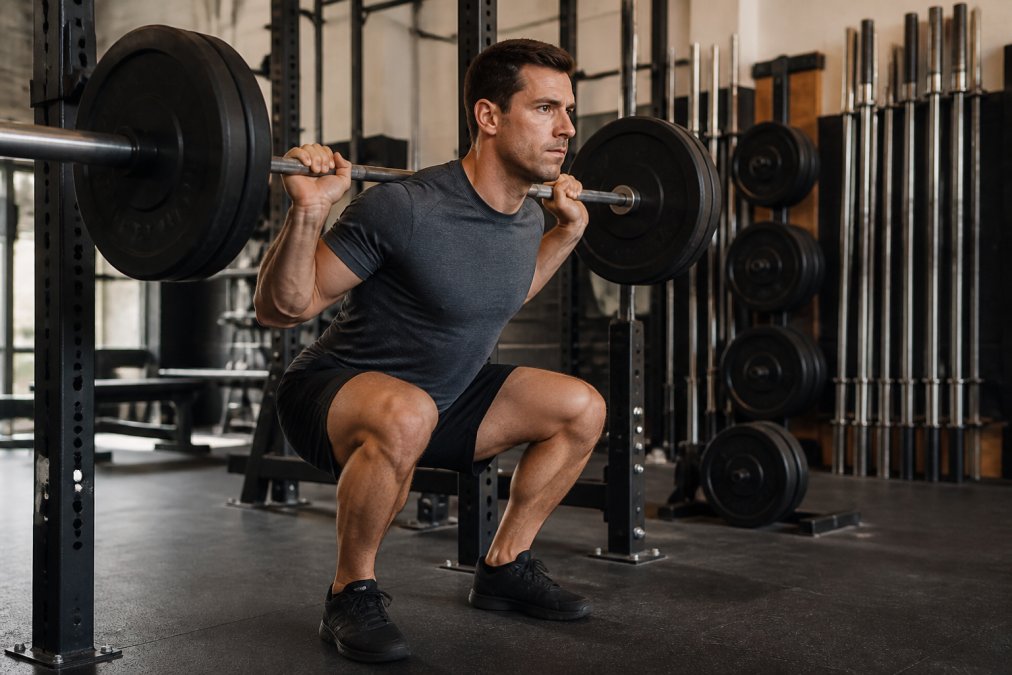
Focus on compound movements that engage multiple muscle groups:
- Squats and deadlifts
- Push-ups and bench presses
- Rows and pull-ups
- Overhead presses
Aim for 3-4 strength sessions per week. Each session should last 30-45 minutes. You don't need to be in the gym for hours. Consistency matters more than intensity when you're starting out.
A practical approach: perform 3-4 exercises per session, 3-4 sets each, with 60-90 seconds rest between sets. This creates enough volume to stimulate muscle growth without excessive fatigue.
Step 2: Optimize Protein Intake for Fat Loss
Protein has the highest thermic effect of any macronutrient. Your body burns 20-30% of protein calories just digesting it. This means eating more protein directly boosts metabolism for fat loss.
Protein also preserves muscle during a caloric deficit. When you eat less food overall, your body can break down muscle for energy. Adequate protein prevents this. It signals to your body that muscle is valuable and should be kept.
Target protein intake based on your body weight:
- Sedentary individuals: 0.8 grams per pound
- Active individuals (training 3-4x weekly): 1.0-1.2 grams per pound
- Athletes in deficit: 1.2-1.6 grams per pound
If you weigh 180 pounds and train 4 times per week, aim for 180-216 grams of protein daily. Spread this across 4-5 meals to maximize muscle protein synthesis throughout the day.
Quality protein sources include:
- Chicken and turkey breast
- Lean beef and fish
- Eggs and Greek yogurt
- Cottage cheese and whey protein
Whey protein powder is convenient for hitting daily targets. The Peakform Nutrition Workout Supplement Stack includes Elite Standard Whey, which supports post-workout recovery and helps you reach your daily protein goal efficiently.

Step 3: Add High-Intensity Interval Training to Boost Metabolism
High-intensity interval training (HIIT) creates an "afterburn effect" where your body continues burning elevated calories for hours post-workout. This is called excess post-exercise oxygen consumption (EPOC).
HIIT involves short bursts of maximum effort followed by recovery periods. A typical session lasts 15-20 minutes. Despite the short duration, HIIT generates significant metabolic demand.
A simple HIIT protocol:
- Warm up: 2-3 minutes easy movement
- Work interval: 30 seconds maximum effort
- Recovery interval: 60-90 seconds low intensity
- Repeat: 8-10 rounds total
- Cool down: 2-3 minutes easy movement
You can apply HIIT to any activity: sprinting, rowing, cycling, jump rope, or burpees. The key is pushing hard during work intervals, then recovering (not resting completely) during recovery intervals.
Add HIIT 1-2 times per week alongside your strength training. Doing it more frequently risks overtraining and recovery issues. Quality matters more than frequency.
The combination of strength training plus HIIT creates a powerful metabolic stimulus.
Step 4: Prioritize Sleep and Circadian Rhythm Alignment
Sleep deprivation reduces metabolic rate and increases hunger hormones. When you sleep poorly, your body burns fewer calories and craves more food, a losing combination.
Practical steps for better sleep:
- Keep a consistent sleep schedule (same bedtime and wake time)
- Sleep in a cool, dark room (around 65-68 degrees Fahrenheit)
- Avoid screens 30-60 minutes before bed
- Limit caffeine after 2 PM
- Get morning sunlight exposure within an hour of waking
Step 5: Manage Stress and Cortisol Levels
Chronic stress elevates cortisol, a hormone that promotes fat storage (especially around the midsection) and muscle breakdown. High cortisol also increases hunger and cravings for calorie-dense foods.
You can't eliminate stress, but you can manage your response to it. Effective stress management techniques include:
- Meditation or breathwork: 5-10 minutes daily
- Walking in nature: 15-20 minutes
- Journaling: 10 minutes to process thoughts
- Social connection: time with friends and family
- Hobbies and creative activities
Step 6: Increase NEAT vs EAT for Weight Loss
NEAT stands for Non-Exercise Activity Thermogenesis, calories burned through daily movement outside formal workouts. It includes walking, fidgeting, occupational activity, and maintaining posture.
Increasing NEAT doesn't require gym time. Simple changes add up:
- Take the stairs instead of the elevator
- Park farther away and walk
- Stand while working or use a standing desk
- Walk during phone calls
- Do light stretching or mobility work while watching TV
- Pace while thinking
Step 7: Choose Metabolism Boosting Foods and Hydration
Certain foods and beverages support metabolic health. Metabolism boosting foods don't magically burn fat, but they support the hormonal and physiological environment where fat loss happens.
Foods that support metabolism:
- Green tea and coffee: contain caffeine and catechins that increase fat oxidation
- Spicy foods: capsaicin temporarily increases thermogenesis
- Whole grains: higher thermic effect than refined carbs
- Lean proteins: highest thermic effect of any macronutrient
- Vegetables: nutrient-dense, low calorie, support satiety
| Food Type | Thermic Effect | Best For |
|---|---|---|
| Protein | 20-30% | Muscle preservation, satiety |
| Whole grains | 5-10% | Sustained energy, fiber |
| Vegetables | 5% | Nutrients, low calories |
| Healthy fats | 0-3% | Hormone production, satiety |
| Refined carbs | 5% | Quick energy (limited use) |
Putting It All Together: Your 4-Week Action Plan
You don't need to implement all seven steps simultaneously. This creates overwhelm and makes adherence impossible.
Week 1-2: Foundation
- Start strength training 3 times per week (focus on form, not weight)
- Increase daily steps to 7,000-8,000
- Optimize sleep: consistent bedtime and wake time
- Add one stress management practice (meditation or walking)
Week 3-4: Build
- Add one HIIT session per week
- Increase protein intake to target
- Add green tea or coffee to daily routine
- Increase daily steps to 9,000-10,000
Week 5-6: Refine
- Add second HIIT session
- Fine-tune meal timing and frequency
- Evaluate sleep quality and adjust as needed
- Assess stress levels and adjust practices
Tracking Progress and Avoiding Plateaus
Metabolic adaptation happens. Your body adjusts to consistent stimulus, and progress slows. This is normal and manageable.
Track these metrics weekly:
- Body weight (weigh yourself 2-3 times per week, average the results)
- How your clothes fit
- Energy levels and workout performance
- Sleep quality
- Hunger and cravings
If progress stalls for 3-4 weeks, make small adjustments:
- Increase NEAT by 1,000 steps
- Add one additional strength exercise per session
- Increase training volume by 10-15%
- Reduce caloric intake by 5-10% (if in a deficit)
Frequently Asked Questions
How do I boost my metabolism to burn fat?
Boost metabolism through a combination of resistance training to build lean muscle, high-intensity interval training, adequate protein intake, quality sleep, and stress management. These approaches increase your basal metabolic rate and energy expenditure throughout the day. Adding more daily movement (NEAT) and staying hydrated also support fat loss. Most people see meaningful changes within 4-6 weeks of consistent effort.
How much protein do I need to increase my metabolic rate?
Aim for 0.7 to 1 gram of protein per pound of body weight daily. Protein has the highest thermic effect of food, meaning your body burns more calories digesting it compared to carbs or fats. This increased energy expenditure, combined with protein's role in muscle protein synthesis, can support a higher metabolic rate and fat loss goals.
What's the difference between NEAT and EAT for weight loss?
EAT (Exercise Activity Thermogenesis) is calories burned during structured workouts, while NEAT (Non-Exercise Activity Thermogenesis) is energy spent on daily activities like walking, fidgeting, and occupational tasks. NEAT accounts for 15-30% of total daily energy expenditure and is often overlooked. Increasing NEAT through more movement throughout the day, taking stairs, parking farther away, standing more, can significantly boost fat loss without formal exercise.
Does drinking cold water actually boost metabolism?
Yes, cold water does temporarily boost metabolism through thermogenesis. Your body burns calories heating cold water to body temperature. While the effect is modest (about 30 calories per liter), consistent hydration supports metabolic health, reduces hunger, and improves workout performance. Staying hydrated also optimizes nutrient transport and metabolic efficiency, making it a simple, effective addition to any fat loss plan.