

Table of Contents
- Quick Comparison: Top Supplements for Skin Health and Glow
- How We Evaluated These Supplements
- 1. Collagen Peptides: The Foundation of Skin Elasticity
- 2. Hyaluronic Acid and Vitamins for Deep Skin Hydration
- 3. Antioxidants and UV Protection: Glutathione and Astaxanthin
- 4. Best Vitamins for Skin Radiance and Cellular Renewal
- 5. Omega-3 Fatty Acids and the Skin Barrier
- 6. The Gut-Skin Axis: Probiotics and Skin Clarity
Last Updated: August 28, 2026
Quick Comparison: Top Supplements for Skin Health and Glow
Achieving radiant, youthful skin starts from within. The supplements you choose can make the difference between a dull complexion and one that radiates vitality. At Peakform Nutrition, we offer a range of products to help you build a regimen that supports your skin health goals.
Quick Picks:
- Best Foundation: Collagen peptides, essential for skin structure and elasticity
- Best for Hydration: Hyaluronic acid combined with vitamins for deep moisture
- Best Antioxidant Defense: Astaxanthin and glutathione for UV protection and brightening
- Best for Radiance: B vitamins and vitamin C for cellular renewal
- Best for Barrier Health: Omega-3 fatty acids for skin hydration and inflammation control
- Best for Clarity: Probiotics targeting the gut-skin axis
How We Evaluated These Supplements
We assessed each supplement based on five criteria: bioavailability, clinical evidence for skin-specific benefits, interactions with topical skincare, safety profile, and practical integration into daily routines. Absorption rates vary dramatically between supplement forms, collagen peptides in powder absorb better than capsules, and liposomal forms of antioxidants penetrate cellular membranes more effectively. We prioritized supplements that work synergistically with topical skincare and evaluated safety equally, as some antioxidants can cause photosensitivity and certain supplements interfere with medications.
1. Collagen Peptides: The Foundation of Skin Elasticity
Collagen peptides are the most researched supplement for skin elasticity and firmness. They're hydrolyzed collagen, broken down into amino acids small enough for your digestive system to absorb, unlike bone broth or gelatin, where the hydrolyzation process is critical.

Why Collagen Matters for Skin Structure
Collagen comprises roughly 70% of your skin's dry weight, providing structural support and elasticity. Collagen production declines by approximately 1% per year after age 25, which is why fine lines deepen and skin loses its bounce over time (peer-reviewed research). Oral collagen peptides provide amino acids, particularly glycine, proline, and hydroxyproline, that your body uses to synthesize new collagen. Studies show that consistent collagen supplementation improves skin hydration, elasticity, and reduces fine lines within 8-12 weeks, with results most pronounced in people over 40 (peer-reviewed research).
Peakform Nutrition's approach emphasizes bioavailability and clean sourcing. Our supplements use grass-fed collagen peptides that dissolve completely in hot or cold liquids, making them easy to incorporate into coffee, smoothies, or water.
Bioavailability and Absorption Rates
Hydrolyzed collagen should have a molecular weight between 2,000-5,000 Daltons for optimal absorption. Grass-fed and pasture-raised sources absorb better than conventional collagen because the animals' natural movement and diet create a more complete amino acid profile. Taking collagen with vitamin C amplifies collagen synthesis, as vitamin C is a cofactor in the hydroxylation process that stabilizes newly formed collagen. Most people see results with 10-20 grams daily. Consistency matters far more than dosage.
2. Hyaluronic Acid and Vitamins for Deep Skin Hydration
Hyaluronic acid is a humectant that draws water into the skin and holds it there. One molecule can bind up to 1,000 times its weight in water, making it essential for plump, dewy skin and reducing fine lines caused by dehydration (peer-reviewed research). Oral hyaluronic acid supplements work differently than topical serums, they're absorbed into the bloodstream and distributed throughout the dermis, hydrating skin from within.
For maximum effect, combine hyaluronic acid with vitamin C and niacinamide. Vitamin C stimulates collagen production and protects against oxidative stress. Niacinamide strengthens the skin barrier, reducing transepidermal water loss.
3. Antioxidants and UV Protection: Glutathione and Astaxanthin
Oxidative stress is the primary driver of skin aging. Free radicals, generated by UV exposure, pollution, and normal metabolism, damage collagen, elastin, and cellular DNA. Antioxidants neutralize free radicals before they cause damage.
Glutathione is your body's master antioxidant. It recycles other antioxidants like vitamins C and E, making them available for repeated use.
Astaxanthin is a carotenoid with antioxidant properties 6,000 times stronger than vitamin C.
4. Best Vitamins for Skin Radiance and Cellular Renewal
Vitamins are cofactors in the biochemical reactions that keep skin healthy. Without adequate vitamin levels, your skin can't produce collagen, regulate sebum, turn over dead cells, or defend against oxidative stress.
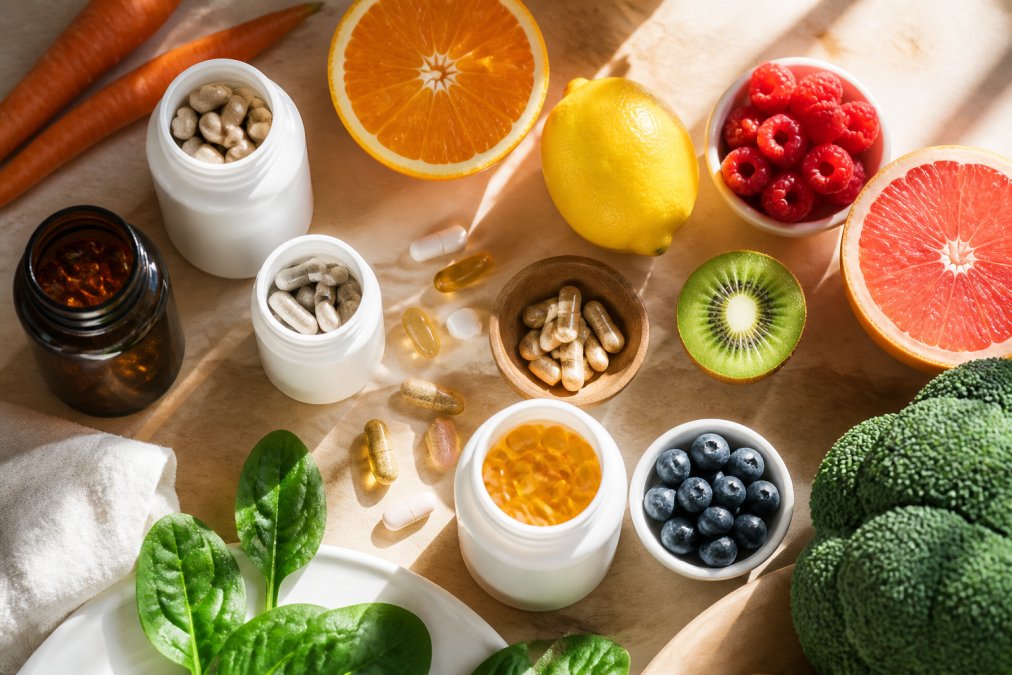
Vitamin C is the most critical for skin radiance. It's a cofactor in collagen synthesis and a potent antioxidant. Liposomal vitamin C supplements solve absorption challenges by encasing the vitamin in lipid spheres that protect it during digestion and improve cellular uptake.
B vitamins, particularly biotin, niacin, and B5, regulate sebum production, support cellular turnover, and strengthen the skin barrier. High-dose biotin (5-10 mg daily) can improve skin texture and reduce breakouts. Note: biotin can interfere with certain blood tests and medications, so check with your healthcare provider.
Vitamin E is a fat-soluble antioxidant that protects cell membranes from oxidative damage. It works synergistically with vitamin C, as vitamin C regenerates vitamin E after it neutralizes free radicals.
5. Omega-3 Fatty Acids and the Skin Barrier
Your skin barrier is primarily composed of lipids. Omega-3 fatty acids are essential fats your body cannot produce, so you must obtain them through diet or supplementation. Omega-3s, particularly EPA and DHA, reduce inflammation throughout your body, including in your skin. This is why people with inflammatory skin conditions like eczema and psoriasis often see improvement with omega-3 supplementation.
Omega-3s also improve skin hydration by strengthening the lipid barrier. Consistent omega-3 supplementation over 8-12 weeks noticeably improves skin hydration and reduces redness and sensitivity.
6. The Gut-Skin Axis: Probiotics and Skin Clarity
The gut-skin axis is the bidirectional communication between your gut microbiome and your skin health. A dysbiotic gut triggers systemic inflammation, which manifests as acne, rosacea, eczema, and dullness. A healthy, diverse gut microbiome correlates with clear skin. Probiotics restore microbial balance and reduce intestinal permeability, sealing the gut barrier and reducing the inflammatory cascade that damages skin.
Look for Lactobacillus and Bifidobacterium species, which have the strongest evidence for skin health. Results take longer than other supplements, typically 8-12 weeks, because establishing new microbial populations is gradual.
Bioavailability and Absorption: Why Form Matters
The supplement form you choose directly affects how much of the active ingredient reaches your bloodstream and skin cells. Powders generally have the highest bioavailability because they dissolve completely in your digestive system. Capsules are convenient but may not dissolve completely, reducing absorption by 10-20%. Softgels are ideal for fat-soluble vitamins and omega-3s because the oil coating protects ingredients during digestion. Liposomal supplements have superior absorption for water-soluble vitamins like vitamin C and glutathione. Gummies are the most convenient form but typically contain added sugars and lower active ingredient concentrations.
Interactions with Topical Skincare: Building a Cohesive Routine
Your oral supplements should work synergistically with your topical skincare, not compete with it. Vitamin C supplements amplify the effects of topical vitamin C serums. Collagen supplements pair well with retinol-based topicals, supporting skin barrier repair while retinol increases cellular turnover. Hyaluronic acid supplements complement hydrating serums and moisturizers. Antioxidant supplements work well with SPF, providing internal UV protection while sunscreen provides external barrier protection.
Safety and Potential Side Effects
Most supplements for skin health are well-tolerated. Collagen peptides are generally very safe with rare mild digestive upset. Hyaluronic acid has no known serious side effects. Glutathione is safe for most people, but high doses can cause nausea. Astaxanthin can cause photosensitivity in rare cases at typical doses (4-12 mg daily). Biotin at high doses (5-10 mg daily) can interfere with certain blood tests. Omega-3 fish oil can increase bleeding risk at very high doses (above 3 grams daily). Probiotics typically have no serious side effects, but initial adjustment is common. Immunocompromised individuals should consult a healthcare provider before starting probiotics.
Personalized Supplementation Based on Skin Type
Your skin type and primary concern should dictate which supplements you prioritize. For oily, acne-prone skin: Prioritize probiotics, omega-3s, and niacinamide. For dry, sensitive skin: Collagen peptides, hyaluronic acid, omega-3s, and ceramides are your foundation. For mature skin (40+): Collagen peptides, vitamin C, astaxanthin, and omega-3s are non-negotiable. For dull, tired-looking skin: Vitamin C, astaxanthin, and probiotics are your priority. For combination skin: Start with collagen peptides and vitamin C as your foundation.
Sustainability and Sourcing Transparency
Where your supplements come from matters for both efficacy and environmental impact. Grass-fed collagen peptides have a superior amino acid profile and absorb better than conventional sources. Fish oil supplements sourced from small fish species (sardines, anchovies) rather than large predatory fish are more sustainable and have lower mercury content. Astaxanthin from algae is more sustainable than astaxanthin from krill.
Look for third-party testing certifications (NSF Certified for Sport, USP Verified, Informed Choice) on supplement labels. These certifications verify that the product contains what the label claims and is free from banned substances and contaminants. Peakform Nutrition's approach to supplements for skin health emphasizes sourcing transparency and clean ingredients. Our Aphrodite's Blessing beauty care line uses all-natural ingredients and undergoes rigorous third-party testing to ensure purity and potency.
How Long Should You Take Skin Supplements for Results?
Patience is essential with supplements for skin health. Your skin cells turn over every 28-30 days, and collagen remodeling takes 8-12 weeks. Most people see noticeable results within 6-8 weeks of consistent daily use.
Timeline expectations by supplement:
- Collagen peptides: 4-6 weeks for improved hydration, 8-12 weeks for visible firmness
- Hyaluronic acid: 2-4 weeks for improved hydration
- Vitamin C: 4-6 weeks for improved radiance
- Astaxanthin: 6-8 weeks for reduced fine lines
- Omega-3s: 8-12 weeks for improved skin barrier
- Probiotics: 8-12 weeks for improved clarity
Consistency matters more than perfection. After 12 weeks, reassess your regimen. Some supplements can be continued indefinitely (collagen, omega-3s, vitamin C). Others, like high-dose biotin, should be cycled: take for 3 months, then take a 1-month break.
Comparison Table: Top Supplements for Skin Health and Glow
| Supplement | Best For | Key Benefit | Typical Timeline | Best Form |
|---|---|---|---|---|
| Collagen Peptides | Overall skin elasticity | Firmness, hydration, fine line reduction | 8-12 weeks | Powder |
| Hyaluronic Acid | Deep hydration | Plumpness, dewy appearance | 2-4 weeks | Capsule or softgel |
| Astaxanthin | Antioxidant defense, UV protection | Radiance, wrinkle reduction | 6-8 weeks | Softgel |
| Vitamin C | Brightening, collagen support | Even skin tone, radiance | 4-6 weeks | Liposomal powder |
| Omega-3 Fish Oil | Barrier health, inflammation | Hydration, reduced sensitivity | 8-12 weeks | Softgel (triglyceride form) |
| Probiotics | Clarity, gut-skin axis | Reduced breakouts, improved tone | 8-12 weeks | Capsule (50B+ CFU) |
Building Your Personalized Routine
Start simple. Most people see excellent results from a foundation of three supplements: collagen peptides, vitamin C, and omega-3s. These address the core mechanisms of skin aging: collagen loss, oxidative stress, and inflammation. After 8-12 weeks at this foundation level, assess your results and add a fourth supplement based on your remaining concerns. If you still have dullness, add astaxanthin. If you have breakouts or sensitivity, add probiotics. If hydration is still lacking, add hyaluronic acid.
Avoid adding everything at once. You won't be able to identify which supplements are actually working, and the cost becomes prohibitive. A strategic, phased approach is more effective and sustainable. Track your progress with monthly photos taken in consistent lighting. Skin changes are gradual, and you'll notice improvements more clearly in photos than in the mirror.
Frequently Asked Questions
What is the best supplement for glowing skin?
The best supplement depends on your specific skin concerns, but collagen peptides and hyaluronic acid are foundational for skin hydration and elasticity. For skin radiance, astaxanthin and glutathione provide powerful antioxidant defense against free radicals and oxidative stress. Combining collagen with Vitamin C enhances collagen production and supports a brighter complexion. Peakform Nutrition's Aphrodite's Blessing line uses all-natural ingredients designed to address multiple skin health needs simultaneously.
How long does it take to see results from skin health supplements?
Most skin supplements require 4 to 12 weeks of consistent daily use before visible results appear. Collagen peptides typically show improvements in skin elasticity and hydration within 6 to 8 weeks. Antioxidants like astaxanthin may reduce fine lines. Individual results vary based on age, baseline skin condition, diet, hydration, and sun exposure. Consistency matters more than dosage, taking supplements daily produces better results than sporadic use.
Do oral supplements actually improve skin health?
Yes, oral supplements can improve skin health when they address nutrient deficiencies and support dermal health from within. Collagen peptides increase skin hydration and elasticity. Hyaluronic acid supplements increase skin moisture retention. Omega-3 fatty acids strengthen the lipid barrier and reduce inflammation. Probiotics support the gut-skin axis, reducing acne and sensitivity. However, supplements work best alongside proper hydration, sun protection, sleep, and a nutrient-rich diet. Topical skincare products address surface concerns, while oral supplements support deeper cellular turnover and skin barrier function.
Are there side effects to taking skin-boosting supplements?
Most skin supplements are well-tolerated, but some people experience mild side effects. Collagen supplements may cause digestive discomfort in sensitive individuals. Fish oil supplements can cause a fishy aftertaste or mild nausea. Probiotics may initially cause bloating as the gut microbiome adjusts. High-dose vitamin supplements can interact with medications, consult a healthcare provider if you take blood thinners or other medications. Glutathione supplements are generally safe, but liposomal forms may cause mild headaches in some users. Quality matters: third-party tested supplements from reputable brands reduce contamination risks.
Can I take multiple skin supplements together?
Yes, many skin supplements work synergistically when combined thoughtfully. Collagen pairs well with Vitamin C, hyaluronic acid, and biotin for enhanced collagen production and skin radiance. Omega-3 fatty acids complement antioxidants by reducing inflammation while antioxidants neutralize free radicals. Probiotics support nutrient absorption, making other supplements more effective. However, avoid exceeding recommended daily limits for fat-soluble vitamins like A, D, and E, which accumulate in body tissues. Peakform Nutrition's tailor-made approach helps you identify which combinations suit your skin type and health goals.
Last Updated: August 28, 2026
Ready to transform your skin from within? At Peakform Nutrition, our supplements for skin health are formulated with bioavailability and synergy in mind. Our Aphrodite's Blessing beauty care line combines collagen peptides, hyaluronic acid, and antioxidants in a comprehensive formula designed to deliver visible radiance within 8 weeks. Shop Now and define your own path to glowing, youthful skin.