

Table of Contents
- Quick Comparison: Best Moisture-Wicking Shirts for Training
- How Moisture-Wicking Fabric Actually Works
- Synthetic vs Cotton Workout Shirts: Which Performs Better?
-
Top Moisture-Wicking Shirts Ranked by Training Type
- Best Budget Pick: Hanes Sport Cool DRI
- Best for Daily Training: Nike Dri-FIT Primary Tee
- Best Compression Fit: Under Armour HeatGear
- Best Eco-Friendly Option: Adidas AEROREADY Tee
- Best for Odor Control: Lululemon Metal Vent Tech
- Best for Cooling: Reebok ACTIVCHILL Tee
- Best for UV Protection and Versatility: Rhone Reign
- Best for Sensitive Skin: Vuori Strato Tech Tee
- Best Ultralight Pick: Ten Thousand Session Shirt
- Best Workout Shirts for Heavy Sweating: What to Look For
- How to Wash Moisture-Wicking Shirts Without Ruining Them
- Which Moisture-Wicking Shirt Should You Buy?
- Conclusion
Last Updated: August 10, 2026
Quick Comparison: Best Moisture-Wicking Shirts for Training
Moisture-wicking shirts pull sweat away from the skin and accelerate evaporation, keeping athletes dry during high-intensity training. The right shirt improves comfort, thermoregulation, and odor control. This guide helps you find the shirt that matches your training demands.
Quick Picks:
- Best Budget Pick: Hanes Sport Cool DRI, reliable wicking at an unbeatable price
- Best for Daily Training: Nike Dri-FIT Primary Tee, versatile and consistently effective
- Best Compression Fit: Under Armour HeatGear, tight, fast-drying, with built-in anti-odor
- Best Eco-Friendly: Adidas AEROREADY Tee, recycled materials without sacrificing performance
- Best Odor Control: Lululemon Metal Vent Tech, Silverescent technology is best-in-class
- Best for Cooling: Reebok ACTIVCHILL Tee, mesh-heavy design prioritizes airflow
- Best for UV Protection: Rhone Reign, UPF 50+ plus GoldFusion anti-odor
- Best for Sensitive Skin: Vuori Strato Tech Tee, exceptionally soft, anti-chafe construction
- Best Ultralight: Ten Thousand Session Shirt, micro mesh fabric that practically disappears
| Shirt | Starting Price | Best For | Key Technology |
|---|---|---|---|
| Hanes Sport Cool DRI | $18 (2-pack) | Budget buyers | Cool DRI + FreshIQ |
| Nike Dri-FIT Primary Tee | $32 | Daily training | Dri-FIT moisture transport |
| Under Armour HeatGear | $35 | Compression + wicking | HeatGear anti-odor mesh |
| Adidas AEROREADY Tee | $25 | Eco-conscious athletes | AEROREADY + recycled materials |
| Lululemon Metal Vent Tech | $78 | Odor resistance | Silverescent technology |
| Reebok ACTIVCHILL Tee | $24.99-$29.99 | Cooling and airflow | ACTIVCHILL mesh back |
| Rhone Reign | $68 | UV protection + versatility | GoldFusion + UPF 50+ |
| Vuori Strato Tech Tee | $58 | Sensitive skin | Anti-chafe seams + soft jersey |
| Ten Thousand Session Shirt | $78 | Ultralight running | Micro mesh + Odorblock |
How Moisture-Wicking Fabric Actually Works
Moisture-wicking fabric uses hydrophobic outer fibers and hydrophilic inner fibers to create capillary action that draws sweat away from the skin toward the surface where it evaporates quickly. Performance fabrics like polyester and nylon repel water at the fiber level, spreading it across a wider surface area for faster evaporation, the opposite of cotton, which absorbs and holds moisture against the skin.
According to textile performance research published by the American Association of Textile Chemists and Colorists, evaporation rate is directly tied to fiber structure and surface area. The best moisture-wicking shirts combine hydrophobic outer layers, hydrophilic inner layers, lightweight construction, and ventilation zones with mesh panels to increase airflow.
Thermoregulation is the broader goal. Moisture-wicking technology works alongside breathability to help your body maintain stable core temperature during high-intensity training.
Synthetic vs Cotton Workout Shirts: Which Performs Better?
Cotton loses this argument for serious training. Once wet, it stays wet, gets heavier, clings to the skin, and creates friction, a real problem during high-intensity interval training or long runs.
Synthetic fibers, primarily polyester and nylon, are the backbone of every performance shirt in this guide. Polyester is hydrophobic and channels moisture outward. Nylon adds durability and softness. Most performance shirts blend the two with elastane for four-way stretch.
Merino wool sits in a different category. It genuinely manages moisture, regulates temperature, and resists odor without synthetic treatments. The tradeoff is price and durability; merino shirts cost significantly more and require gentler care.
| Fabric | Moisture Management | Odor Resistance | Durability | Best Use Case |
|---|---|---|---|---|
| Cotton | Poor (absorbs, holds) | Low | High | Casual wear only |
| Polyester | Excellent | Moderate | High | All training types |
| Nylon | Very good | Moderate | Very high | Endurance + layering |
| Merino Wool | Good | Excellent (natural) | Moderate | Outdoor + travel |
| Polyester/Elastane blend | Excellent | Moderate-high | High | Compression + HIIT |
As the American Council on Exercise's guide to workout apparel notes, fabric choice directly affects comfort during sustained aerobic activity, and cotton is consistently the underperformer.
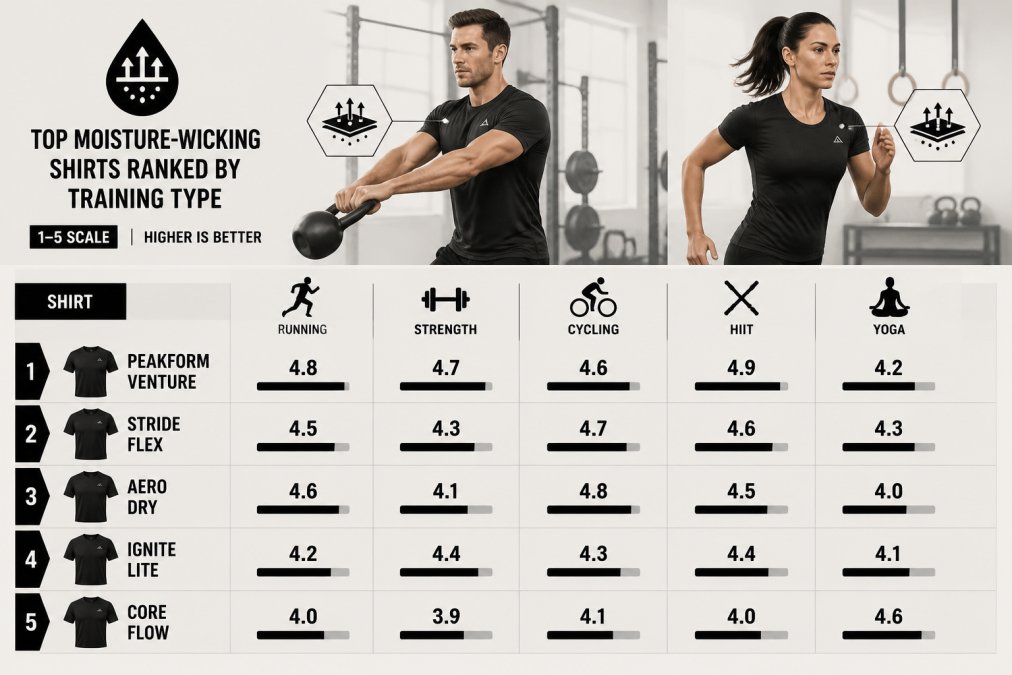
Top Moisture-Wicking Shirts Ranked by Training Type
Nine shirts made this list, each earning its spot for doing something particularly well for a defined athlete or training context.
Best Budget Pick: Hanes Sport Cool DRI
The Hanes Sport Cool DRI delivers reliable moisture-wicking at $18 for a two-pack. Cool DRI technology moves sweat away from skin and dries faster than standard cotton. FreshIQ odor protection adds antimicrobial defense. UPF 40+ or 50+ sun protection rounds out a feature set that punches well above cost. The fabric is functional rather than luxurious, and the fit is relaxed rather than performance-focused. For daily gym use, weekend runs, or building a training wardrobe on budget, this is the most rational buy.
Best for: Budget-conscious athletes, high-volume training, beginners building a training wardrobe.
Best for Daily Training: Nike Dri-FIT Primary Tee
The Nike Dri-FIT Primary Tee is the workhorse of performance training shirts. Dri-FIT technology moves sweat away from skin and accelerates evaporation. Underarm gussets and embroidered eyelets provide ventilation. The ultra-soft fabric moves with the body rather than against it. Note: this shirt tends to run small, so sizing up is recommended.
Best for: Daily gym-goers, general training, athletes who want a dependable everyday shirt.
Best Compression Fit: Under Armour HeatGear
Under Armour HeatGear combines tight fit, fast-drying performance, and strategic ventilation. Super-light HeatGear fabric delivers superior coverage without bulk. Mesh underarm and back panels provide targeted airflow. Anti-odor technology prevents odor-causing microbes. The tight fit isn't for everyone, but for those who train in compression gear, lifting, HIIT, warm-weather cardio, this is the most complete option at its price point.
Best for: Intense workouts, warm-weather training, athletes who prefer compression fits.
Best Eco-Friendly Option: Adidas AEROREADY Tee
The Adidas AEROREADY Tee prioritizes sustainability without sacrificing moisture management. AEROREADY technology keeps sweat at bay through effective moisture transport. The regular fit with side hem slits gives full range of motion. Made in part with recycled and renewable materials, it's one of the more sustainable options in performance activewear at this price.
Best for: Eco-conscious athletes, cardio, general training, athletes who prioritize sustainable materials.
Best for Odor Control: Lululemon Metal Vent Tech
Lululemon Metal Vent Tech separates itself through Silverescent technology, powered by X-STATIC silver fiber, which inhibits odor-causing bacteria growth. This is built into fabric construction, not a topical treatment that washes out. Seamless construction minimizes chafing. Lightweight four-way stretch moves freely in every direction. At $78 (often on sale for $39-$54), it's premium-priced, though some users report durability concerns after many wash cycles.
Best for: Runners, athletes with odor concerns, long training sessions, anyone who values fabric feel.
Best for Cooling: Reebok ACTIVCHILL Tee
The Reebok ACTIVCHILL Tee prioritizes cooling and heat dissipation. ACTIVCHILL fabric is specifically designed for breathability. The mesh back panel significantly increases airflow, making this the best option for athletes who run hot or train in warm environments. The slim fit reduces excess fabric movement. Lightweight construction means you barely notice the shirt.
Best for: High-intensity training, warm-weather workouts, athletes who prioritize cooling.
Best for UV Protection and Versatility: Rhone Reign
The Rhone Reign does more than most training shirts. UPF 50+ sun protection makes it a genuine outdoor option for trail running or outdoor HIIT. GoldFusion Anti-Odor technology keeps the shirt fresh across multiple wears. The nylon/polyester/elastane blend delivers quick-dry performance with enough stretch for full athletic range of motion. Raglan sleeves and straddle stitching reduce friction at seams. At $68, it's premium-priced, but the combination of UV protection, anti-odor performance, and durable construction makes it strong value for outdoor athletes.
Best for: Outdoor training, trail running, athletes who want one shirt for gym and outdoor environments.
Best for Sensitive Skin: Vuori Strato Tech Tee
The Vuori Strato Tech Tee is exceptionally soft against the skin. Anti-chafe seams eliminate friction points that cause irritation during repetitive movement. It delivers quick-drying construction, anti-odor technology, lightweight feel, and UPF sun protection. The modern athletic fit is versatile for yoga, running, travel, and gym training. At $58, it's premium-priced, but for athletes who've struggled with skin irritation from synthetic fabrics, the comfort difference is worth it.
Best for: Sensitive skin, yoga, travel, athletes who prioritize comfort.
Best Ultralight Pick: Ten Thousand Session Shirt
The Ten Thousand Session Shirt is built for athletes who want to forget they're wearing a shirt. Micro mesh fabric is among the lightest construction on this list. Permanent Odorblock treatment keeps odor under control across hundreds of training sessions. Anti-chafe flatlock seams run throughout. For runners and conditioning athletes, this is the shirt that disappears during a workout. At $78, it's priced at the top of this list, but justified for serious athletes who train daily.
Best for: Running, conditioning, mobility work, athletes who prioritize lightweight no-cling feel.
Best Workout Shirts for Heavy Sweating: What to Look For
Heavy sweating demands more from a training shirt. Standard moisture-wicking is necessary but not sufficient; construction details matter as much as fabric technology.
Key Features: Flatlock Seams, Mesh Panels, and Four-Way Stretch
Three construction features separate adequate shirts from genuinely effective ones for heavy sweating.
Flatlock seams sit flush against skin rather than creating a ridge. During high-volume movement, raised seams become friction points that cause chafing. The Ten Thousand Session Shirt and Lululemon Metal Vent Tech both use this construction.
Mesh panels are ventilation zones that accelerate airflow across back, underarms, and chest. They actively increase evaporation by exposing more fabric surface area to moving air. Under Armour HeatGear and Reebok ACTIVCHILL both incorporate strategic mesh placement.
Four-way stretch allows fabric to move with the body in every direction without creating tension. For heavy sweaters who move dynamically, a shirt that restricts movement adds friction and discomfort. Lululemon's Metal Vent Tech and Rhone Reign both include elastane for genuine four-way stretch.
Body-Type Fit Guide and Layering Strategies
Fit affects both performance and comfort:
- Compression fit (Under Armour HeatGear): Best for athletic builds or muscle support during lifting.
- Slim fit (Reebok ACTIVCHILL, Ten Thousand): Works for lean to average builds. Provides close contact for efficient moisture transport.
- Regular/relaxed fit (Adidas AEROREADY, Nike Dri-FIT): Suits most body types. Better airflow than compression fits.
- Modern athletic fit (Vuori Strato Tech): Tapered without being tight. Flattering on athletic builds.
Layering strategies for cold-weather training: Moisture-wicking shirts function as a base layer when temperatures drop. Choose a slim-fit or compression wicking shirt as your base; a regular fit creates too much dead air space between layers, reducing thermal efficiency. The Rhone Reign's quick-dry nylon blend is particularly effective as a base layer because it dries fast enough to prevent the chill from damp fabric under a mid-layer.
How to Wash Moisture-Wicking Shirts Without Ruining Them
Most moisture-wicking shirts fail prematurely because of how they're washed, not worn. Performance finishes, antimicrobial treatments, hydrophobic coatings, and stretch properties degrade faster with heat, fabric softener, and harsh detergents.
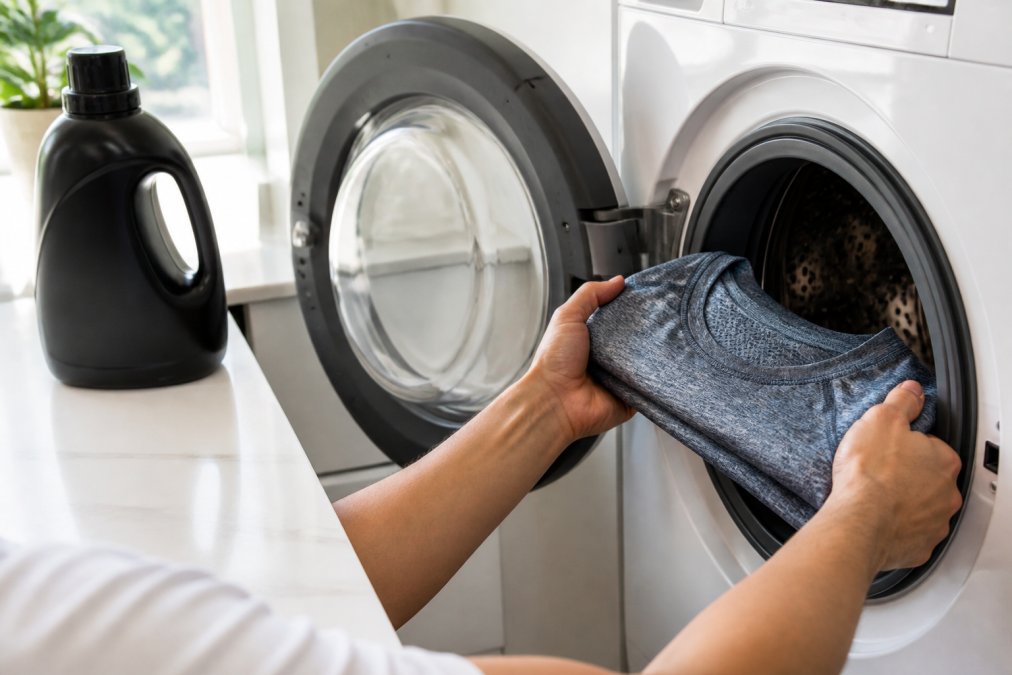
The correct approach is straightforward:
- Wash in cold water. Hot water breaks down synthetic fibers and degrades hydrophobic coatings.
- Skip fabric softener entirely. Fabric softener coats fibers with waxy residue that clogs the micro-channels responsible for moisture transport.
- Use sport-specific detergent. Standard detergents leave residue that builds up in synthetic fabrics.
- Air dry when possible. Tumble drying on high heat degrades elastane and can shrink polyester blends.
- Wash inside out. Body oils, sweat residue, and deodorant accumulate on the interior.
- Don't over-stuff the machine. Performance fabrics need room to move in the wash cycle.
According to care guidance from the Textile Care Alliance, synthetic performance fabrics last significantly longer when washed at lower temperatures and without chemical softening agents.
Which Moisture-Wicking Shirt Should You Buy?
The best shirt depends on what you're optimizing for:
Buy the Hanes Sport Cool DRI if budget is the primary constraint. It wicks, dries, and protects against odor at unbeatable value.
Buy the Nike Dri-FIT Primary Tee if you want one reliable shirt for daily training that requires no thought.
Buy the Under Armour HeatGear if you train in compression gear and want integrated moisture-wicking with anti-odor protection.
Buy the Lululemon Metal Vent Tech if odor control is your top priority. Silverescent technology is genuinely superior to topical antimicrobial treatments.
Buy the Ten Thousand Session Shirt if you're a runner or conditioning athlete who wants the lightest possible shirt with permanent odor protection.
Buy the Rhone Reign if you train outdoors regularly and want UV protection alongside moisture-wicking and anti-odor performance.
Buy the Vuori Strato Tech Tee if you have sensitive skin or want the most comfortable shirt on this list.
The Adidas AEROREADY Tee earns its spot for eco-conscious athletes. The Reebok ACTIVCHILL is the cooling specialist.
For athletes who want their training gear to complement a complete performance approach, Peakform Nutrition's active lifestyle apparel line includes moisture-wicking tops built for the same training demands covered in this guide.
Finding the right training shirt is one part of a complete performance setup. The harder challenge is fueling your training effectively. Peakform Nutrition's clean-ingredient supplement line, including the Ambrosia pre-workout powder for crystal-clear mental focus without jitters, is designed to work alongside your training gear. Explore the full Peakform Nutrition range and shop now to build a performance stack that matches your goals.
Frequently Asked Questions
Is moisture-wicking fabric actually effective for intense training?
Yes, moisture-wicking fabric genuinely outperforms standard cotton during high-intensity interval training and endurance sessions. Synthetic fibers like polyester and nylon pull sweat away from your skin and spread it across the fabric surface so it evaporates faster. This keeps your core temperature more stable and reduces the heavy, waterlogged feeling that soaked cotton creates. For athletes who train hard and sweat heavily, the difference in comfort and thermoregulation is noticeable within the first 20 minutes of a session.
What is the best sweat-wicking gym shirt for heavy sweaters?
Heavy sweaters should prioritize shirts with mesh ventilation panels, four-way stretch, and anti-odor technology. The Under Armour HeatGear and Ten Thousand Session Shirt both excel here: HeatGear uses mesh underarm and back panels for strategic airflow, while the Session Shirt's micro mesh fabric is cling-free even when saturated. Look for flatlock seams to prevent chafing during long sessions, and avoid tight weaves that trap heat. Compression fits work well for some athletes, but a relaxed athletic cut allows more airflow if you run extremely hot.
What is the difference between moisture-wicking and quick-dry fabrics?
Moisture-wicking and quick-dry describe related but distinct properties. Moisture-wicking refers to a fabric's ability to pull sweat away from your skin toward the outer surface using hydrophilic and hydrophobic fiber structures. Quick-dry describes how fast that moisture then evaporates from the fabric surface. Most high-performance activewear combines both: the fabric wicks sweat outward and then dries rapidly. Shirts marketed as one or the other usually do both, but check for lightweight construction and open weave structures if fast drying after washing is a priority.
How do I wash moisture-wicking shirts to maintain their performance?
Wash moisture-wicking shirts in cold water on a gentle cycle and skip the fabric softener entirely. Softener coats synthetic fibers and blocks the moisture transport channels that make performance fabric work. Use a small amount of sport-specific detergent or a standard detergent without added conditioners. Air dry whenever possible since high dryer heat degrades elastane and polyester fibers over time, shortening the shirt's lifespan. Turn shirts inside out before washing to protect the outer finish and reduce pilling.
Are synthetic workout shirts better than cotton for training?
For most training scenarios, synthetic shirts outperform cotton. Polyester and nylon blends wick sweat, dry quickly, and resist odor-causing bacteria better than cotton, which absorbs moisture and stays wet. Cotton feels softer initially but becomes heavy and clingy once saturated, increasing chafing risk during longer sessions. Merino wool is the main natural-fiber exception: it wicks moisture, regulates temperature, and resists odor naturally, making it a strong base layer option. For casual low-intensity activity, cotton remains comfortable, but for any serious training, synthetics are the practical choice.