

Quick Summary
The cheapest way to buy sports nutrition is to compare cost per serving rather than sticker price, then choose the size, bundle or subscription that you will actually finish. Bulk buying saves money only for products you use daily and that stay fresh, while whole foods can cover much of your protein and carbohydrate needs at a lower cost.
- A $40 tub with 20 servings can cost more per serving than a $55 tub with 40 servings.
- Include shipping and required add-ons when calculating total price.
- Protein powder is best finished within 3-6 months after opening.
- Subscription discounts only save money if you use the product at the delivery pace.
- Ambrosia Starter Kit bundles a 30-serving tub and shaker for $69.99, saving $11.99.
Table of Contents
- Start With the Cost Per Serving, Not the Sticker Price
- Decide Which Supplements You Actually Need
- Buy Bulk Only When the Math Works
- Use Online Retailers, Subscriptions and Seasonal Sales
- Read Labels to Avoid Paying for Filler
- Build Sports Nutrition on a Budget With Whole Foods
- Pick Your Next Order and Lock In Your Savings
- Frequently Asked Questions
9 Cheap Ways to Buy Sports Nutrition Without Losing Quality
Last Updated: November 9, 2026
Start With the Cost Per Serving, Not the Sticker Price
Most shoppers compare sports nutrition by the price on the front of the tub. That number tells you almost nothing. A $40 tub with 20 servings can cost more per serving than a $55 tub with 40.
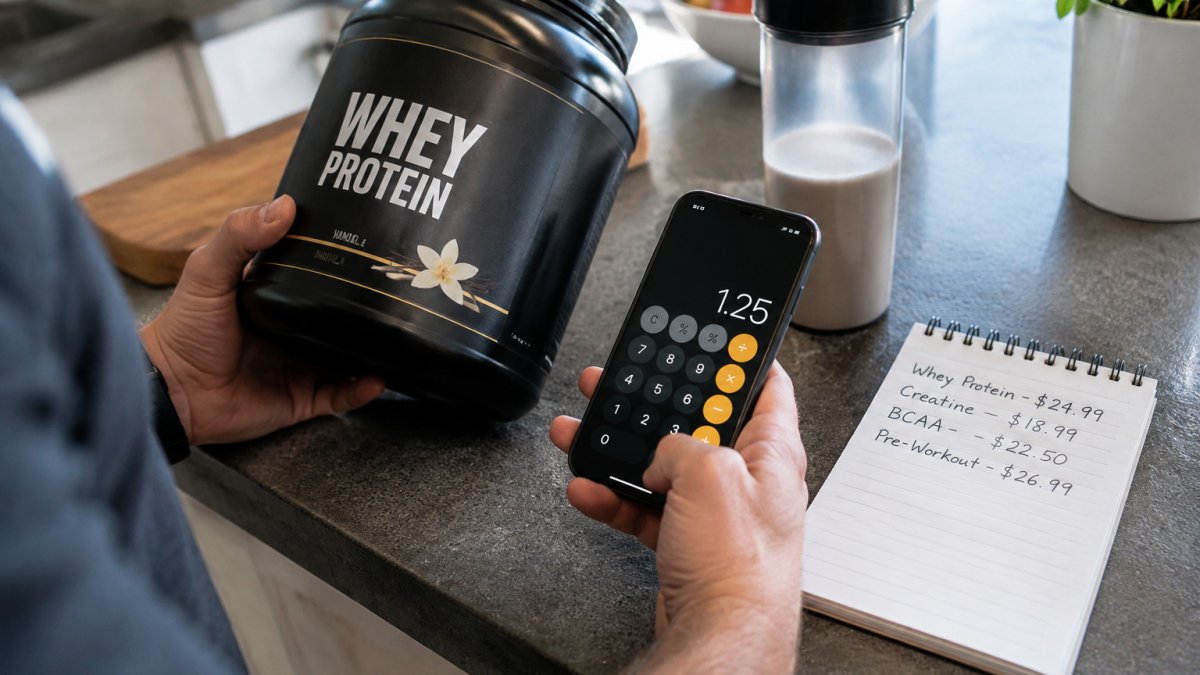
The global sports nutrition market is projected to grow from $77.4 billion in 2026 to $138.5 billion by 2033, according to Grand View Research sports nutrition market analysis. With that much growth, more brands compete on packaging and marketing, which makes the unit math more important, not less.
How to Calculate Price Per Serving in Three Steps
- Find the total price. Include shipping and any required add-ons, not just the listed price.
- Find the serving count. Check the label for servings per container, not the marketing claim on the front.
- Divide. Total price divided by servings gives you cost per serving. Compare that number across brands and formats.
Watch out: a product with a smaller scoop size may list more servings, so always compare per gram of product, not per scoop, when the scoop sizes differ.
Decide Which Supplements You Actually Need
Start with a short list.
For a starter set, the Ambrosia Starter Kit: Tub + Shaker is a practical place to begin.
Best for: Athletes who want a single, pre-measured pre-workout and a shaker in one order.
Skip if: You already have a shaker and a pre-workout you like and see no reason to change.
Shop the Ambrosia Starter Kit to see what is included before you commit.

Buy Bulk Only When the Math Works
Bulk buying lowers the unit price for many staples, but it only saves money if you finish the product before it degrades or expires. A large tub of protein powder you take six months to use can lose value to storage problems and wasted scoops. The break-even question is not "is the big tub cheaper per serving?" but "is the big tub cheaper per serving I actually consume before it goes bad?"
Run the math in four steps before you commit to a bulk size:
- Calculate the effective cost per serving at each size. Divide total price (including shipping) by servings per container for the small, medium, and bulk sizes. Write the three numbers down side by side.
- Estimate your realistic monthly servings. Count how many scoops or servings you actually use in a typical week, then multiply by 4.3. Be honest, most people overestimate by 20-30%.
- Divide bulk servings by monthly servings. That gives you months-to-finish. If it exceeds the product's shelf life after opening, the bulk price is a false saving.
- Add a waste factor. Powders clump, scoops spill, and half-finished tubs get abandoned. A common pattern is 5-10% loss on large containers; factor that into the per-serving comparison.
Shelf Life and Storage: The Hidden Cost of Bulk
Buying in bulk is only cost-effective if the product does not spoil. Protein powder, creatine, pre-workout, and greens powders all degrade differently, and the clock starts when you open the container, not when you buy it.
- Protein powder is typically best within 12-24 months of the manufacture date when unopened, and most practitioners recommend finishing an opened tub within 3-6 months for best mixability and flavor. Whey and casein absorb moisture and can clump; plant proteins can turn rancid faster because of their fat content.
- Creatine monohydrate is stable for years when kept dry, which makes it one of the safest bulk buys in the category.
- Pre-workout is the riskiest bulk purchase. The stimulants and flavors are more sensitive to heat and humidity, and most people use it only on training days, so a large tub can sit for a year.
- Greens powders often contain fragile enzymes and probiotics that lose potency faster than the label suggests.
Store bulk containers in a cool, dry place away from the stove, dishwasher, and direct sunlight. Keep the original sealed container or transfer to an airtight container with a desiccant packet. Do not store powder in the refrigerator unless the label says to, condensation every time you open it accelerates clumping.
When Bulk Actually Pays Off
Bulk makes sense for protein you use every day and for creatine, where stability is high and usage is consistent.
Watch out: a bulk tub that expires half-full is more expensive per serving than the small tub you actually finish. Calculate cost per consumed serving, not cost per listed serving.
Before you buy a large size, compare the options side by side, using the key numbers from the article.
| Step | What to do | Time or frequency |
|---|---|---|
| Calculate cost per serving | Divide total price, including shipping, by servings | Each size you compare |
| Estimate usage | Count realistic servings per week, then multiply by 4.3 | Monthly |
| Find months-to-finish | Divide bulk servings by monthly servings | Before buying |
| Add waste factor | Allow 5-10% loss on large containers | Per purchase |
| Check shelf life | Finish opened protein within 3-6 months | After opening |
Use Online Retailers, Subscriptions and Seasonal Sales
Online retailers often list the same product at different prices, and a few minutes of comparison can reveal a real gap. Compare the brand's own site, large retailers, and specialty stores, and factor in shipping thresholds. Many retailers offer free shipping above a set order total, so a larger bundle can end up cheaper per serving than a smaller order plus a shipping fee. The comparison only works if you normalize every option to cost per serving after shipping and any required add-ons.
Subscription Math: When 'Subscribe and Save' Actually Saves
Subscriptions are the most misunderstood cost lever in sports nutrition. A 10-15% recurring discount looks like free money, but the real cost depends on three variables: the discount rate, your actual consumption rate, and the cancellation friction.
Run this comparison before you subscribe:
- Calculate the subscription cost per serving. Multiply the list price by (1 − discount rate), add any shipping, then divide by servings.
- Calculate the bulk cost per serving. Do the same for the largest one-time size you would realistically finish.
- Compare against your consumption rate. If the subscription delivers more servings per month than you use, the effective cost per consumed serving rises even though the sticker discount looks good.
- Check the lock-in terms. Note the minimum number of deliveries, the cancellation window, and whether you can skip or pause. A subscription that is hard to cancel can cost more than any discount it provides.
A common pattern: subscription discounts beat one-off retail prices but lose to bulk purchases for products you use daily, while subscriptions win for products you use at a steady, moderate pace and do not want to store in large quantities.
A Seasonal Buying Calendar
Seasonal sales and holiday promotions can bring prices down, especially on bundles. Plan larger purchases around these recurring windows if your current supply will last:
- New Year (January): resolution-driven promotions on starter kits, protein, and bundles; often the deepest discounts of the year on entry-level products.
- Spring (March-May): pre-summer sales on protein and pre-workout as brands clear winter inventory.
- Back-to-school (August): bundle promotions and free-shipping thresholds aimed at student athletes.
- Black Friday and Cyber Monday (late November): the single best window for bulk protein, creatine, and multi-product stacks; many brands run sitewide discounts plus free shipping.
- End-of-year clearance (December): discontinued flavors and older packaging at reduced prices, check expiration dates before buying.
Time your bulk purchases to these windows and keep a two-to-three-month buffer of daily-use products so you are never forced to buy at full price. Browse the Workout Supplement Stack to compare what a bundle includes against buying each product separately.

Watch out: a subscription discount applied to a product you use every other month can cost more per consumed serving than buying the bulk size twice a year during Black Friday, always compare the annualized cost, not the monthly sticker.
Read Labels to Avoid Paying for Filler
Label literacy is one of the most useful money-saving skills in this category. Look at the amount of active ingredient per serving, not the total weight of the container, and check the ingredient list for fillers, sugars or proprietary blends that hide exact doses. Browse the weight management category to see filler-free options grouped together.
Greens powders are a useful example. For a candid breakdown of what they do and do not replace, read Are Greens Powders Worth It? An Honest Look.
Watch out: "clean" and "natural" are marketing terms, not regulated standards. Read the actual ingredient list and confirm what each product contains.
The Ambrosia formula is listed with exact ingredient amounts and no proprietary blends, which makes its label easier to compare.
Build Sports Nutrition on a Budget With Whole Foods
Whole foods can cover a meaningful share of your protein, carbohydrate and fat needs at a lower cost per gram than many supplements.
Meal prep reduces waste and impulse purchases. Cooking a batch of rice and chicken for the week costs less per meal than buying ready-made options, and it keeps your macronutrient intake consistent.
For focus and recovery, compare supplement options against food-based approaches. Supplements For Cognitive Support And Focus: A 2026 Guide goes deeper on which options are worth paying for.
Pick Your Next Order and Lock In Your Savings
Start by calculating cost per serving for the products you buy most. Then compare a bundle, a bulk size and a subscription against your current spending.
Peakform Nutrition offers a range of supplements and apparel, and its team can help you think through which products may fit your goals. Start with the Ambrosia Starter Kit if you want a low-cost first step, and review your order against the cost-per-serving method above before you buy.
Frequently Asked Questions
How can I save money when buying sports nutrition products?
The biggest savings usually come from comparing cost per serving instead of the listed price, buying only the products your training actually needs, and timing purchases around sales. Check the serving count on each label and divide the price by it. Then look at subscription discounts, which often run around 10 to 15 percent at many retailers, and compare them against one-time seasonal promotions. Skipping products that duplicate each other, such as two different pre-workouts, cuts spending more than any coupon will.
Is it cheaper to buy supplements online or in stores?
Online retailers often beat in-store prices because they carry lower overhead and run frequent promotions, but the gap depends on the product and the store. Compare the total cost, including shipping, against the sale price at a local shop. Many online stores offer free shipping above a set order total, so bundling several items in one order can make the difference. Checking both channels before each purchase is the simplest way to confirm you are paying the lower price.
How do I compare the cost of different protein powders?
Divide the price by the number of servings to get the cost per serving, then divide that figure by grams of protein per serving to get cost per gram of protein. This shows which product delivers the most protein for each dollar, regardless of tub size or packaging. Use the same method for every brand you compare so the numbers are consistent. A protein powder that looks cheap per tub can cost more per gram of usable protein once you account for the serving size.
Are bulk-size supplements always a better value?
Not always. Larger containers usually lower the unit price, but only if you use the product before it loses potency or goes stale. Check the expiration date and the recommended storage conditions before buying in bulk. If a large tub would take you six months to finish, a smaller size or a multi-pack may be the better buy. Calculate the cost per serving for both sizes before deciding.
